THE CLASSIC COLLECTION✦Studies in the South and West, with Comments on CanadaCLASSIC FREE BOOKS
Studies in the South and West, with Comments on Canada
Charles Dudley Warner
THE CLASSIC COLLECTION · 1891
"Our Italy" by Charles Dudley Warner is a travelogue written in the late 19th century. This work focuses on Southern California, drawing parallels between its beauty and climate to that of Italy, while exploring the physical characteristics and bounty of the region. The author invites readers to consider the landscape, agricultural potential, and the livability of this unique part of the United States. At the start of the narrative, Warner vividly describes the awe-inspiring transition experienced by travelers as they journey into the picturesque vistas of Southern California from the rigors of cold alpine landscapes. The opening portion establishes the contrasting climates, highlighting the abundance of lush gardens, orchards, and varying elevations that contribute to a unique ecosystem. The author emphasizes the richness of the terrain, discussing the implications of localized weather patterns, irrigation, and cultivation, which together position Southern California as a fertile and thriving land, drawing comparisons to Italy yet with its own distinct charm and characteristics.
Introduction adapted from the source catalogue; source summaries may be automatically generated.
Free to read · English · 51,164 words · No account needed
MAKE TIME FOR A GOOD BOOK
On by default. Untick to stop anonymous reading totals. Each page counts after 10 seconds in view. How this works.
Anonymous counting is on unless you have switched it off.
Our camp for the night was at the next place where water could be obtained, a station of the Arizona Cattle Company. Abundant water is piped down to it from mountain springs. The log-house and stable of the cow-boys were unoccupied, and we pitched our tent on a knoll by the corral. The night was absolutely dry, and sparkling with the starlight. A part of the company spread their blankets on the ground under the sky. It is apt to be cold in this region towards morning, but lodging in the open air is no hardship in this delicious climate. The next day the way part of the distance, with only a road marked by wagon wheels, was through extensive and barren-looking cattle ranges, through pretty vales of grass surrounded by stunted cedars, and over stormy ridges and plains of sand and small bowlders. The water having failed at Red Horse, the only place where it is usually found in the day's march, our horses went without, and we had resource to our canteens. The whole country is essentially arid, but snow falls in the winter-time, and its melting, with occasional showers in the summer, create what are called surface wells, made by drainage. Many of them go dry by June. There had been no rain in the region since the last of March, but clouds were gathering daily, and showers are always expected in July. The phenomenon of rain on this baked surface, in this hot air, and with this immense horizon, is very interesting. Showers in this tentative time are local. In our journey we saw showers far off, we experienced a dash for ten minutes, but it was local, covering not more than a mile or two square. We have in sight a vast canopy of blue sky, of forming and dispersing clouds. It is difficult for them to drop their moisture in the rising columns of hot air. The result at times was a very curious spectacle--rain in the sky that did not reach the earth. Perhaps some cold current high above us would condense the moisture, which would begin to fall in long trailing sweeps, blown like fine folds of muslin, or like sheets of dissolving sugar, and then the hot air of the earth would dissipate it, and the showers would be absorbed in the upper regions. The heat was sometimes intense, but at intervals a refreshing wind would blow, the air being as fickle as the rain; and now and then we would see a slender column of dust, a thousand or two feet high, marching across the desert, apparently not more than two feet in diameter, and wavering like the threads of moisture that tried in vain to reach the earth as rain. Of life there was not much to be seen in our desert route. In the first day we encountered no habitation except the ranch-house mentioned, and saw no human being; and the second day none except the solitary occupant of the dried well at Red Horse, and two or three Indians on the hunt. A few squirrels were seen, and a rabbit now and then, and occasionally a bird. The general impression was that of a deserted land. But antelope abound in the timber regions, and we saw several of these graceful creatures quite near us. Excellent antelope steaks, bought of the wandering Indian hunters, added something to our "canned" supplies. One day as we lunched, without water, on the cedar slope of a lovely grass interval, we saw coming towards us over the swells of the prairie a figure of a man on a horse. It rode to us straight as the crow flies. The Indian pony stopped not two feet from where our group sat, and the rider, who was an Oualapai chief, clad in sacking, with the print of the brand of flour or salt on his back, dismounted with his Winchester rifle, and stood silently looking at us without a word of salutation. He stood there, impassive, until we offered him something to eat. Having eaten all we gave him, he opened his mouth and said, "Smoke 'em?" Having procured from the other wagon a pipe of tobacco and a pull at the driver's canteen, he returned to us all smiles. His only baggage was the skull of an antelope, with the horns, hung at his saddle. Into this he put the bread and meat which we gave him, mounted the wretched pony, and without a word rode straight away. At a little distance he halted, dismounted, and motioned towards the edge of the timber, where he had spied an antelope. But the game eluded him, and he mounted again and rode off across the desert--a strange figure. His tribe lives in the cañon some fifty miles west, and was at present encamped, for the purpose of hunting, in the pine woods not far from the point we were aiming at.
Your reading position is saved on this browser. Take it to another device with a library code. Reading pages adapt to text, rather than matching a printed edition.
Charles Dudley Warner

Charles Dudley Warner
Charles Dudley Warner
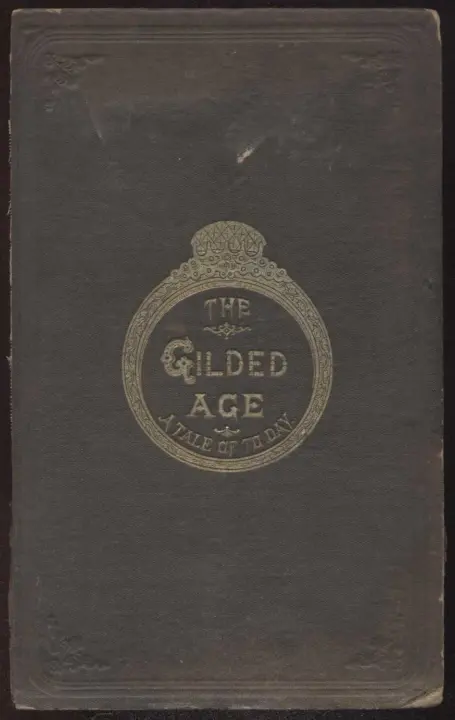
Mark Twain & Charles Dudley Warner
BEHIND THE BOOK
This eBook is for the use of anyone anywhere in the United States and most other parts of the world at no cost and with almost no restrictions whatsoever. You may copy it, give it away or re-use it under the terms of the Project Gutenberg License included with this eBook or online at www.gutenberg.org. If you are not located in the United States, you will have to check the laws of the country where you are located before using this eBook. Read the source licence.
The original source file, including credits and licence, is retained by this library. Request an original-format copy at no charge. Please include the book title and Project Gutenberg identifier #28506.
KEEP YOUR CURIOSITY GOING
Wilfrid Scawen Blunt
Wilfrid Scawen Blunt

E. W. (Edgar Watson) Howe
Francis Greenleaf Allinson & Anne C. E. (Anne Crosby Emery) Allinson
Cyrenus Cole

John Martineau