THE CLASSIC COLLECTION✦Studies in the South and West, with Comments on CanadaCLASSIC FREE BOOKS
Studies in the South and West, with Comments on Canada
Charles Dudley Warner
THE CLASSIC COLLECTION · 1891
"Our Italy" by Charles Dudley Warner is a travelogue written in the late 19th century. This work focuses on Southern California, drawing parallels between its beauty and climate to that of Italy, while exploring the physical characteristics and bounty of the region. The author invites readers to consider the landscape, agricultural potential, and the livability of this unique part of the United States. At the start of the narrative, Warner vividly describes the awe-inspiring transition experienced by travelers as they journey into the picturesque vistas of Southern California from the rigors of cold alpine landscapes. The opening portion establishes the contrasting climates, highlighting the abundance of lush gardens, orchards, and varying elevations that contribute to a unique ecosystem. The author emphasizes the richness of the terrain, discussing the implications of localized weather patterns, irrigation, and cultivation, which together position Southern California as a fertile and thriving land, drawing comparisons to Italy yet with its own distinct charm and characteristics.
Introduction adapted from the source catalogue; source summaries may be automatically generated.
Free to read · English · 51,164 words · No account needed
MAKE TIME FOR A GOOD BOOK
On by default. Untick to stop anonymous reading totals. Each page counts after 10 seconds in view. How this works.
Anonymous counting is on unless you have switched it off.
From 1855 to 1864, nine years, the Yosemite had 653 visitors; in 1864 there were 147. The number increased steadily till 1869, the year the overland railroad was completed, when it jumped to 1122. Between 4000 and 5000 persons visit it now each year. The number would be enormously increased if it could be reached by rail, and doubtless a road will be built to the valley in the near future, perhaps up the Merced River. I believe that the pilgrims who used to go to the Yosemite on foot or on horseback regret the building of the stage road, the enjoyment of the wonderful valley being somehow cheapened by the comparative ease of reaching it. It is feared that a railway would still further cheapen, if it did not vulgarize it, and that passengers by train would miss the mountain scenery, the splendid forests, the surprises of the way (like the first view of the valley from Inspiration Point), and that the Mariposa big trees would be farther off the route than they are now. The traveller sees them now by driving eight miles from Wawona, the end of the first day's staging. But the romance for the few there is in staging will have to give way to the greater comfort of the many by rail.
The railway will do no more injury to the Yosemite than it has done to Niagara, and, in fact, will be the means of immensely increasing the comfort of the visitor's stay there, besides enabling tens of thousands of people to see it who cannot stand the fatigue of the stage ride over the present road. The Yosemite will remain as it is. The simplicity of its grand features is unassailable so long as the Government protects the forests that surround it and the streams that pour into it. The visitor who goes there by rail will find plenty of adventure for days and weeks in following the mountain trails, ascending to the great points of view, exploring the cañons, or climbing so as to command the vast stretch of the snowy Sierras. Or, if he is not inclined to adventure, the valley itself will satisfy his highest imaginative flights of the sublime in rock masses and perpendicular ledges, and his sense of beauty in the graceful water-falls, rainbow colors, and exquisite lines of domes and pinnacles. It is in the grouping of objects of sublimity and beauty that the Yosemite excels. The narrow valley, with its gigantic walls, which vary in every change of the point of view, lends itself to the most astonishing scenic effects, and these the photograph has reproduced, so that the world is familiar with the striking features of the valley, and has a tolerably correct idea of the sublimity of some of these features. What the photograph cannot do is to give an impression of the unique grouping, of the majesty, and at times crushing weight upon the mind of the forms and masses, of the atmospheric splendor and illusion, and of the total value of such an assemblage of wonders. The level surface of the peaceful, park-like valley has much to do with the impression. The effect of El Capitan, seen across a meadow and rising from a beautiful park, is much greater than if it were encountered in a savage mountain gorge. The traveller may have seen elsewhere greater water-falls, and domes and spires of rock as surprising, but he has nowhere else seen such a combination as this. He may be fortified against surprise by the photographs he has seen and the reports of word painters, but he will not escape (say, at Inspiration Point, or Artist Point, or other lookouts), a quickening of the pulse and an elation which is physical as well as mental, in the sight of such unexpected sublimity and beauty. And familiarity will scarcely take off the edge of his delight, so varied are the effects in the passing hours and changing lights. The Rainbow Fall, when water is abundant, is exceedingly impressive as well as beautiful. Seen from the carriage road, pouring out of the sky overhead, it gives a sense of power, and at the proper hour before sunset, when the vast mass of leaping, foaming water is shot through with the colors of the spectrum, it is one of the most exquisite sights the world can offer; the elemental forces are overwhelming, but the loveliness is engaging. One turns from this to the noble mass of El Capitan with a shock of surprise, however often it may have been seen. This is the hour also, in the time of high-water, to see the reflection of the Yosemite Falls. As a spectacle it is infinitely finer than anything at Mirror Lake, and is unique in its way. To behold this beautiful series of falls, flowing down out of the blue sky above, and flowing up out of an equally blue sky in the depths of the earth, is a sight not to be forgotten. And when the observer passes from these displays to the sight of the aerial domes in the upper end of the valley, new wonders opening at every turn of the forest road, his excitement has little chance of subsiding: he may be even a little oppressed. The valley, so verdant and friendly with grass and trees and flowers, is so narrow compared with the height of its perpendicular guardian walls, and this little secluded spot is so imprisoned in the gigantic mountains, that man has a feeling of helplessness in it. This powerlessness in the presence of elemental forces was heightened by the deluge of water. There had been an immense fall of snow the winter before, the Merced was a raging torrent, overflowing its banks, and from every ledge poured a miniature cataract.
Your reading position is saved on this browser. Take it to another device with a library code. Reading pages adapt to text, rather than matching a printed edition.
Charles Dudley Warner

Charles Dudley Warner
Charles Dudley Warner
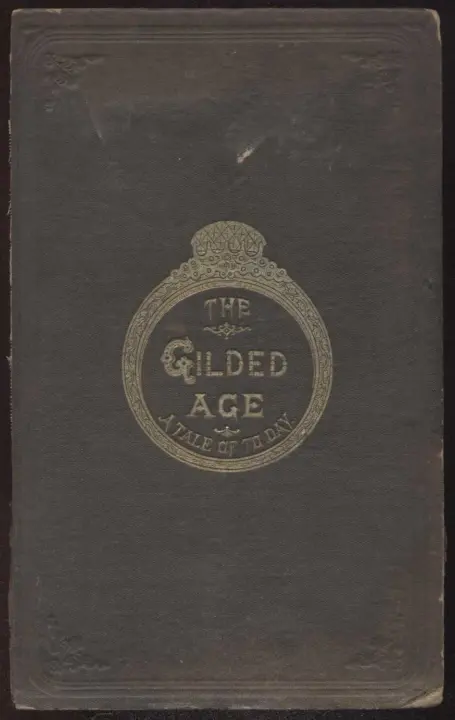
Mark Twain & Charles Dudley Warner
BEHIND THE BOOK
This eBook is for the use of anyone anywhere in the United States and most other parts of the world at no cost and with almost no restrictions whatsoever. You may copy it, give it away or re-use it under the terms of the Project Gutenberg License included with this eBook or online at www.gutenberg.org. If you are not located in the United States, you will have to check the laws of the country where you are located before using this eBook. Read the source licence.
The original source file, including credits and licence, is retained by this library. Request an original-format copy at no charge. Please include the book title and Project Gutenberg identifier #28506.
KEEP YOUR CURIOSITY GOING
Wilfrid Scawen Blunt
Wilfrid Scawen Blunt

E. W. (Edgar Watson) Howe
Francis Greenleaf Allinson & Anne C. E. (Anne Crosby Emery) Allinson
Cyrenus Cole

John Martineau