THE CLASSIC COLLECTION✦The Feasts of Autolycus: The Diary of a Greedy WomanCLASSIC FREE BOOKS
The Feasts of Autolycus: The Diary of a Greedy Woman
Elizabeth Robins Pennell
THE CLASSIC COLLECTION · 1910
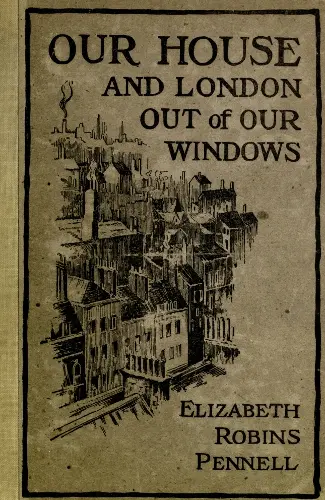
"Our House and London out of Our Windows" by Elizabeth Robins Pennell is a memoir written in the early 20th century. The book provides an intimate look into life from the perspective of the author and her partner, as they navigate the challenges of domestic life and the quirks of their hired help in London. The focus on amusing and sometimes poignant anecdotes paints a vivid picture of their home and surroundings, allowing readers to explore both the beauty and difficulties of their experiences. The beginning of the narrative recounts the serendipitous journey the author and her partner undertake in search of a home, leading them to a charming residence on the Thames. As they settle in, the author introduces her first servant, 'Enrietter', who initially seems perfect but quickly leads to a series of dramatic and comical incidents that showcase the complexities of hiring help in London. The author reflects on her expectations versus the reality of domestic life, setting the stage for the many adventures, misadventures, and vibrant characters that populate their world as they seek to create a sense of home amidst the chaos of urban living.
Introduction adapted from the source catalogue; source summaries may be automatically generated.
Free to read · English · 69,236 words · No account needed
MAKE TIME FOR A GOOD BOOK
On by default. Untick to stop anonymous reading totals. Each page counts after 10 seconds in view. How this works.
Anonymous counting is on unless you have switched it off.
Out of compliment to J., our Beggars pose as artists no less frequently than as authors. If the artist himself, when accident or bad luck has got him into a tight place, likes best to come to his fellow artist to get him out of it, he is the first to pay his debts and the first debt he pays is to the artist who saw him through. But this has nothing to do with our Beggars who have chosen art as an unemployment and with whom accident or bad luck is deliberately chronic. They look upon art as a gilt-edged investment that should bring them in a dividend, however remote their connection with it. According to them, an artist entitles all his family, even to the second and third generation, to a share in J.'s modest income, though J. himself is not at all of their manner of thinking. Grandsons of famous wood-engravers, nephews of editors of illustrated papers, cousins of publishers of popular magazines, fathers of painters, brothers, sons, and uncles of every sort of artist, even sisters, daughters, and aunts who take advantage of their talent for pathos and "crocodile wisdom of shedding tears when they should devour,"--all have sought to impress upon him that the sole reason for their existence is to live at his expense. He may suggest meekly that he subscribes to benevolent institutions and societies founded for the relief of artists and artists' families in just their difficulties. They are glib in excuses for making their application to him instead, and they evidently think he ought to be grateful to them for putting him in the way of enjoying the blessing promised to those who give.
The most ambitious reckon their needs on a princely scale, as if determined to beg, when they have to, with all their might. One artist, distinguished in his youth, writes to J., from the Cafe Royal where, in his old age, he makes a habit of dining and finding himself towards midnight ridiculously without a penny in his pocket, an emergency in which a five-pound note by return of messenger will oblige. Another, whose business hours are as late, comes in person for a "fiver," his last train to his suburban home being on the point of starting and he as ridiculously penniless, except for a cheque for a hundred pounds just received from a publisher, which he cannot change at that time of night. The more humble have so much less lavish a standard that half a crown will meet their liabilities, or else a sum left to the generosity of the giver. A youth, frequent in his visits, never aspires above the fare of a hansom waiting below, while a painter of mature years appears only on occasions of public rejoicing or mourning when there is no telling to what extent emotion may loosen the purse strings. Some bring their pictures as security, or the pictures of famous ancestors who have become bewilderingly prolific since their death; some plead for their work to be taken out of pawn; some want to pose in a few days, and these J. recommends to the Keeper of the Royal Academy; and some are so subtle in their argument that we fail to follow it. We are still wondering what could have been the motive of the excited little man who burst in upon J. a few days ago with a breathless inquiry as to how much he charged for painting polo ponies for officers, and who bolted as precipitately when J. said that he knew nothing about polo, and had never painted a pony in his life. But for sheer irrelevance none has surpassed the American whom, in J.'s absence, I was called upon to interview, and who assured me that, having begun life as an artist and later turned model, he had tramped all the way from New Orleans to New York and then worked his way over on a cattleship to London with no other object in view than to sit to J. If I regret that my countrymen in England borrow the trick of begging from the native, it is some satisfaction to have them excel in it. When I represented to the model from New Orleans that J., as far as I could see, would have no use for him, he was quite ready to take a shilling in place of the sitting, and when I would not give him a shilling, he declared himself repaid by his pleasant chat with a compatriot. He must have thought better of it afterwards and decided that something more substantial was owing to him, for three weeks later his visit was followed by a letter:--
Your reading position is saved on this browser. Take it to another device with a library code. Reading pages adapt to text, rather than matching a printed edition.
Elizabeth Robins Pennell
Joseph Pennell & Elizabeth Robins Pennell
Elizabeth Robins Pennell & Joseph Pennell
Joseph Pennell & Elizabeth Robins Pennell
BEHIND THE BOOK
This eBook is for the use of anyone anywhere in the United States and most other parts of the world at no cost and with almost no restrictions whatsoever. You may copy it, give it away or re-use it under the terms of the Project Gutenberg License included with this eBook or online at www.gutenberg.org. If you are not located in the United States, you will have to check the laws of the country where you are located before using this eBook. Read the source licence.
The original source file, including credits and licence, is retained by this library. Request an original-format copy at no charge. Please include the book title and Project Gutenberg identifier #38749.
KEEP YOUR CURIOSITY GOING
Wilfrid Scawen Blunt
Wilfrid Scawen Blunt

E. W. (Edgar Watson) Howe
Francis Greenleaf Allinson & Anne C. E. (Anne Crosby Emery) Allinson
Cyrenus Cole

John Martineau