THE CLASSIC COLLECTION✦An outlaw’s diary: the CommuneCLASSIC FREE BOOKS
An outlaw’s diary: the Commune
Cécile Tormay
THE CLASSIC COLLECTION · 1912
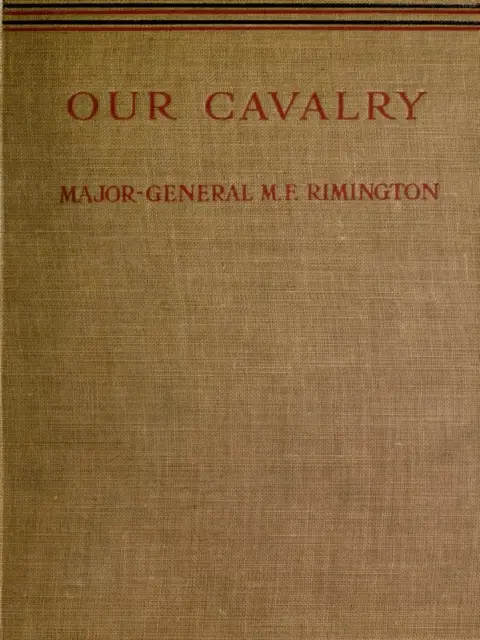
"Our Cavalry" by Major-General M. F. Rimington is a military text that appears to have been written in the early 20th century. This work serves as a guide aimed primarily at junior officers within the cavalry and discusses the principles and tactics of cavalry operations throughout history, drawing lessons from past military leaders and battles. The author emphasizes the importance of cavalry in combat, training, and the effective use of horses, weapons, and tactics. At the start of the text, Rimington reflects on the enduring role of cavalry by discussing its historical significance, from ancient armies to contemporary practices. He summarizes key principles that have guided successful cavalry operations, such as cohesion among troops, the moral impact of a cavalry charge, and the need for effective leadership. The opening also introduces the importance of historical examples in shaping modern cavalry tactics, with a focus on how lessons learned from the battlefield can inform present-day military strategies.
Introduction adapted from the source catalogue; source summaries may be automatically generated.
Free to read · English · 58,388 words · No account needed
MAKE TIME FOR A GOOD BOOK
On by default. Untick to stop anonymous reading totals. Each page counts after 10 seconds in view. How this works.
Anonymous counting is on unless you have switched it off.
Cavalry, expense of, 8;
leader, 8, 73;
brigade in action, 59;
in the general engagement, 69;
disposition of, in a campaign, 86;
masses of, 99, 109;
screen, 135;
shooting and fire discipline of, 208
Cavalry Training, Manual of, 111
Cavalry v. Cavalry, 37
“Charge,” the, 2, 4
Cherfils, 69, 98
Chest measurement as sign of stamina of horse, 20
Chivalry, 2;
Norman, 2
Colonials in the South African War, 75
Competition of squadrons, 212
Convoy duty, 144
Cooking, knowledge of, 211
Cossacks, 75, 150;
activity of the, 135
Cost of horse-flesh in South African operations, 18
Country-bred men, 210
Cromwell, 3, 6, 34, 69
Cronje, General, 84
Culverwell, Professor, on teaching, 214
Curély, 3, 7, 134
Cyclists, 94, 96
Cynic, 143;
cynicism, 217
Daumas, General, book on Arab horses by, 23
Delarey, 75
Denison on cavalry recruits, 208
Despatch-riding, 139
Detached duties of cavalry, 139
De Wet, raids of, 147
Direction of cavalry by higher leaders, 88
Dismounted action of cavalry, 57;
work, 11, 73, 186
Disposition of cavalry in a campaign, 86
Dissemination of squadrons, 68
Divisional cavalry, 91
Doctrine, Langlois’, 171;
Napoleon’s, 172
Dogger Bank, 131
Dragoons of Napoleon, 11
Drives in South Africa, 93
Drying tent, 125
Dundonald, Lord, Preface to his Cavalry Training, 55
Duty, sense of, 160
Echelon attack, advantages of the, 39
Elliot, on the possibilities of cavalry, 6;
inspiriting regulation mentioned by, 178
En bondes, to work towards the enemy, 59
Enemy, in contact with the, 122
Engineering, Manual of Military, 211
English cavalry, 59
Europe, supply of food for horses when campaigning in, 21
Expenses in cavalry, 154, 155
Expensive, want of cavalry is, American view, 8
Exploration, cavalry of, 90
Fanaticism, religious, 215
Field Service Regulations, 90, 94
Fire action in tactics, 50;
action by cavalry, German opinion on, 57;
effect, horse artillery, compared with rifle fire, 117
Fixed principles of the great cavalry leaders, 3
Flags, use of, 78
Flank, forming to the, 37
Forage supply and its carriage, 95, 96
Forming to the flank, 37
Frederick the Great, 3, 6, 90;
sayings of, 25, 105, 177;
his horses duly considered, 27;
on the rapid rallying of squadrons, 33;
success of the cavalry of, 81;
horse artillery and cavalry of, 102, 103;
and his officer Seydlitz, 193
Free-jumping lane, 198
French, General Sir John, 84
French cavalry, 7, 209;
regulations, 90, 134, 136, 159, 171
French dragoons in the Peninsular War, 15;
nation and the war of 1870, 7;
Republic, the armies of the, 97;
Manuel du gradé de cavalerie, 160, 217
Frossard, General, and the episode at Vionville, 73
Galliffet, General, 6, 31, 88
Gambling spirit necessary in cavalry leader, 9
Gerard, Sir Montague, 11
German cavalry, bayonet substituted for the sword in, 10;
and the lance, 16;
rifle and fire tactics, 16;
at Loigny-Poupry, 72;
regulations, 70, 71, 79, 80, 92, 107, 109, 115, 170;
considered too weak, 95
German officers in the 1870 war, 139;
opinion on mounted infantry, 56;
opinion on fire action by cavalry, 57
Goltz, Von der, his Nation in Arms, 10, 69, 93, 97, 161, 162, 167
Gordon, Lindsay, poem by, 32
Gourko, General, his raid across the Balkans, 146
Grumbling--the soldier’s privilege to grumble, 217
Gustavus Adolphus, 3
Haig, General Sir D., 35, 38, 51, 67, 71, 78, 113
Haute école, 196, 197, 203
Henderson, Colonel, in Science of War, 56, 117, 118, 128
Hood, General, and Wheeler’s raid, 149
Horse, the, 18;
Arab, 23;
in South African operations, 82;
what will the cavalry horse live on? 86;
despatch-riding, 139;
loss of many overriden, 149;
exhaustion of, 151;
Frederick the Great and his, 178;
efficiency for war in, 181;
training of the, 191
Your reading position is saved on this browser. Take it to another device with a library code. Reading pages adapt to text, rather than matching a printed edition.
BEHIND THE BOOK
This eBook is for the use of anyone anywhere in the United States and most other parts of the world at no cost and with almost no restrictions whatsoever. You may copy it, give it away or re-use it under the terms of the Project Gutenberg License included with this eBook or online at www.gutenberg.org. If you are not located in the United States, you will have to check the laws of the country where you are located before using this eBook. Read the source licence.
The original source file, including credits and licence, is retained by this library. Request an original-format copy at no charge. Please include the book title and Project Gutenberg identifier #53349.
KEEP YOUR CURIOSITY GOING
Cécile Tormay

Moritz Busch
John L. Ransom
Frances Wright
Cécile Tormay

Mabel Potter Daggett