THE CLASSIC COLLECTION✦In a winter cityCLASSIC FREE BOOKS
In a winter city
Ouida
THE CLASSIC COLLECTION · 1880
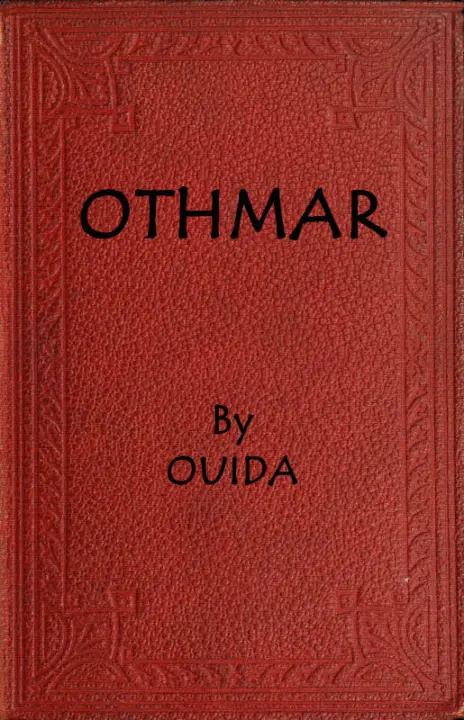
"Othmar" by Ouida is a novel written in the late 19th century. The narrative unfolds in a sumptuous setting, where the themes of love, intellect, and human emotion are explored through the lives and discussions of its characters. At the center of the story is Othmar and his nuanced relationship with a captivating woman, whose ideals and contemplations about love and happiness reveal the tensions of their world. The beginning of the novel introduces a "Court of Love," an enchanting gathering that reflects on the nature of love through intellectual debate. As the queen presides over the discussions, her witty remarks and the sharp exchanges among the courtiers highlight the paradoxes of love in a society caught between romance and realism. Surrounded by exquisite beauty and the lingering ghosts of past passions, the characters grapple with definitions of love, revealing their strengths and vulnerabilities, and setting the stage for deeper explorations of their fates. The opening successfully establishes a rich atmosphere and thought-provoking dialogue, piquing interest in the unfolding drama.
Introduction adapted from the source catalogue; source summaries may be automatically generated.
Free to read · English · 194,427 words · No account needed
MAKE TIME FOR A GOOD BOOK
On by default. Untick to stop anonymous reading totals. Each page counts after 10 seconds in view. How this works.
Anonymous counting is on unless you have switched it off.
'Precisely,' said Béthune. 'To-morrow you will wonder what you ever saw in a hedge rose, but that will not put the rose back in bloom on the hedge again.'
'The rose will cease to bloom certainly anywhere, and that is nature's
fault, and not mine.'
'I hear you love the old poets,' she said, turning to Damaris. 'Will you recite something to me? I love them too.'
'And you yawn before every stage in Paris!' murmured Béthune. But
Damaris did not hear him.
'I shall say it very ill, Madame,' she murmured. She was diffident, terrified indeed; yet her vague consciousness that she had some sort of power in her, as the lark had, as the nightingale had, made the old remembered poetry come thronging in her brain and trembling on her lips as she spoke of it.
'If, after all, I have talent?' she thought, her heart seeming to beat
up to her throat.
'Give us something from Esther,' said her visitor; 'that is the one play permissible to young girls.'
Damaris smiled, as if at the name of a dear friend. Those verses, which generation after generation of children have spoken since the young disciples of the early years of St. Cyr first wept over the perils of the Jewish heroine, were amongst those which most touched her heart and pleased her imagination. Unknown to herself, she had something of the sense of loneliness of an exile, of an alien, on this little island, which yet she loved so well.
'Voyons, voyons!' said Nadine impatiently, not accustomed to, or tolerant of, being made to wait. 'Do not be afraid. I will tell you frankly whether you have any artistic aptitude, or whether you had better stay and gather oranges and never open a poem all your life. These gentlemen will flatter you, but I shall not. Voyons!'
She spoke imperatively, and with the imperial air of her most resolute will. Damaris grew very pale, even to her lips, but she did not dare refuse to obey. She opened her mouth once, twice, with a deep-drawn, fluttering, frightened breath; then she began to recite, with tremulous voice, the
Notre ennemi cruel devant vous se déclare: C'est lui, c'est le ministre infidèle et barbare Qui, d'un zèle trompeur à vos yeux revêtu, Contre notre innocence arma votre vertu. Et quel autre, grand Dieu! qu'un Scythe impitoyable Aurait de tant d'horreurs dicté l'ordre effroyable?
and passed on to the passage,
O Dieu, confonds l'audace et l'imposture!
Your reading position is saved on this browser. Take it to another device with a library code. Reading pages adapt to text, rather than matching a printed edition.
BEHIND THE BOOK
This eBook is for the use of anyone anywhere in the United States and most other parts of the world at no cost and with almost no restrictions whatsoever. You may copy it, give it away or re-use it under the terms of the Project Gutenberg License included with this eBook or online at www.gutenberg.org. If you are not located in the United States, you will have to check the laws of the country where you are located before using this eBook. Read the source licence.
The original source file, including credits and licence, is retained by this library. Request an original-format copy at no charge. Please include the book title and Project Gutenberg identifier #51487.
KEEP YOUR CURIOSITY GOING
Coulson Kernahan

Maurice Baring
Frances Wright
Cécile Tormay

Frederic Jesup Stimson

W. H. P. (William Henry Pope) Jarvis