THE CLASSIC COLLECTION✦An outlaw’s diary: the CommuneCLASSIC FREE BOOKS
An outlaw’s diary: the Commune
Cécile Tormay
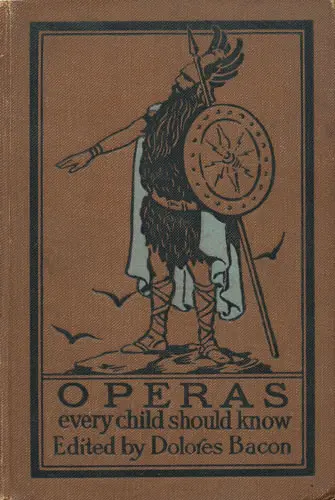
THE CLASSIC COLLECTION · 1911
"Operas Every Child Should Know" by Mary Schell Hoke Bacon is a collection of descriptions and explorations of famous operas aimed at children, likely written in the early 20th century. The book focuses on some of the most notable operatic masterpieces and aims to make them accessible to young audiences, offering insights into their stories and music, while embracing the beauty and complexity of opera as a genre. The opening of the book introduces the foreword, which discusses the challenges of selecting specific operas to include and reflects on the subjective nature of operatic quality and popularity. The author emphasizes that the goal is not just to present great works but also to give children a sense of the rich tapestry of operatic storytelling and music. It mentions various operas and composers that will be covered, setting the stage for a journey through the world of opera, imparting an appreciation for its history, diversity, and emotional resonance. The author asserts that understanding the stories behind the music enhances the overall experience of opera.
Introduction adapted from the source catalogue; source summaries may be automatically generated.
Free to read · English · 116,975 words · No account needed
MAKE TIME FOR A GOOD BOOK
On by default. Untick to stop anonymous reading totals. Each page counts after 10 seconds in view. How this works.
Anonymous counting is on unless you have switched it off.
"Nay, Princess," he answered. "I am not more happy than before, only I am thinking of this war that is about to be, and how I should love to do some valiant deed--for us all," he added as an after-thought, but Amneris surprised the look of tenderness that he gave to Aida. From that moment she watched the lovers closely.
"To-day the Goddess is to decide who shall lead the Egyptians against the Ethiops; I would it were to be I," he sighed. Amneris flushed with anger, as she again saw a look of devotion pass between the slave-girl and Radames, the darling of the court. Still, she pretended to be unsuspicious.
"Is there nothing to attract you in Memphis, that you wish to be off to the war?" she asked, narrowly observing him. Radames, so sensitive and so much in love, saw that he had betrayed his love for Aida. All three became ill at ease, but the Princess called the slave girl to her, pretending great affection for her, and said:
"Why do you weep, Aida? Neither you nor Radames seem to be happy
to-day."
"Ah, Princess, I weep because of this war rumour. I have known the sadness and terror of war, and the thought of assembled war-hosts gives me pain. It means ruin and despair to so many."
"That is the only the reason for your tears?" she persisted, trying to hide her anger, but her glances belied the softness of her tone. Radames, noting this, trembled for Aida. Even the life of the girl was in the hands of the Princess, and Radames knew it.
"Ah, my love, you are weeping for something besides a nation, and your blush betrays you," Amneris answered, gently enough, but in her heart she determined to punish the helpless girl. As the scene became more and more painful, trumpets, which always preceded the King's coming, were heard near at hand, and in he came, surrounded by guards, ministers, priests, and officers; a brilliant company, making a brilliant picture.
"Greeting!" he cried, "it is a mighty cause which brings us here together. A messenger has this moment arrived among us with news of great import. I need the support of all the gallant men of my kingdom. Now, messenger, come before us, if thou wilt, and tell thy news," the King cried in a fine and haughty manner, motioning the messenger before him.
"I came to tell thee, Sire, that Egypt is invaded by Ethiop's King, and all her border lands are laid waste. Our crops are destroyed, great havoc hath been wrought, and unless thou shouldst send an army to resist the invading hosts, we are lost."
Your reading position is saved on this browser. Take it to another device with a library code. Reading pages adapt to text, rather than matching a printed edition.
BEHIND THE BOOK
This eBook is for the use of anyone anywhere in the United States and most other parts of the world at no cost and with almost no restrictions whatsoever. You may copy it, give it away or re-use it under the terms of the Project Gutenberg License included with this eBook or online at www.gutenberg.org. If you are not located in the United States, you will have to check the laws of the country where you are located before using this eBook. Read the source licence.
The original source file, including credits and licence, is retained by this library. Request an original-format copy at no charge. Please include the book title and Project Gutenberg identifier #28711.
KEEP YOUR CURIOSITY GOING
Cécile Tormay

Moritz Busch
John L. Ransom
Frances Wright
Cécile Tormay

Mabel Potter Daggett