
The Cretan Insurrection of 1866-7-8
William James Stillman
THE CLASSIC COLLECTION · 1887
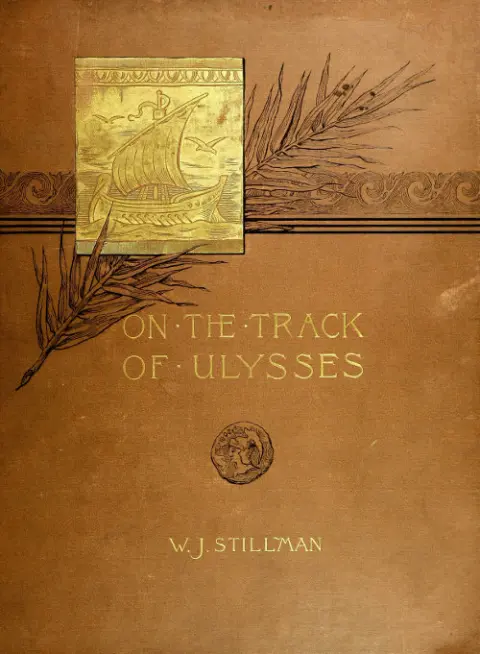
"On the Track of Ulysses; Together with an Excursion in Quest of the So-called Venus of Melos" by W. J. Stillman is a scholarly work that combines travel literature and archaeological studies, written during the late 19th century. This text appears to explore both the legendary journey of Ulysses as depicted in Homer's "Odyssey" and the archaeological significance of the famed Venus de Milo. The author's intent is to connect literary history with real geographical explorations of the Greek islands, blending mythology with historical inquiry. At the start of this work, the author reflects on the main themes of exploration and rediscovery, considering the remnants of ancient civilizations and their connections to contemporary geography. He embarks on a voyage through the sites associated with the journey of Ulysses, contemplating how myth intertwines with reality. The narrative introduces the intricate path of Ulysses, outlining significant locations such as Ogygia, the land of the Phaeacians, and includes historical conjectures about his adventures, setting the stage for a deeper exploration of identity and history within these storied landscapes. The author’s observations weave rich detail while pondering the archaeological challenges and the misidentifications commonly encountered in these ancient locales.
Introduction adapted from the source catalogue; source summaries may be automatically generated.
Free to read · English · 32,663 words · No account needed
MAKE TIME FOR A GOOD BOOK
On by default. Untick to stop anonymous reading totals. Each page counts after 10 seconds in view. How this works.
Anonymous counting is on unless you have switched it off.
The city itself is without interest except as the first really Eastern city one will see coming from the West, and as an example of Venetian fortress-building. The view from the citadel is fine and breezy, the islands of Ovo, Cerigotto, and Crete being visible, and a great expanse of that sea which, on sunny days, is in itself so beautiful from its color. You look down on the houses, white as continual whitewashing will make them, whose flat, terraced roofs serve in the hot and rainless summer as sleeping-places for the whole family. How many nights I have dragged my mattress from the bedroom out on this delightful substitute and let the night breeze fan me to sleep!
Of history the island has next to none. Mythology puts the landing of Aphrodite here, as she came, foam-born and sea-borne, to found her religion in the Greek worlds.[7] The first who are traditionally reported to have colonized the island are the Phœnicians; but it is impossible to ignore the previous coming of the Pelasgi, who have left a well-marked ruin of the earliest type. To see the traces of the antique settlements, one had better go to Port San Nicolo if provided as we were; but secure an intelligent guide previously from Cerigo, as the country people, as in other islands, while pretending to know all about the antiquities, really know absolutely nothing. They know the tombs because they serve as sheep-folds, and they have sometimes a curious knowledge of the relative antiquity of the ruins; but they have heard modern myths, and apply them with the least possible regard to archæological facts, and invariably assure you that they know everything.
So it happened that I was again, for want of choice, out on a search with an ignorant guide. There had been some excavations commenced on the site of what is now known as Palaiopolis (the old city), which evidently was Phœnician, and was occupied down to Roman times. There were some columns of Roman or Byzantine work unearthed, and from mere curiosity to know his notions, I asked a shepherd boy watching his sheep near by what they were. “This,” he said, “was the palace of the king.” “Of what king?” I asked. “Don’t you know?” he said, opening his eyes at me as if this were the very a b c of history. “Why, the palace of Menelaus.” There is an old tradition that it was the place of residence of Menelaus and Helen, and all the objects to be seen are attributed to them. The Phœnician city is close to the sea; the Pelasgic site is several miles back, and looms up on the highest mountains in the vicinity. In a previous visit I had seen but had not explored it; but now I determined to see the whole extent of it. My guide, who brought a donkey for my occasional changes of mode of locomotion, pretended to lead me to the ancient citadel; but when we reached the hill on which I knew it to be better than he, he began to inquire about it of the women at work in the fields; thereupon I, as usual, took the lead. Guided by the nature of the ground, I found all that remained of the ancient citadel wall—a fragment kept up by the chance of its being the limit of a field, and so kept in repair, but in such a state of dilapidation that but for the evidences of the continuity I would not have been sure that it was a wall. I followed the main wall a mile or more along the edge of the precipitous slope, and saw that it bore testimony to the importance of the ancient city, for it was wide in its compass and massive, with towers, gates, and flanking towers of the true Pelasgic style, but in most places only two or three stones high. I got an imposing view of the hill from below the lowest trace of wall, showing its position with reference to the valley below, through which ran once a river of some volume, if we may judge by the alluvial plains at its mouth, but which at the time of my visit in midsummer, was dry as desert dust. A strip of white pebbles shows where it still runs in winter-time. On the hills close to the sea-side, and on both sides of the mouth of this ancient river, used to lie the old Phœnician, Greek, and Roman city, whatever it was originally called,—probably Cythera, like the island. As I have said, it is now called Palaiopolis. The temple of Aphrodite, the people pretend, was on the hill near the citadel where now is an insignificant chapel, but with no evidence of antiquity except that there are in the construction of the chapel some large stones which are evidently of Hellenic cutting; but as the Greeks had the habit in all ages of keeping up the temples of their gods, there is nothing to show that it was a temple of Aphrodite rather than a Pelasgic god, which Aphrodite-Astarte was not, and her temple must have been near the sea.
Your reading position is saved on this browser. Take it to another device with a library code. Reading pages adapt to text, rather than matching a printed edition.
William James Stillman
BEHIND THE BOOK
This eBook is for the use of anyone anywhere in the United States and most other parts of the world at no cost and with almost no restrictions whatsoever. You may copy it, give it away or re-use it under the terms of the Project Gutenberg License included with this eBook or online at www.gutenberg.org. If you are not located in the United States, you will have to check the laws of the country where you are located before using this eBook. Read the source licence.
The original source file, including credits and licence, is retained by this library. Request an original-format copy at no charge. Please include the book title and Project Gutenberg identifier #61025.
KEEP YOUR CURIOSITY GOING
Wilfrid Scawen Blunt
Wilfrid Scawen Blunt

E. W. (Edgar Watson) Howe

Maurice Baring
Francis Greenleaf Allinson & Anne C. E. (Anne Crosby Emery) Allinson
Cyrenus Cole