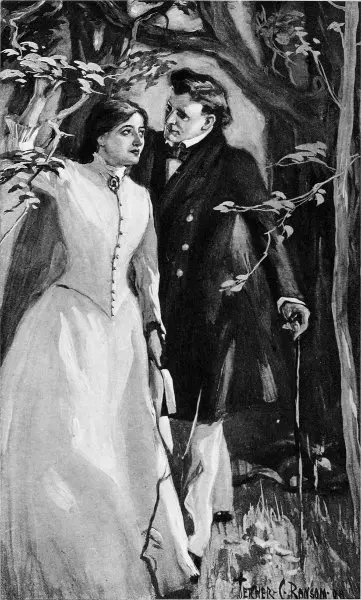
The diary of a superfluous man, and other stories
Ivan Sergeevich Turgenev
THE CLASSIC COLLECTION · 1859
"On the eve: A novel by Ivan Sergeevich Turgenev" is a novel first published in 1859. The story follows Elena Stakhova, a young woman pursued by multiple suitors on the eve of the Crimean War. When she meets Dmitri Insarov, a revolutionary Bulgarian, they fall in love and secretly marry, defying her parents' wishes. Their union leads them on a tragic journey that tests their ideals and devotion, ultimately taking Elena far from home in search of a cause greater than herself.
Introduction adapted from the source catalogue; source summaries may be automatically generated.
Free to read · English · 59,844 words · No account needed
MAKE TIME FOR A GOOD BOOK
On by default. Untick to stop anonymous reading totals. Each page counts after 10 seconds in view. How this works.
Anonymous counting is on unless you have switched it off.
‘Do you remember I asked you, “Will there ever be men among us?” and you answered, “there will be. O primaeval force!” And now from here in “my poetic distance”, I will ask you again, “What do you say, Uvar Ivanovitch, will there be?”’
‘Uvar Ivanovitch flourished his fingers, and fixed his enigmatical stare into the far distance.’
This creation of an universal national type, out of the flesh and blood of a fat taciturn country gentleman, brings us to see that Turgenev was not merely an artist, but that he was a poet using fiction as his medium. To this end it is instructive to compare Jane Austen, perhaps the greatest English exponent of the domestic novel, with the Russian master, and to note that, while as a novelist she emerges favourably from the comparison, she is absolutely wanting in his poetic insight. How petty and parochial appears her outlook in Emma, compared to the wide and unflinching gaze of Turgenev. She painted most admirably the English types she knew, and how well she knew them! but she failed to correlate them with the national life; and yet, while her men and women were acting and thinking, Trafalgar and Waterloo were being fought and won. But each of Turgenev’s novels in some subtle way suggests that the people he introduces are playing their little part in a great national drama everywhere around us, invisible, yet audible through the clamour of voices near us. And so On the Eve, the work of a poet, has certain deep notes, which break through the harmonious tenor of the whole, and strangely and swiftly transfigure the quiet story, troubling us with a dawning consciousness of the march of mighty events. Suddenly a strange sense steals upon the reader that he is living in a perilous atmosphere, filling his heart with foreboding, and enveloping at length the characters themselves, all unconsciously awaiting disaster in the sunny woods and gardens of Kuntsovo. But not till the last chapters are reached does the English reader perceive that in recreating for him the mental atmosphere of a single educated Russian household, Turgenev has been casting before his eyes the faint shadow of the national drama which was indeed played, though left unfinished, on the Balkan battlefields of 1876-7. Briefly, Turgenev, in sketching the dawn of love in a young girl’s soul, has managed faintly, but unmistakably, to make spring and flourish in our minds the ineradicable, though hidden, idea at the back of Slav thought--the unification of the Slav races. How doubly welcome that art should be which can lead us, the foreigners, thus straight to the heart of the national secrets of a great people, secrets which our own critics and diplomatists must necessarily misrepresent. Each of Turgenev’s novels may be said to contain a light-bringing rejoinder to the old-fashioned criticism of the Muscovite, current up to the rise of the Russian novel, and still, unfortunately, lingering among us; but On the Eve, of all the novels, contains perhaps the most instructive political lesson England can learn. Europe has always had, and most assuredly England has been over-rich in those alarm-monger critics, watchdogs for ever baying at Slav cupidity, treachery, intrigue, and so on and so on. It is useful to have these well-meaning animals on the political premises, giving noisy tongue whenever the Slav stretches out his long arm and opens his drowsy eyes, but how rare it is to find a man who can teach us to interpret a nation’s aspirations, to gauge its inner force, its aim, its inevitability. Turgenev gives us such clues. In the respectful, if slightly forced, silence that has been imposed by certain recent political events on the tribe of faithful watchdogs, it may be permitted to one to say, that whatever England’s interest may be in relation to Russia’s development, it is better for us to understand the force of Russian aims, before we measure our strength against it. And a novel, such as On the Eve, though now nearly forty years old, and to the short-sighted out of date, reveals in a flash the attitude of the Slav towards his political destiny. His aspirations may have to slumber through policy or necessity; they may be distorted or misrepresented, or led astray by official action, but we confess that for us, On the Eve suggests the existence of a mighty lake, whose waters, dammed back for a while, are rising slowly, but are still some way from the brim. How long will it take to the overflow? Nobody knows; but when the long winter of Russia’s dark internal policy shall be broken up, will the snows, melting on the mountains, stream south-west, inundating the Valley of the Danube? Or, as the national poet, Pushkin, has sung, will there be a pouring of many Slavonian rivulets into the Russian sea, a powerful attraction of the Slav races towards a common centre to create an era of peace and development within, whereby Russia may rise free and rejoicing to face her great destinies? Hard and bitter is the shaping of nations. Uvar Ivanovitch still fixes his enigmatical stare into the far distance.
Your reading position is saved on this browser. Take it to another device with a library code. Reading pages adapt to text, rather than matching a printed edition.
Ivan Sergeevich Turgenev
Ivan Sergeevich Turgenev
Ivan Sergeevich Turgenev
Ivan Sergeevich Turgenev
BEHIND THE BOOK
This eBook is for the use of anyone anywhere in the United States and most other parts of the world at no cost and with almost no restrictions whatsoever. You may copy it, give it away or re-use it under the terms of the Project Gutenberg License included with this eBook or online at www.gutenberg.org. If you are not located in the United States, you will have to check the laws of the country where you are located before using this eBook. Read the source licence.
The original source file, including credits and licence, is retained by this library. Request an original-format copy at no charge. Please include the book title and Project Gutenberg identifier #6902.
KEEP YOUR CURIOSITY GOING
Coulson Kernahan

Maurice Baring
Frances Wright
Cécile Tormay

Frederic Jesup Stimson

W. H. P. (William Henry Pope) Jarvis