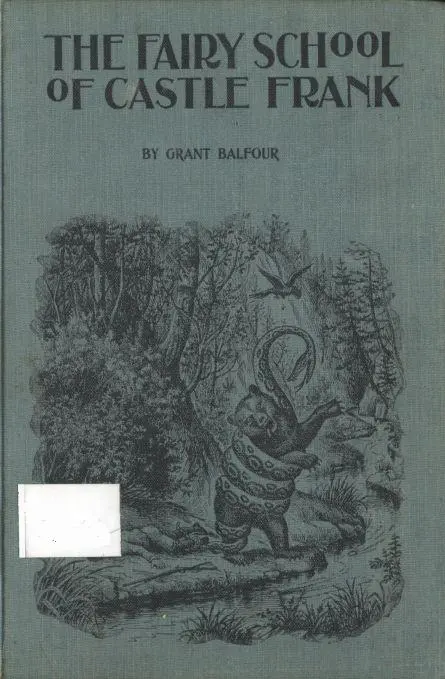
The Fairy School of Castle Frank
Grant Balfour
THE CLASSIC COLLECTION · 1913
"On Strike Till 3" by Grant Balfour is a poignant narrative poem published in the early 20th century. This work tells a touching story that blends themes of love, sacrifice, and social struggle, likely reflecting the early labor movements and the economic challenges faced by workers. The poem focuses on the lives of a widowed mother and her young son, illustrating their hardships and aspirations amidst their everyday realities. The story unfolds during a cold Christmas Eve, where the mother, a tireless worker, and her son David share a simple yet profound bond. David is filled with ideas of love and hope, believing he can provide a better life for his mother. As the poem progresses, the mother suffers from illness exacerbated by her arduous labor, leading her to seek treatment away from home. David, in his innocence, learns about the concept of a workers' strike and innocently initiates his own "strike" in the hopes of aiding his mother's situation. Tragically, both mother and son's lives come to an end, leaving a bittersweet reminder of their struggles against the backdrop of love and longing. The poem ultimately highlights the themes of compassion and the harsh realities faced by those grappling with poverty and illness, effectively delivering a heartfelt message about the human experience.
Introduction adapted from the source catalogue; source summaries may be automatically generated.
Free to read · English · 2,512 words · No account needed
MAKE TIME FOR A GOOD BOOK
On by default. Untick to stop anonymous reading totals. Each page counts after 10 seconds in view. How this works.
Anonymous counting is on unless you have switched it off.
Two nights, not more, before the Christmas eve,
A heap of things for washing lay against
The wall. Alas, at any time too great,
The present task might break the weary back,
But Christmas need was pressing and the labour
Must be done. (Oh, spare that wasted frame!
Hear, O Lord, the widow's cry!)
The weary, yet the watchful boy,
His blackboard took and wrote in letters big
And urgent, seeming charged with meaning strange.
And the clock's alarum was set. And now
On bended knee beside his mother's knee
He spoke his simple prayer, pleading lastly
That his mother might have better wages
And have rest. And, oh, the mother's heart
Went with him, with himself before the throne,
Forgetful, ay entirely, of herself.
A wild temptation seized her. She would clasp,
Yea, fiercely hug, that wasted angel-body
To her breast, and kiss those guileless, beauteous,
Sweetest lips. Alas! she knew the worst
Had come--those eyes, uplifted, hollow, shining,
Spoke of death. And why refrain? She would not,
Yea, she drank the cup of pleasure to the full.
The child was glad, and went to rest,
A smile of heaven on his lips.
And now the mother satisfied, as one
With strongest wine, rose up, and ope'd the door.
She looked abroad a moment, then went out
Into the silent air. The deep ravine
Was glorious white. The mighty pines were robed
As if prepared to sing in heaven's choir
On earth, when strong the northern tempest blew.
The widow, vigour getting for a little
From the frosty air, admired the scene,
And lifting up her eyes to sparkling worlds
Above, she felt assured, though human help
And pity wholly failed, that somewhere, sometime,
There was plenteous rest.
And yet she thanked
And praised the Power that good and evil gave,
For one brief cup of pleasure, if no more--
Her pleasure in her darling boy. "Take him,
O Lord, whatever portion mine."
The tension loosed,
The stricken widow turned, yet ere she turned
She scanned the northern shore of brilliant night,
And, lo, a mountain mass of tempest clouds
Lined up for battle with the sleeping south.
The woman, fearless, smiled as if in kinship
With the coming storm.
But having struggled, spoken,
Pleaded strong, her transient vigour gone,
She stumbled to the door and entered in.
Beside the bed, she saw the letters written
On the board, as if the sacred writing
On the wall. She saw the slender lovely hand
Exposed that wrote them, and she bowed and kissed it,
But she could not weep.
Your reading position is saved on this browser. Take it to another device with a library code. Reading pages adapt to text, rather than matching a printed edition.
Grant Balfour
BEHIND THE BOOK
This eBook is for the use of anyone anywhere in the United States and most other parts of the world at no cost and with almost no restrictions whatsoever. You may copy it, give it away or re-use it under the terms of the Project Gutenberg License included with this eBook or online at www.gutenberg.org. If you are not located in the United States, you will have to check the laws of the country where you are located before using this eBook. Read the source licence.
The original source file, including credits and licence, is retained by this library. Request an original-format copy at no charge. Please include the book title and Project Gutenberg identifier #33555.
KEEP YOUR CURIOSITY GOING

Eric Mackay
Edmund Gosse
Sophia Margaretta Hensley
Gilbert Parker
George MacDonald

Elizabeth Bibesco