THE CLASSIC COLLECTION✦Dreams of an astronomerCLASSIC FREE BOOKS
Dreams of an astronomer
Camille Flammarion
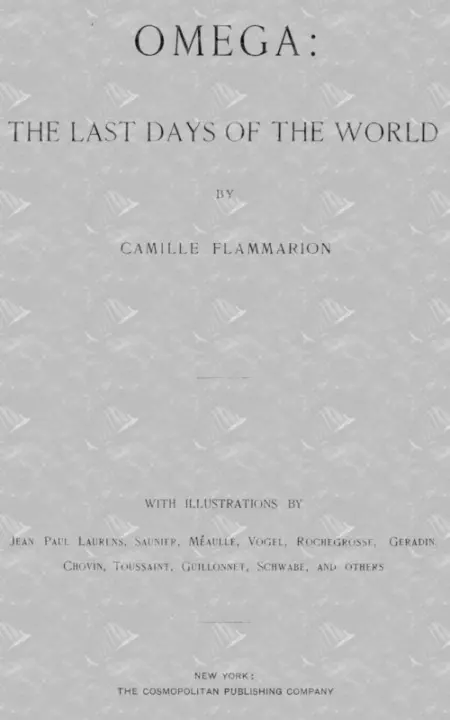
THE CLASSIC COLLECTION · 1894
"Omega: The Last Days of the World" by Camille Flammarion is a speculative fiction work written in the late 19th century. The narrative unfolds during an apocalyptic period where humanity grapples with the existential threat posed by an incoming comet, and the book delves into both scientific and philosophical explorations of this calamity. The rising tension among the populace emphasizes their varied reactions to impending doom, with a cast of characters that likely includes scientists, politicians, and everyday citizens who are faced with the question of humanity's fate. The opening of the narrative sets an urgent tone as people gather in Paris, anxious about astronomical predictions that suggest a comet's catastrophic collision with Earth. Amid a backdrop of social unrest and historical turmoil, Flammarion captures a world brimming with fear and speculation, as citizens from all walks of life converge at an important scientific assembly to learn about the comet's approach and its potential repercussions. The initial chapters detail the scientists' debates and the heated discussions about the cosmic threat, urging the reader to consider not just the physical implications of the comet but also the psychological and societal impacts of such a momentous disaster.
Introduction adapted from the source catalogue; source summaries may be automatically generated.
Free to read · English · 55,889 words · No account needed
MAKE TIME FOR A GOOD BOOK
On by default. Untick to stop anonymous reading totals. Each page counts after 10 seconds in view. How this works.
Anonymous counting is on unless you have switched it off.
It was still in working order, like a clock which has been wound up. For thousands of years the genius of man had been almost exclusively applied to the struggle with destiny. The last remaining water had been forced to circulate in subterranean canals, where also the solar heat had been stored. The last animals had been trained to serve these machines, and the nutritious properties of the last plants had been utilized to the utmost. Men had finally succeeded in living upon almost nothing, so far as quantity was concerned; every newly discovered form of food being completely assimilable. Cities had finally been built of glass, open to the sun, to which was conveyed every substance necessary to the synthesis of the food which replaced the products of nature. But as time passed, it became more and more difficult to obtain the necessaries of life. The mine was at last exhausted. Matter had been conquered by intelligence; but the day had come when intelligence itself was overmatched, when every worker had died at his post and the earth’s storehouse had been depleted. Unwilling to abandon this desperate struggle, man had put forth every effort. But he could not prevent the earth’s absorption of water, and the last resources of a science which seemed greater even than nature itself had been exhausted.
Eva returned to the body of her mother, and once more took the cold hands in her own. The psychic faculties of the race in these its latter days had acquired, as we have said, transcendent powers, and she thought for a moment to summon her mother from the tomb. It seemed to her as if she must have one more approving glance, one more counsel. A single idea took possession of her, so fascinating her that she even lost the desire to die. She saw afar the soul which should respond to her own. Every man belonging to that company of which she was the last survivor had died before her birth. Woman had outlived the sex once called strong. In the pictures upon the walls of the great library, in books, engravings and statues, she saw represented the great men of the city, but she had never seen a living man; and still dreaming, strange and disquieting forms passed before her. She was transported into an unknown and mysterious world, into a new life, and love did not seem to be yet wholly banished from earth. During the reign of cold, all electrical communication between the two last cities left upon the earth had been interrupted. Their inhabitants could speak no more with each other, see each other no more, nor feel each other’s presence. Yet she was as well acquainted with the ocean city as if she had seen it, and when she fixed her eyes upon the great terrestrial globe suspended from the ceiling of the library, and then, closing them, concentrated all her will and psychic power upon the object of her thoughts, she acted at a distance as effectively, though in a different way, as in former days men had done when communicating with each other by electricity. She called, and felt that another heard and understood. The preceding night she had transported herself to the ancient city in which Omegar lived, and had appeared to him for an instant in a dream. That very morning she had witnessed his despairing act and by a supreme effort of the will had arrested his arm. And now, stretched in her chair beside the dead body of her mother, heavy with sleep, her solitary soul wandered in dreams above the ocean city, seeking the companionship of the only mate left upon the earth. And far away, in that ocean city, Omegar heard her call. Slowly, as in a dream, he ascended the platform from which the air-ships used to take their flight. Yielding to a mysterious influence, he obeyed the distant summons. Speeding toward the west, the electric air-ship passed above the frozen regions of the tropics, once the site of the Pacific ocean, Polynesia, Malaisia and the Sunda islands, and stopped at the landing of the crystal palace. The young girl, startled from her dream by the traveller, who fell from the air at her feet, fled in terror to the farther end of the immense hall, lifting the heavy curtain of skin which separated it from the library. When the young man reached her side, he stopped, knelt, and took her hand in his, saying simply: “You called me. I have come.” And then he added: “I have known you for a long time. I knew that you existed, I have often seen you; you are the constant thought of my heart, but I did not dare to come.”
Your reading position is saved on this browser. Take it to another device with a library code. Reading pages adapt to text, rather than matching a printed edition.
Camille Flammarion
Camille Flammarion
Camille Flammarion
Camille Flammarion
BEHIND THE BOOK
This eBook is for the use of anyone anywhere in the United States and most other parts of the world at no cost and with almost no restrictions whatsoever. You may copy it, give it away or re-use it under the terms of the Project Gutenberg License included with this eBook or online at www.gutenberg.org. If you are not located in the United States, you will have to check the laws of the country where you are located before using this eBook. Read the source licence.
The original source file, including credits and licence, is retained by this library. Request an original-format copy at no charge. Please include the book title and Project Gutenberg identifier #57489.
KEEP YOUR CURIOSITY GOING
Coulson Kernahan

Maurice Baring
Frances Wright
Cécile Tormay
Francis Greenleaf Allinson & Anne C. E. (Anne Crosby Emery) Allinson

Frederic Jesup Stimson