THE CLASSIC COLLECTION✦The Pirate, and The Three CuttersCLASSIC FREE BOOKS
The Pirate, and The Three Cutters
Frederick Marryat
THE CLASSIC COLLECTION · 1840
"Olla Podrida" by Captain Frederick Marryat is a collection of short stories, articles, and personal journals written in the early 19th century. This work showcases Marryat's literary genius and reflects his experiences and thoughts, particularly on societal issues, politics, and travels across Europe. The book presents a humorous and satirical lens on various subjects, likely featuring personal anecdotes and observations that highlight the absurdities and follies of contemporary life. The opening of "Olla Podrida" introduces the reader to the narrator's affliction with a peculiar type of political anxiety, which he terms "Politicophobia." Set against the backdrop of England in 1835, he describes the overwhelming and oppressive nature of his political obsession, which colors every aspect of his life, from mundane breakfast items to social interactions. After expressing desperation for relief from his symptoms, he decides to escape this political turmoil by embarking on a journey abroad. The narrator's entertaining yet chaotic reflections set the tone for the subsequent adventures and insights he is set to discover, blending humor with poignant commentary on the human condition.
Introduction adapted from the source catalogue; source summaries may be automatically generated.
Free to read · English · 131,481 words · No account needed
MAKE TIME FOR A GOOD BOOK
On by default. Untick to stop anonymous reading totals. Each page counts after 10 seconds in view. How this works.
Anonymous counting is on unless you have switched it off.
Then after a day or two came an Anti-Teutonic, who railed against Germany--and Germans--German towns, German travelling, and German French, which was detestable--German cookery, which was nothing but grease. "You may imagine," said he, "and so have many more, that Germany is more pleasant and less expensive than France; but they have been disappointed, and so will you be. Now, for a quiet place, I should recommend Saint Omer--only thirty miles from Calais--so convenient--and very pretty."
Saint Omer--humph--very quiet and retired--and no politics--and Saint Omer was occasionally canvassed.
"Saint Omer!" said another who called the next day, "you'll die of ennui. Go to Boulogne--it is delightful--you may be there as retired or as gay as you please."
Boulogne to be taken into consideration many inquiries made and all very satisfactory--good sands and excellent jackasses for the children.
"My dear friend, Boulogne is something like the King's Bench--at least most of the people only go there in preference. Every body will suppose that you've levanted. Pray don't go to Boulogne."
"Why don't you go by Southampton to Havre--there you'll have quiet and amusement--beautiful country about Honfleur--scenery up the Seine splendid; and then you can go up to Rouen by water, if you intend to go on to Paris."
Havre and Honfleur submitted to the committee.
But then came Dieppe, and Brest, and the environs of Paris, Versailles, Saint Germain, Passy, and other recommendations, in which every one particular place was proved incontestably to be more particularly suited to us than any other, and the committee sat for three weeks, at the end of which, upon examining the matured opinions of the last seven days, I found them to have fluctuated as follows:--
Monday morning, Manheim. Evening, Spa.
Tuesday morning, Bruges. Evening Brussels.
Wednesday morning, Saint Omer. Evening, Boulogne.
Thursday morning, Havre. Evening Honfleur.
Friday morning, Dieppe. Evening, Passy.
Saturday morning, Versailles. Evening, Saint Germain.
Sunday morning, Spa. Evening, Brussels.
The fact was, that there was a trifling difference of opinion in the committee--the great object appeared to be, and the great difficulty at the same time, to find a place which would suit all parties, that is to say, a place where there were no politics, plenty of gaiety, and cheap peaches.
Your reading position is saved on this browser. Take it to another device with a library code. Reading pages adapt to text, rather than matching a printed edition.
Frederick Marryat
Frederick Marryat
Frederick Marryat
Frederick Marryat
BEHIND THE BOOK
This eBook is for the use of anyone anywhere in the United States and most other parts of the world at no cost and with almost no restrictions whatsoever. You may copy it, give it away or re-use it under the terms of the Project Gutenberg License included with this eBook or online at www.gutenberg.org. If you are not located in the United States, you will have to check the laws of the country where you are located before using this eBook. Read the source licence.
The original source file, including credits and licence, is retained by this library. Request an original-format copy at no charge. Please include the book title and Project Gutenberg identifier #23139.
KEEP YOUR CURIOSITY GOING
Wilfrid Scawen Blunt
Wilfrid Scawen Blunt
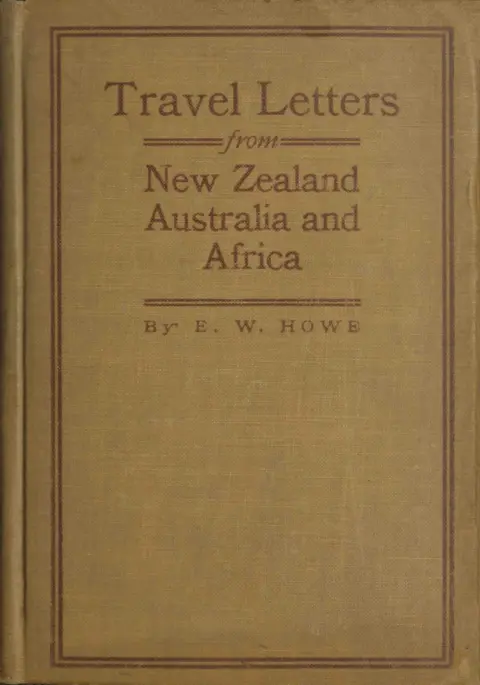
E. W. (Edgar Watson) Howe

David Patterson (Spirit) Hatch

David Patterson (Spirit) Hatch

David Patterson (Spirit) Hatch