THE CLASSIC COLLECTION✦The Thirty Years’ War, 1618-1648CLASSIC FREE BOOKS
The Thirty Years’ War, 1618-1648
Samuel Rawson Gardiner
THE CLASSIC COLLECTION · 1901
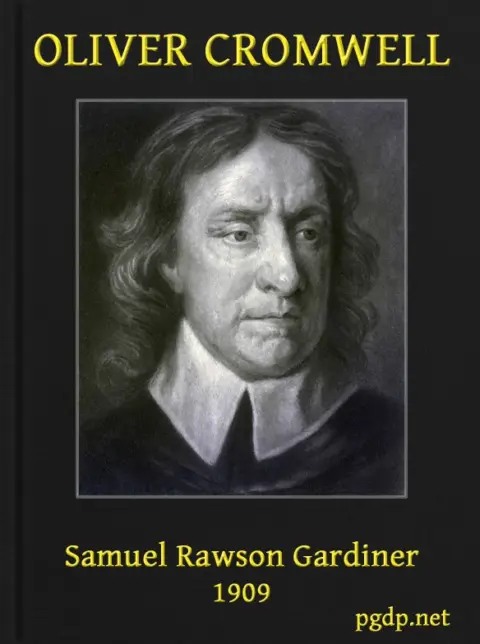
"Oliver Cromwell" by Samuel Rawson Gardiner is a historical account written in the late 19th century. The book provides a comprehensive biography of Oliver Cromwell, the influential Lord Protector of the Commonwealth of England, detailing his rise in political power and governance. It covers the complexities of his character and life, as well as the impact he had on English history, particularly during the English Civil War and the establishment of the Commonwealth. The opening of the text introduces Oliver Cromwell, born in 1599 in Huntingdon, detailing his early life, family background, and educational journey. It highlights Cromwell's moral and religious convictions, exploring how his upbringing, influenced by Puritanism, shaped his approach to politics and governance. Early accounts of his public career are provided, along with insights into the societal norms of his time, setting the stage for understanding his significant role in the conflict between the monarchy and Parliament. The stage is set for later discussions on his military successes and the broad political implications of his leadership during a pivotal moment in English history.
Introduction adapted from the source catalogue; source summaries may be automatically generated.
Free to read · English · 77,325 words · No account needed
MAKE TIME FOR A GOOD BOOK
On by default. Untick to stop anonymous reading totals. Each page counts after 10 seconds in view. How this works.
Anonymous counting is on unless you have switched it off.
It was hard, indeed, in those days, to say where the face of authority was to be found, and Cromwell was far from being able to solve the question. The most innocent suggestion made by his opponents was that the army must purge Parliament and declare the King responsible for the ruin of the country. Goffe declared that it had been revealed to him that the sin of the army lay in its tampering with God's enemies, in other words, with Charles. Cromwell struck in with an expression of distrust in personal revelations. He himself, he explained, was guided by God's dispensations, that is to say, in more modern phrase, by the requirements of the situation. He acknowledged that danger was to be apprehended from the King and House of Lords, and that it was not his intention 'to preserve the one or the other with a visible danger and destruction to the people and the public interest'. On the other hand, he refused to accept it as certain that God had determined to destroy King and Lords, though he thought it probable that it was so. In the end, the constitutional discussion was transferred to a committee.
For a right judgment of Cromwell's character and habits of procedure no evidence exists of such importance as that which has been thus summarised. Here at least is laid bare before us his reluctance to abandon an untenable position, long after it has become clear to more impatient spirits that it has become untenable. Yet his hesitation is not based on any timorous reluctance to act. It arises from his keen sense of the danger of any alternative policy, a sense which will be overmastered as soon as action in one direction or the other becomes a manifest necessity. On November 8, seeing that the Levellers were bent on pushing forward their proposal of manhood suffrage, he obtained a vote from the Army Council directing that both officers and Agitators should be sent back to their regiments. There can be little doubt that the danger was greater than was thus indicated, and that there was truth in a story which charged the Levellers with intending, at this time, to purge the Parliament and to bring the King to trial. On the 11th, at all events, the brave but fanatical Colonel Harrison was calling for the prosecution of the King, and on the same day Cromwell sent to Whalley, who commanded the guard at Hampton Court, to provide against any attempt on Charles's person. Similar warnings had reached Charles himself, and on the evening of the same day he quietly made his escape. On the 14th, after the failure of a scheme for the provision of a vessel from Southampton to carry him to France, he reached Carisbrooke, where the Governor of the Castle was Robert Hammond, Cromwell's cousin. Cromwell's first task was to ensure the discipline of the army. His persistent efforts to keep up negotiation with the King had exposed him to the distrust of the Levellers, and it is said that some of them had resolved to murder him in his bed. There was no time to be lost. On the 15th a rendezvous of a third part of the army was to be held on Corkbush Field, not far from Ware, and there could be no doubt that the Levellers would make desperate attempts to seduce the regiments from their military obedience. To meet the danger, a manifesto was issued in the name of Fairfax and the Army Council, in which Fairfax offered to give his support to the early dissolution of Parliament and to a plan for making the House of Commons 'as near as may be, an equal representative of the people that are to elect'. For the rest, every soldier would be expected to sign a form of adhesion to the General and the Council. Speaking broadly, the conflict was between the men who knew the importance of maintaining the discipline of the army, and those who would reduce it to an armed mob eager to compel Parliament to adopt the democratic system of The Agreement of the People. On the 15th the soldiers gathered to the appointed rendezvous on Corkbush Field, where most of the regiments, with more or less reluctance, submitted to their officers. Two, those of Harrison and Robert Lilburne, both of which had been ordered elsewhere, mutinously made their appearance with copies of The Agreement of the People in their hats, as well as the motto "England's Freedom! Soldiers' Rights!" A few words from Fairfax reduced Harrison's regiment to obedience. Cromwell, finding that Lilburne's men defied his order to remove the papers from their hats, rode into the ranks with his sword drawn, on which the regiment, with one accord, did as it was bidden. Three of the ringleaders were condemned to death by a court-martial held on the spot, and then ordered to throw dice for their lives. He who threw lowest was shot in the presence of the whole force, and the mutiny was brought to an end.
Your reading position is saved on this browser. Take it to another device with a library code. Reading pages adapt to text, rather than matching a printed edition.
BEHIND THE BOOK
This eBook is for the use of anyone anywhere in the United States and most other parts of the world at no cost and with almost no restrictions whatsoever. You may copy it, give it away or re-use it under the terms of the Project Gutenberg License included with this eBook or online at www.gutenberg.org. If you are not located in the United States, you will have to check the laws of the country where you are located before using this eBook. Read the source licence.
The original source file, including credits and licence, is retained by this library. Request an original-format copy at no charge. Please include the book title and Project Gutenberg identifier #45010.
KEEP YOUR CURIOSITY GOING
Cécile Tormay

Moritz Busch
John L. Ransom
Frances Wright
Cécile Tormay

Mabel Potter Daggett