THE CLASSIC COLLECTION✦The Thirty Years’ War, 1618-1648CLASSIC FREE BOOKS
The Thirty Years’ War, 1618-1648
Samuel Rawson Gardiner
THE CLASSIC COLLECTION · 1901
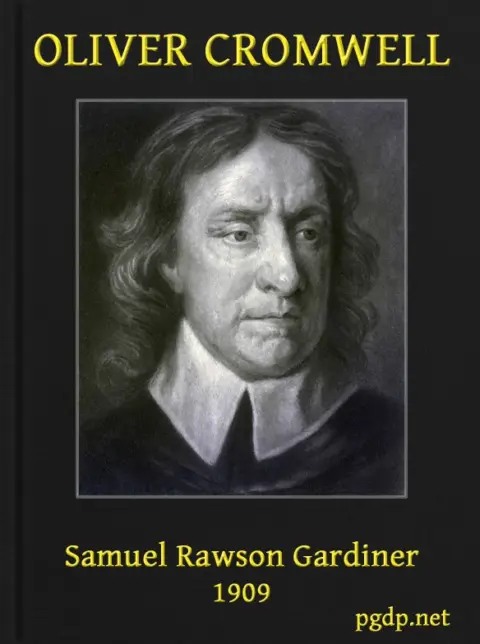
"Oliver Cromwell" by Samuel Rawson Gardiner is a historical account written in the late 19th century. The book provides a comprehensive biography of Oliver Cromwell, the influential Lord Protector of the Commonwealth of England, detailing his rise in political power and governance. It covers the complexities of his character and life, as well as the impact he had on English history, particularly during the English Civil War and the establishment of the Commonwealth. The opening of the text introduces Oliver Cromwell, born in 1599 in Huntingdon, detailing his early life, family background, and educational journey. It highlights Cromwell's moral and religious convictions, exploring how his upbringing, influenced by Puritanism, shaped his approach to politics and governance. Early accounts of his public career are provided, along with insights into the societal norms of his time, setting the stage for understanding his significant role in the conflict between the monarchy and Parliament. The stage is set for later discussions on his military successes and the broad political implications of his leadership during a pivotal moment in English history.
Introduction adapted from the source catalogue; source summaries may be automatically generated.
Free to read · English · 77,325 words · No account needed
MAKE TIME FOR A GOOD BOOK
On by default. Untick to stop anonymous reading totals. Each page counts after 10 seconds in view. How this works.
Anonymous counting is on unless you have switched it off.
Already Cromwell's apparent devotion to the King's person was not unnaturally drawing forth harsh criticisms from those who failed to understand the essential unity underlying divergencies in his action. Some at least amongst the Agitators were joining the Presbyterians in sarcasms directed against the man who was everything by turns; who had at one time taken the Covenant--at another time accepted the disbandment of the army; at another time again had made himself the instrument of the army in its resistance of disbandment. Cromwell took no notice of such calumnies. He was more concerned with the eagerness of the Agitators to march upon Westminster with the object of forcing the Houses to condemn the eleven members who were again stirring, and of crushing the discontent which was simmering amongst the City population. Happily the mere threat of force had been sufficient, and Parliament virtually abandoned its hostile attitude by naming Fairfax Commander-in-chief of all the forces in the country. Would it be so easy to deal with Charles? By July 23, The Heads of the Proposals, probably drawn up by Ireton--who, of all the officers, was the most versed in constitutional lore--with the assistance of Colonel Lambert, having been adopted by the Army Council, were submitted to the King. So far as religion was concerned, they anticipated the settlement of the Revolution of 1688, leaving all forms of worship--including that of the condemned Prayer Book--to the voluntary choice of the worshipper. So far as politics were concerned, provision was to be made, not merely for making the King responsible to Parliament, but for making Parliament responsible to the people. There were to be biennial Parliaments, elected by enlarged constituencies, and a Council of State was to be formed, to whose consent in important matters the King was to bow. The first Council was to remain in office for at least seven years. How it was to be nominated after that was left uncertain, probably till the question had been threshed out in discussion with the King. The army leaders had yet to discover how little profit such a discussion would bring. Charles was not prepared to abandon his old position for that of constitutional King, limited, as he had never been limited before, by opposing forces. If he had spoken his objections clearly out it would have been easy to criticise him as one who was blind to the forces which were governing events: it would have been impossible to hold him morally at fault. The course which he took could not but lead to disaster. Listening to the army leaders, he yet conspired against them, still placing his hopes on the assistance of a Scottish army, and speculating on the chances of a breach between the army on the one side and the Parliament and the City on the other, which would enable him to grasp the reins of power under the old conditions. "I shall see them glad ere long," he told Berkeley, "to accept more equal terms." He even went so far as to imagine that Fairfax and Cromwell were to be bribed by offers of personal advantage to re-establish his fallen throne on other terms than those now offered to him. "You cannot," he told them, "do without me. You will fall into ruin if I do not sustain you." He was partly supported by his knowledge that though the City authorities had yielded to the sway of the army, the City apprentices were in a state of disquiet and had broken into the House of Commons, compelling the members to vote a series of Presbyterian resolutions in defiance of the army. In misplaced confidence in this movement in the City, Charles entered into communication with Lauderdale, the ablest member of a body of Scottish Commissioners who had recently arrived nominally to urge the King to accept the Parliamentary terms, but in reality to negotiate a separate agreement between the Scots and the King. Charles eagerly closed with their proposals and allowed Lauderdale to send a message to Edinburgh urging the equipment of a Scottish army for the invasion of England. Unluckily for him, mob-violence was a feeble reed on which to lean. The Speaker of the two Houses, together with the Independent members, took refuge with the army, and the army treating them as the genuine Parliament reconducted them to Westminster. On August 6 Fairfax was named by the reconstituted Parliament Constable of the Tower, which though it had hitherto been guarded by the citizens was from henceforward to be garrisoned by a detachment of the army, whilst another detachment was left at Westminster as a guard to the Houses. The remainder of the soldiers, to show their power, tramped through the City, passing out by London Bridge on the march to Croydon--Cromwell riding at the head of the cavalry.
Your reading position is saved on this browser. Take it to another device with a library code. Reading pages adapt to text, rather than matching a printed edition.
BEHIND THE BOOK
This eBook is for the use of anyone anywhere in the United States and most other parts of the world at no cost and with almost no restrictions whatsoever. You may copy it, give it away or re-use it under the terms of the Project Gutenberg License included with this eBook or online at www.gutenberg.org. If you are not located in the United States, you will have to check the laws of the country where you are located before using this eBook. Read the source licence.
The original source file, including credits and licence, is retained by this library. Request an original-format copy at no charge. Please include the book title and Project Gutenberg identifier #45010.
KEEP YOUR CURIOSITY GOING
Cécile Tormay

Moritz Busch
John L. Ransom
Frances Wright
Cécile Tormay

Mabel Potter Daggett