THE CLASSIC COLLECTION✦The Thirty Years’ War, 1618-1648CLASSIC FREE BOOKS
The Thirty Years’ War, 1618-1648
Samuel Rawson Gardiner
THE CLASSIC COLLECTION · 1901
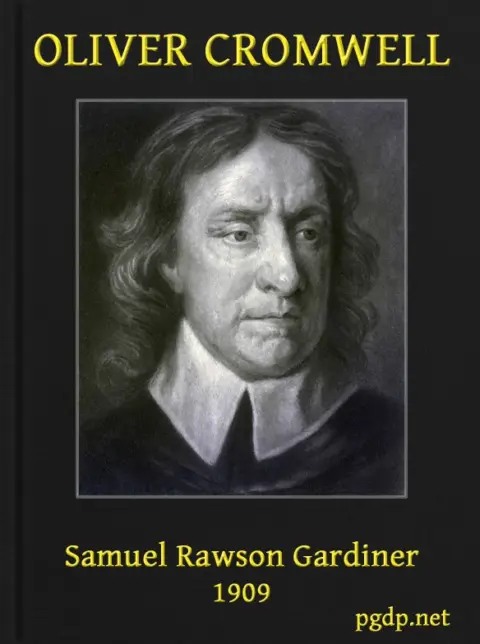
"Oliver Cromwell" by Samuel Rawson Gardiner is a historical account written in the late 19th century. The book provides a comprehensive biography of Oliver Cromwell, the influential Lord Protector of the Commonwealth of England, detailing his rise in political power and governance. It covers the complexities of his character and life, as well as the impact he had on English history, particularly during the English Civil War and the establishment of the Commonwealth. The opening of the text introduces Oliver Cromwell, born in 1599 in Huntingdon, detailing his early life, family background, and educational journey. It highlights Cromwell's moral and religious convictions, exploring how his upbringing, influenced by Puritanism, shaped his approach to politics and governance. Early accounts of his public career are provided, along with insights into the societal norms of his time, setting the stage for understanding his significant role in the conflict between the monarchy and Parliament. The stage is set for later discussions on his military successes and the broad political implications of his leadership during a pivotal moment in English history.
Introduction adapted from the source catalogue; source summaries may be automatically generated.
Free to read · English · 77,325 words · No account needed
MAKE TIME FOR A GOOD BOOK
On by default. Untick to stop anonymous reading totals. Each page counts after 10 seconds in view. How this works.
Anonymous counting is on unless you have switched it off.
No words can better depict the state of Cromwell's mind at this time. Of the religion to which the King and his followers clung there is no question in his thoughts. He would be unwilling to listen to the suggestion that it was to be counted as religion in any worthy sense. Parliament, mutilated as it was, is the authority ordained by God to keep order in the land. For that very reason Parliament was bound to allow full liberty to God's children, whatever might be their differences on matters of discipline or practice. Within the limits of Puritanism, no intolerance might be admitted. A common spiritual emotion--not external discipline or intellectual agreement--was the test of brotherhood. So resolved was the House of Commons to discountenance this view of the case, that in ordering the publication of Cromwell's two despatches, it mutilated both of them by the omission of the passages advocating liberty of conscience.
At the present day we are inclined to blame Cromwell, not for going too far in the direction of toleration, but for not going far enough. In the middle of the seventeenth century the very idea of toleration in any shape was peculiar to a chosen few. That the majority of the Puritan clergy were bitterly opposed to it affords no matter for surprise. As men of some education and learning, and with a professional confidence in the certainty of their own opinions, they looked with contempt not merely on views different from their own, but also on the persons who, often without the slightest mental culture, ventured to produce out of the Bible schemes of doctrine sometimes immoral, and very often--at least in the opinions of the Presbyterian divines--blasphemous and profane. Even where this was not the case, there remained the danger of seeing the Church of England--which was held to have been purified by the abolition of episcopacy and the banishment of the ceremonies favoured by the bishops--degenerate into a chaos in which a thousand sects battled for their respective creeds, instead of meekly accepting the gospel dealt out to them by their well-instructed pastors. Richard Baxter was a favourable specimen of the Presbyterian clergy. Conciliatory in temper, he was yet an ardent controversialist, and, for a few months after the battle of Naseby, he accepted the position of chaplain to Whalley's regiment, with the avowed intention of persuading the sectaries to abandon their evil ways. He soon discovered that the greater part of the infantry of the New Model Army was by no means sectarian or even Puritan in its opinions. "The greatest part of the common soldiers," he wrote, "especially of the foot, were ignorant men of little religion, abundance of them such as had been taken prisoners or turned out of garrisons under the King, and had been soldiers in his army; and these would do anything to please their officers." In other words, the sectarian officers could command the services of the army as a whole, backed as they would be by the most energetic of the private soldiers. Nor was Baxter longer in discovering that the military preachers were ready to question received doctrine in politics as well as in religion. "I perceived," he declared, "they took the King for a tyrant and an enemy, and really intended to master him, and they thought if they might fight against him they might kill or conquer him, and if they might conquer they were never more to trust him further than he was in their power; and that they thought it folly to irritate him either by wars or contradictions in Parliament, if so be they must needs take him for their King, and trust him with their lives when they had thus displeased him." These audacious reasoners went further still. "What," they asked, "were the Lords of England but William the Conqueror's colonels, or the Barons but his majors, or the Knights but his captains?" "They plainly showed me," complained Baxter, "that they thought God's providence would cast the trust of religion and the Kingdom upon them as conquerors; they made nothing of all the most wise and godly in the armies and garrisons that were not of their way. Per fas aut nefas, by law or without it, they were resolved to take down not only Bishops and liturgy and ceremonies, but all that did withstand their way. They ... most honoured the Separatists, Anabaptists and Antinomians; but Cromwell and his council took on them to join themselves to no party, but to be for the liberty of all."
Your reading position is saved on this browser. Take it to another device with a library code. Reading pages adapt to text, rather than matching a printed edition.
BEHIND THE BOOK
This eBook is for the use of anyone anywhere in the United States and most other parts of the world at no cost and with almost no restrictions whatsoever. You may copy it, give it away or re-use it under the terms of the Project Gutenberg License included with this eBook or online at www.gutenberg.org. If you are not located in the United States, you will have to check the laws of the country where you are located before using this eBook. Read the source licence.
The original source file, including credits and licence, is retained by this library. Request an original-format copy at no charge. Please include the book title and Project Gutenberg identifier #45010.
KEEP YOUR CURIOSITY GOING
Cécile Tormay

Moritz Busch
John L. Ransom
Frances Wright
Cécile Tormay

Mabel Potter Daggett