THE CLASSIC COLLECTION✦The Thirty Years’ War, 1618-1648CLASSIC FREE BOOKS
The Thirty Years’ War, 1618-1648
Samuel Rawson Gardiner
THE CLASSIC COLLECTION · 1901
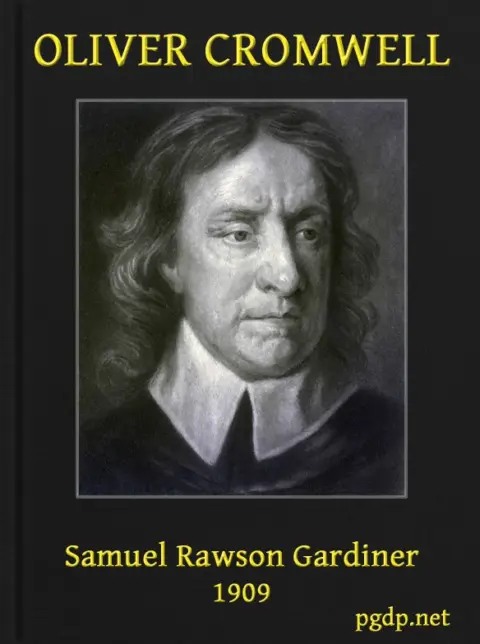
"Oliver Cromwell" by Samuel Rawson Gardiner is a historical account written in the late 19th century. The book provides a comprehensive biography of Oliver Cromwell, the influential Lord Protector of the Commonwealth of England, detailing his rise in political power and governance. It covers the complexities of his character and life, as well as the impact he had on English history, particularly during the English Civil War and the establishment of the Commonwealth. The opening of the text introduces Oliver Cromwell, born in 1599 in Huntingdon, detailing his early life, family background, and educational journey. It highlights Cromwell's moral and religious convictions, exploring how his upbringing, influenced by Puritanism, shaped his approach to politics and governance. Early accounts of his public career are provided, along with insights into the societal norms of his time, setting the stage for understanding his significant role in the conflict between the monarchy and Parliament. The stage is set for later discussions on his military successes and the broad political implications of his leadership during a pivotal moment in English history.
Introduction adapted from the source catalogue; source summaries may be automatically generated.
Free to read · English · 77,325 words · No account needed
MAKE TIME FOR A GOOD BOOK
On by default. Untick to stop anonymous reading totals. Each page counts after 10 seconds in view. How this works.
Anonymous counting is on unless you have switched it off.
Cromwell knew that more than his own name was required to rally the force needed at this desperate conjuncture. At his instance Parliament appointed the new Earl of Manchester--who, as Lord Kimbolton, had been the one member of the House of Lords marked out by the King for impeachment together with the five members of the House of Commons--as Commander of the Eastern Association, and ordered an army of 10,000 men to be raised within its limits. Whilst in the South, Essex raised the siege of Gloucester, and was successful enough at Newbury to make good his retreat to London, Manchester's new army, in which Cromwell commanded the horse, defeated a party of Royalists at Winceby, compelled Newcastle to raise the siege of Hull, and retook Lincoln, which had fallen into the hands of the enemy. Lincolnshire was now added to the Eastern Association, the one part of England on which the eyes of the Parliamentary chiefs could rest with complete satisfaction.
Sooner or later Cromwell would have to face other questions than those of military efficiency. When Pym and his supporters drew up the Grand Remonstrance, they did not contemplate the introduction of any principle of religious liberty. The Church was to be exclusively Puritan, on some plan to be settled by Parliament upon the advice of an Assembly of Divines. That Assembly met on July 1, 1643, and if it had been left to itself, would probably have recommended the adoption of some non-episcopalian system of Church-government; whilst Parliament, faithful to the traditions of English governments, would have taken care that the clergy should be placed under some form of lay government emanating from Parliament itself. In the summer of 1643 it was impossible to separate questions of ecclesiastical organisation from those arising out of the political necessities of the hour. It was known that Charles was angling for the support of Ireland and Scotland, and if Parliament was not to be overborne, it was necessary to meet him on the same ground. In Ireland Charles was fairly successful. On September 15 his Lord Lieutenant obtained from the Confederate Catholics, who were in arms against his Government, a cessation of hostilities, which would enable him to divert a portion of his own troops to the defence of the King's cause in England; ultimately, as he hoped, to be followed by an army levied amongst the Irish Catholics. Charles's attempt to win Scotland to his side was less successful. The predominant party at Edinburgh was that led by the Marquis of Argyle, who had climbed to power with the help of the Presbyterian organisation of the Church, and who justly calculated that, if Charles gained his ends in England, the weight of his victorious sword would be thrown into the balance of the party led by the Duke of Hamilton. That party however, embracing as it did the bulk of the Scottish nobility, would not only have made short work of Argyle's political dictatorship, but would have taken good care that the Presbyterian clergy should, in some way or other, be reduced to dependence on the laity. When, therefore, English Parliamentary Commissioners arrived in Edinburgh to treat for military assistance, they were confronted by a demand that they should accept a document known as the Solemn League and Covenant, binding England to accept the full Scottish Presbyterian system with its Church Courts, claiming as by Divine right to settle all ecclesiastical matters without the interference of the lay government. It is true that this demand was somewhat veiled in the engagement to reform religion in the Church of England, 'according to the example of the best reformed Churches,' so as to bring the Churches in both nations to the nearest conjunction and uniformity. The leading English Commissioner, however, the younger Sir Henry Vane, was one of the few Englishmen who at this time championed a system of religious liberty, and he now succeeded in keeping a door open by proposing the addition of a few words, declaring that religion was to be reformed in England according to the Word of God, as well as by the example of the best reformed Churches. In this form the Covenant was brought back to Westminster, and in this form it was sworn to by the members of Parliament, and required to be sworn to by all Englishmen above the age of eighteen. Few indeed amongst the members of Parliament willingly placed their necks under the yoke. It was the price paid for Scottish armed assistance, simply because that assistance could be had on no other terms. The alliance with the Scots was the last work of Pym, who died before the Scottish army, the aid of which he had so dearly purchased, crossed the Borders into England.
Your reading position is saved on this browser. Take it to another device with a library code. Reading pages adapt to text, rather than matching a printed edition.
BEHIND THE BOOK
This eBook is for the use of anyone anywhere in the United States and most other parts of the world at no cost and with almost no restrictions whatsoever. You may copy it, give it away or re-use it under the terms of the Project Gutenberg License included with this eBook or online at www.gutenberg.org. If you are not located in the United States, you will have to check the laws of the country where you are located before using this eBook. Read the source licence.
The original source file, including credits and licence, is retained by this library. Request an original-format copy at no charge. Please include the book title and Project Gutenberg identifier #45010.
KEEP YOUR CURIOSITY GOING
Cécile Tormay

Moritz Busch
John L. Ransom
Frances Wright
Cécile Tormay

Mabel Potter Daggett