THE CLASSIC COLLECTION✦The Thirty Years’ War, 1618-1648CLASSIC FREE BOOKS
The Thirty Years’ War, 1618-1648
Samuel Rawson Gardiner
THE CLASSIC COLLECTION · 1901
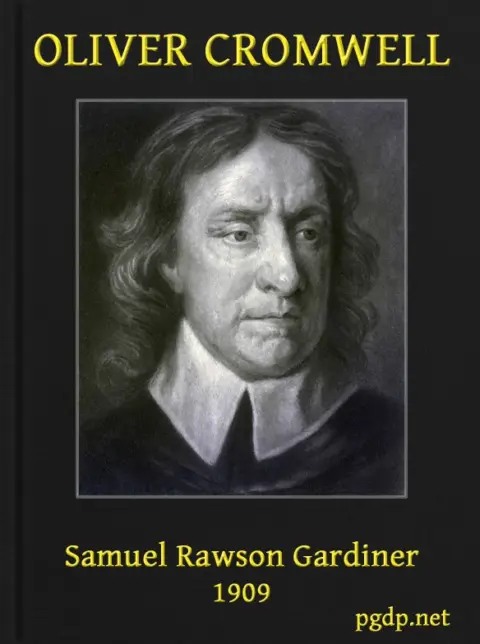
"Oliver Cromwell" by Samuel Rawson Gardiner is a historical account written in the late 19th century. The book provides a comprehensive biography of Oliver Cromwell, the influential Lord Protector of the Commonwealth of England, detailing his rise in political power and governance. It covers the complexities of his character and life, as well as the impact he had on English history, particularly during the English Civil War and the establishment of the Commonwealth. The opening of the text introduces Oliver Cromwell, born in 1599 in Huntingdon, detailing his early life, family background, and educational journey. It highlights Cromwell's moral and religious convictions, exploring how his upbringing, influenced by Puritanism, shaped his approach to politics and governance. Early accounts of his public career are provided, along with insights into the societal norms of his time, setting the stage for understanding his significant role in the conflict between the monarchy and Parliament. The stage is set for later discussions on his military successes and the broad political implications of his leadership during a pivotal moment in English history.
Introduction adapted from the source catalogue; source summaries may be automatically generated.
Free to read · English · 77,325 words · No account needed
MAKE TIME FOR A GOOD BOOK
On by default. Untick to stop anonymous reading totals. Each page counts after 10 seconds in view. How this works.
Anonymous counting is on unless you have switched it off.
Spain, with her supply of treasure from the Indies cut short, was incapacitated from serious warlike effort, and already the alliance was forged which was to force her into submission. Even before the victory was won at Santa Cruz a treaty had been signed between Oliver and Louis XIV., arranging for a joint attack on the Spanish fortresses of Dunkirk, Mardyke and Gravelines, the first two to fall to the share of England, the last to that of France. An English force of 6,000 men was to be combined with a French force of 20,000, the blockade at sea being entrusted to an English fleet. Half the English contingent was at once despatched under Sir John Reynolds, but either the necessities of war, or the reluctance of Mazarin to carry out his engagements, led him to prefer the distant siege of Montmédy to an attack on the coast towns, and it was only after a warm expostulation from the Protector that measures were taken to carry out the treaty. Of the quality of the English contingent there could be no doubt. Turenne--whose praise in military matters was praise indeed--declared that he had never seen finer troops. As soon as Mazarin was found to be in earnest, the remaining 3,000 men were despatched to Flanders, and before the end of October Mardyke was captured and loyally placed in the hands of an English garrison. Farther than this it was impossible to go at so advanced a season. In the summer of 1658, the combined armies defeated the Spaniards on the Dunes, and Dunkirk itself was added to the possessions of England on the Continent.
The wisdom of a foreign policy which gave England a land-frontier in Europe has been often discussed, and the conflict of argument has not yet died away. It is true that in later years this country has had forced on it the task of securing colonial possessions which, in some cases for thousands of miles, march with territories held by independent, and possibly hostile States. There is, however, no comparison between an enormous territory, such as the Dominion of Canada, inhabited by an increasing and loyal population, and a fortified post, such as that of Dunkirk, the inhabitants of which were alien in race and religion from the English garrison which was to hold them down, especially as Dunkirk was a mere port on the edge of a Continent held by great nations, two of which coveted its possession, and would certainly leave no stone unturned to recover it. The only parallels in our history worth considering are the occupation of Calais in the middle ages, and of Gibraltar in modern times. It is idle to speculate whether, if Dunkirk had not been surrendered amicably to France by Charles II., it would have undergone the fate of Calais, but it is not idle to remind ourselves that, whilst Gibraltar is occupied in order to keep the sea open, and has never been used as a threat to the independence of Spain, Dunkirk, as we know from Thurloe, to whom all the secrets of Oliver's mind were revealed, was occupied in the first place, as a menace to the Dutch maritime power, and in the second place, to enable England to interfere with effect against either France or Spain, whilst it was believed by Mazarin that Oliver's main object was to crush the growing power of France. These pretensions might be condemned or defended on abstract grounds, leaving out of account any particular circumstances or any particular time. What is absolutely certain is that such a policy, if it were to be successful, required not merely the prolongation of Oliver's life, but the continuation, and more than the continuation of his military system. At a time when the English nation--it matters not whether with just cause, or from mere impatience of a taxation which it was well able to bear--was bitterly complaining of the heavy burdens imposed by the necessity of keeping up the existing army, Oliver was embarking on a foreign policy which would topple down with a crash unless that army were doubled--perhaps even trebled--to make head against the enemies it would arouse. It was a policy condemned in advance if only by the desperate financial embarrassments which must follow in its train, when France was no longer bound to England by her need of help against Spain. The hostility of France might indeed be confronted by a Government strong in the devotion of its people, and in the accumulated wealth of another half-century of commerce--strong too in an alliance with military Powers, based on the need of joining in resistance to a common danger. If Oliver had been granted those twenty more years of life which enthusiastic worshippers hold necessary for the success of his schemes, it can hardly be doubted that a European coalition would have been formed against the Protector long before it was formed against Louis XIV.
Your reading position is saved on this browser. Take it to another device with a library code. Reading pages adapt to text, rather than matching a printed edition.
BEHIND THE BOOK
This eBook is for the use of anyone anywhere in the United States and most other parts of the world at no cost and with almost no restrictions whatsoever. You may copy it, give it away or re-use it under the terms of the Project Gutenberg License included with this eBook or online at www.gutenberg.org. If you are not located in the United States, you will have to check the laws of the country where you are located before using this eBook. Read the source licence.
The original source file, including credits and licence, is retained by this library. Request an original-format copy at no charge. Please include the book title and Project Gutenberg identifier #45010.
KEEP YOUR CURIOSITY GOING
Cécile Tormay

Moritz Busch
John L. Ransom
Frances Wright
Cécile Tormay

Mabel Potter Daggett