THE CLASSIC COLLECTION✦The Thirty Years’ War, 1618-1648CLASSIC FREE BOOKS
The Thirty Years’ War, 1618-1648
Samuel Rawson Gardiner
THE CLASSIC COLLECTION · 1901
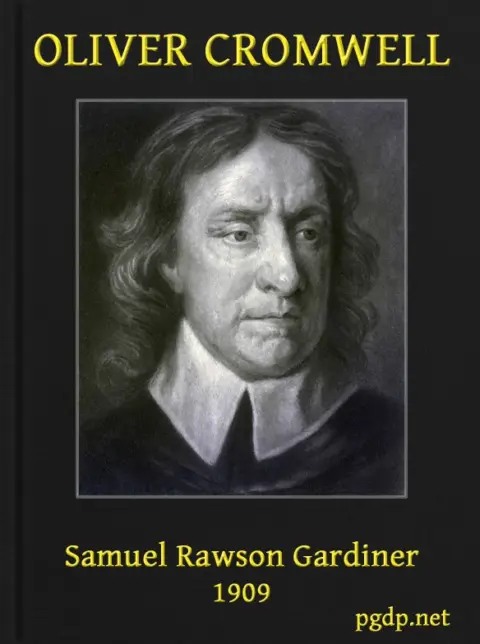
"Oliver Cromwell" by Samuel Rawson Gardiner is a historical account written in the late 19th century. The book provides a comprehensive biography of Oliver Cromwell, the influential Lord Protector of the Commonwealth of England, detailing his rise in political power and governance. It covers the complexities of his character and life, as well as the impact he had on English history, particularly during the English Civil War and the establishment of the Commonwealth. The opening of the text introduces Oliver Cromwell, born in 1599 in Huntingdon, detailing his early life, family background, and educational journey. It highlights Cromwell's moral and religious convictions, exploring how his upbringing, influenced by Puritanism, shaped his approach to politics and governance. Early accounts of his public career are provided, along with insights into the societal norms of his time, setting the stage for understanding his significant role in the conflict between the monarchy and Parliament. The stage is set for later discussions on his military successes and the broad political implications of his leadership during a pivotal moment in English history.
Introduction adapted from the source catalogue; source summaries may be automatically generated.
Free to read · English · 77,325 words · No account needed
MAKE TIME FOR A GOOD BOOK
On by default. Untick to stop anonymous reading totals. Each page counts after 10 seconds in view. How this works.
Anonymous counting is on unless you have switched it off.
The domestic life of the Protector was all that might be expected from a man whose heart was as warm as his spirit was high. In the midst of his most arduous labours he seldom passed a day, as long as he was at Whitehall, on which he did not dine and sup in the family circle, and up till his aged mother's death in 1654 he was in the habit of visiting her every night before she retired to rest. Of his four daughters two were already married, the eldest, Bridget, after the death of her first husband, Ireton, having become the wife of Fleetwood; and the second, the sprightly and graceful Elizabeth, had married John, otherwise Lord Claypole, whom the Protector had entrusted with the charge of his stables, under the style of Master of the Horse. On November 11, 1657, some months after the commencement of the second Protectorate, Frances, the youngest of the four, was married to Robert Rich, the grandson of the Earl of Warwick, the Lord High Admiral of the Long Parliament, and in the following week her sister Mary was married to Lord Fauconberg. The first of these two marriages was long delayed by the Protector's doubts as to the character of the suitor, as well as by his dissatisfaction with the proposed settlement--Oliver's moral sense once more entwining itself with his practical decisions. It was said at the time that he valued the Fauconberg alliance more than that with the Warwick family, as winning over a Royalist peer to his side.
Not one of Oliver's four daughters ever gave their father cause for real anxiety. Though they were less strenuous than himself and sometimes needed, in his judgment, to be spurred on to higher spiritual aims, he never seems to have addressed them otherwise than as those who were worthy of parental love. If he really preferred Lady Claypole to his other daughters, it was most likely because she was more sprightly and less outwardly pious than her sisters. "Your sister Claypole," he had written to Bridget soon after she had become Ireton's wife, "is, I trust in mercy, exercised with some perplexed thoughts. She sees her own vanity and carnal mind; bewailing it. She seeks after--as I hope also--what will satisfy: and thus to be a seeker is to be of the best sect next to a finder; and such an one shall every faithful humble seeker be at the end. Happy seeker, happy finder! Who ever tasted that the Lord is gracious, without some sense of self, vanity, and badness? Who ever tasted that graciousness of His, and could go less in desire--less than pressing after full enjoyment?" Of Bridget herself he writes with fuller assurance. "Dear Heart," he continues, "press on; let no husband, let not anything cool thy affections after Christ. I hope he will be an occasion to inflame them. That which is best worthy of love in thy husband is that of the image of Christ he bears. Look on that, and love it best, and all the rest for that. I pray for thee and him; do so for me." Yet even Bridget was far from answering to the modern conception of the Puritan lady, as is testified by the splendid yellow silk petticoat which has been handed down from generation to generation in the family of her eldest daughter. Nevertheless it was not Bridget's vanity which was most on her father's mind. Five years later, in writing to his wife from Edinburgh, he begs her to 'mind poor Betty,' i.e. Elizabeth, Lady Claypole, 'of the Lord's great mercy,' and to urge her to 'take heed of a departing heart and of being cozened with worldly vanities and worldly company, which I doubt she is too subject to'. The liveliness which caused such searchings of heart was doubtless the tie which bound more firmly Oliver's love to her. One day we hear of her demurely assuring Whitelocke that it was fear of his great influence which had caused her father to send him out of the way to Sweden when he was about to assume the Protectorate. At another time we are told of her driving with her cousin Ingoldsby and two of her sisters, all the three ladies dressed in green, whilst the courtier-like crowd watch their movements and bow as they pass. Then we hear of the scornful language in which, with the pride of a lady by birth as well as by her father's advancement, she accounted for the absence of the wives of some of the Major-Generals from an entertainment at which she took part: "I warrant you they are washing their dishes at home as they used to do". Yet withal she had an open ear for trouble, and a ready tongue to plead not in vain the cause of the innocent with her father. By the summer of 1657 her health had been failing, and at one time her life had been despaired of.
Your reading position is saved on this browser. Take it to another device with a library code. Reading pages adapt to text, rather than matching a printed edition.
BEHIND THE BOOK
This eBook is for the use of anyone anywhere in the United States and most other parts of the world at no cost and with almost no restrictions whatsoever. You may copy it, give it away or re-use it under the terms of the Project Gutenberg License included with this eBook or online at www.gutenberg.org. If you are not located in the United States, you will have to check the laws of the country where you are located before using this eBook. Read the source licence.
The original source file, including credits and licence, is retained by this library. Request an original-format copy at no charge. Please include the book title and Project Gutenberg identifier #45010.
KEEP YOUR CURIOSITY GOING
Cécile Tormay

Moritz Busch
John L. Ransom
Frances Wright
Cécile Tormay

Mabel Potter Daggett