THE CLASSIC COLLECTION✦The Thirty Years’ War, 1618-1648CLASSIC FREE BOOKS
The Thirty Years’ War, 1618-1648
Samuel Rawson Gardiner
THE CLASSIC COLLECTION · 1901
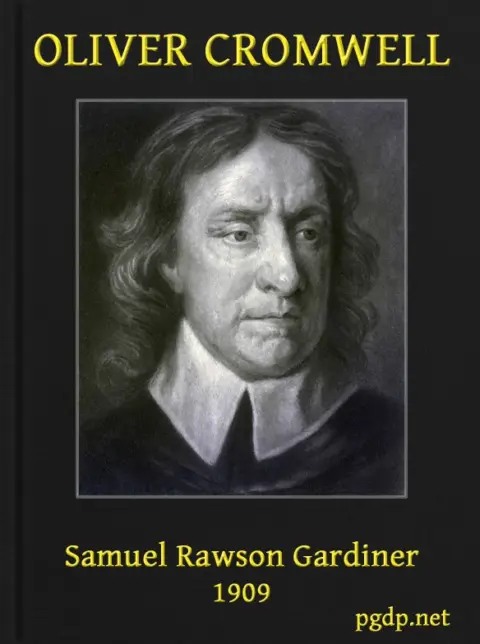
"Oliver Cromwell" by Samuel Rawson Gardiner is a historical account written in the late 19th century. The book provides a comprehensive biography of Oliver Cromwell, the influential Lord Protector of the Commonwealth of England, detailing his rise in political power and governance. It covers the complexities of his character and life, as well as the impact he had on English history, particularly during the English Civil War and the establishment of the Commonwealth. The opening of the text introduces Oliver Cromwell, born in 1599 in Huntingdon, detailing his early life, family background, and educational journey. It highlights Cromwell's moral and religious convictions, exploring how his upbringing, influenced by Puritanism, shaped his approach to politics and governance. Early accounts of his public career are provided, along with insights into the societal norms of his time, setting the stage for understanding his significant role in the conflict between the monarchy and Parliament. The stage is set for later discussions on his military successes and the broad political implications of his leadership during a pivotal moment in English history.
Introduction adapted from the source catalogue; source summaries may be automatically generated.
Free to read · English · 77,325 words · No account needed
MAKE TIME FOR A GOOD BOOK
On by default. Untick to stop anonymous reading totals. Each page counts after 10 seconds in view. How this works.
Anonymous counting is on unless you have switched it off.
Before the end of 1654 two fleets sailed on their several missions. The one, under Blake, entered the Mediterranean, where he was most hospitably received by the Governors of the Spanish ports and by the officials of the Grand Duke of Tuscany at Leghorn. He ransomed a number of English captives at Algiers, but the Bey of Tunis, some of whose subjects had recently been sold for galley-slaves to the Knights of Malta by an English scoundrel, was naturally less compliant. Blake destroyed nine of his vessels at Porto Farina, but Tunis itself was inaccessible, and he was unable to recover a single English slave from that quarter. Penn sailed for Barbados with some 2,500 soldiers on board under Venables. Both in Barbados and in other English islands reinforcements were shipped, and with this ill-compounded force a landing was effected in Hispaniola. The attempt to seize on the city of San Domingo failed, and the expedition sailed for Jamaica, at that time little more than a desert island, and established itself in possession. Some years passed before the colony became self-supporting, but Oliver was unremitting in his resolution not only to increase the numbers of the first military settlers, but to supply them with all things necessary for the foundation of homes in the wilderness. It was annoying that the first operations in the Spanish West Indies had opened with a check, but it was doubtless fortunate that the new English colony was not built up on Spanish foundations. The soldiers who, on their march towards San Domingo, pelted with oranges an image of the Virgin which they had torn down from the walls of a deserted monastery, would hardly have been at their best in the midst of a Roman Catholic population.
Much to Oliver's surprise, the news of the proceedings of his men in Hispaniola aroused the bitterest indignation at Madrid, an indignation already, to some extent, aroused when Blake sailed out through the Straits of Gibraltar to meet and capture the treasure ships expected from America. The features of Philip IV. as--thanks to the brush of Velasquez--they meet us in every noted gallery in Europe, are not those of a man remarkable for wisdom, but he had none of the lingering hesitancy of his grandfather, Philip II. He ordered the seizure of the property of English merchants in Spanish harbours; and Oliver, after balancing for two years between France and Spain, had the question decided by his own mistaken belief that the world of Elizabeth remained unchanged. The breach with Spain necessitated a reconsideration of the relations between England and France. Ever since his accession to the Protectorate, Oliver had evaded the demands of the French Ambassador, Bordeaux, for a cessation of the war of reprisals at sea which had been bequeathed him by the Commonwealth. As English privateers captured more prizes than those of the French, he was in no hurry to bring the situation to an end till he obtained of Mazarin, the virtual ruler of France, a tacit understanding that the Huguenots should no longer be maltreated, and an express undertaking to expel from France the English Royal family and the chief Royalists in attendance on the exiled Court. Whilst these questions were still under discussion, an event occurred which, more than any other single action in his life, brought into relief the higher side of Cromwell's character and policy. In January, 1655, the young Duke of Savoy--or rather his mother, who, though he had come to years of discretion, acted in his name--ordered that the Vaudois, whose religion, though now akin to the Protestantism of the seventeenth century, dated from mediæval times, should be removed from the plain at the foot of the Piedmontese Valleys into which they had spread, to the upper and barer reaches, on the pretext that they had broken the bounds assigned them by his ancestors. In April his troops entered the valley, slaying and torturing as they went. When the news reached England in May, Oliver's heart was moved to its depths. He ordered a day of humiliation to be held, and a house-to-house visitation to collect money for the sufferers. Upwards of £38,000 was gathered in the end, the Protector heading the list with £2,000. He sent a Minister to Turin to remonstrate, but his warmest appeals were addressed to Mazarin, the all-powerful Minister of Louis XIV., as some French troops, acting as allies of the Duke in his war against the Spaniards in Italy, had been concerned in the massacre. Mazarin was plainly told that there would be no treaty with France till these massacres were stopped. The French Minister had been so long deluded of his hope of a treaty that this threat alone might not have terrified him, but he feared that Oliver would hire the Protestant Swiss to take part against the Duke of Savoy, and that all thought of fighting the Spaniards in Italy would have to be laid aside for that year. Communications passed between Paris and Turin, and the Duke of Savoy issued his pardon--such was the term employed--to the surviving Vaudois.
Your reading position is saved on this browser. Take it to another device with a library code. Reading pages adapt to text, rather than matching a printed edition.
BEHIND THE BOOK
This eBook is for the use of anyone anywhere in the United States and most other parts of the world at no cost and with almost no restrictions whatsoever. You may copy it, give it away or re-use it under the terms of the Project Gutenberg License included with this eBook or online at www.gutenberg.org. If you are not located in the United States, you will have to check the laws of the country where you are located before using this eBook. Read the source licence.
The original source file, including credits and licence, is retained by this library. Request an original-format copy at no charge. Please include the book title and Project Gutenberg identifier #45010.
KEEP YOUR CURIOSITY GOING
Cécile Tormay

Moritz Busch
John L. Ransom
Frances Wright
Cécile Tormay

Mabel Potter Daggett