THE CLASSIC COLLECTION✦The Thirty Years’ War, 1618-1648CLASSIC FREE BOOKS
The Thirty Years’ War, 1618-1648
Samuel Rawson Gardiner
THE CLASSIC COLLECTION · 1901
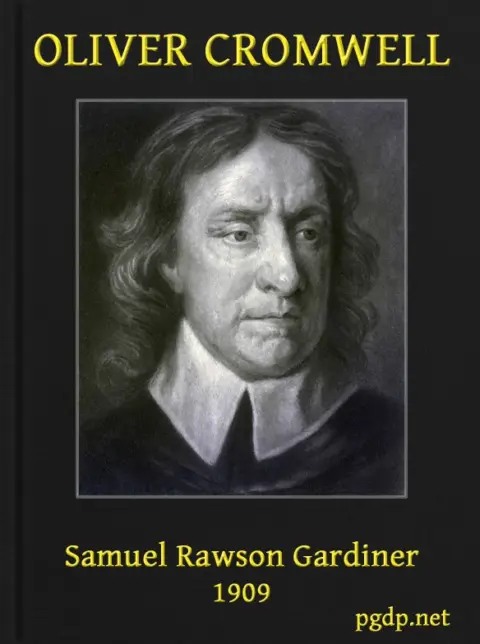
"Oliver Cromwell" by Samuel Rawson Gardiner is a historical account written in the late 19th century. The book provides a comprehensive biography of Oliver Cromwell, the influential Lord Protector of the Commonwealth of England, detailing his rise in political power and governance. It covers the complexities of his character and life, as well as the impact he had on English history, particularly during the English Civil War and the establishment of the Commonwealth. The opening of the text introduces Oliver Cromwell, born in 1599 in Huntingdon, detailing his early life, family background, and educational journey. It highlights Cromwell's moral and religious convictions, exploring how his upbringing, influenced by Puritanism, shaped his approach to politics and governance. Early accounts of his public career are provided, along with insights into the societal norms of his time, setting the stage for understanding his significant role in the conflict between the monarchy and Parliament. The stage is set for later discussions on his military successes and the broad political implications of his leadership during a pivotal moment in English history.
Introduction adapted from the source catalogue; source summaries may be automatically generated.
Free to read · English · 77,325 words · No account needed
MAKE TIME FOR A GOOD BOOK
On by default. Untick to stop anonymous reading totals. Each page counts after 10 seconds in view. How this works.
Anonymous counting is on unless you have switched it off.
Distrust of the constituencies was the prominent feature of Cromwell's next move. The compromise offered by him of the temporary establishment of a non-elective body to prepare a basis of settlement whilst Parliamentary institutions remained in abeyance, was now adopted by the officers. Lambert,--who advocated a scheme for establishing a Council of State, apparently with provision for the increased independence of the executive, together with the election of a Parliament with restricted functions,--was unable to enforce his views. A small Council of State was established to carry on current affairs, but it was in the Council of Officers that the main question of the constitution was to be determined. Cromwell, after some hesitation, rallied to a very different scheme which had been suggested by Harrison, the brilliant soldier who dreaded to see the government in the hands of any but the Saints. Cromwell, however, whilst accepting Harrison's views on the whole, determined to modify them, in order to make the new assembly something more than a group of pious fanatics. He was consequently now anxious that it should include notable personages--even Fairfax was suggested--who had contended against the King, but who had no connection with the extreme sections of the community which found favour in Harrison's eyes. It was eventually resolved that the Council of Officers should invite nominations from the Congregational Churches in each county, reserving to itself the power of rejecting persons so named, and also of adding names which found no place on the list. On June 8 the persons finally selected received writs issued in the name of Cromwell as Lord General. An attempt had been made to secure the inclusion not only of Fairfax but of Vane, but neither of them would accept a place in the new assembly.
On July 4 the nominees of the army took their seats at Westminster. Cromwell, at all events, threw himself entirely into the spirit of the occasion. In a long speech he manifested his delight at seeing the government at last entrusted to the hands of the godly. No such authority, he proclaimed triumphantly, had ever before been entrusted to men on the ground that they owned God and were owned by Him. For once the emotional side of his nature had gained the upper hand over his practical common-sense. In long detail he told of the misconduct of the late Parliament, and repelled the idea that he had had any intention of substituting his own authority for that of the discarded House. It had been incumbent on him and his colleagues 'not to grasp at the power ourselves, or to keep it in military hands, no, not for a day, but, as far as God enabled us with strength and ability, to put it into the hands of proper persons that might be called from the several parts of the nation'. "This necessity," he proceeded to aver; "and I hope we may say for ourselves, this integrity of concluding to divest the sword of all power in the civil administrations, hath been that that hath moved us to put you to this trouble." Then, enlarging on the providential character of the mission of the members of the new assembly, he urged them with many Scriptural quotations to take up their authority as men whom God had placed as rulers of the land. What, then, was to be said of that ideal of elected Parliaments, which had sunk so deeply into the minds of that generation? "If it were a time," he suggested, "to compare your standing with those that have been called by the suffrages of the people--which who can tell how soon God may fit the people for such a thing? None can desire it more than I! Would all were the Lord's people; as it was said, 'Would all the Lord's people were prophets': I would all were fit to be called." In time, indeed, this might be possible when the good and religious conduct of this assembly had won the people to the love of godliness. "Is not this the likeliest way to bring them to their liberties?" Finally, after much enforcement of the encouragements held forth by the Prophets and the Psalmists, he resigned all the power provisionally exercised by himself into the hands of his hearers, announcing to them that their power also was to be provisional. They were to hold it only till November 3, 1654, and then to give place to a second assembly to be elected by themselves--an assembly which was to sit for no more than a year, in which time it was to make provision for the future government of the country.
Your reading position is saved on this browser. Take it to another device with a library code. Reading pages adapt to text, rather than matching a printed edition.
BEHIND THE BOOK
This eBook is for the use of anyone anywhere in the United States and most other parts of the world at no cost and with almost no restrictions whatsoever. You may copy it, give it away or re-use it under the terms of the Project Gutenberg License included with this eBook or online at www.gutenberg.org. If you are not located in the United States, you will have to check the laws of the country where you are located before using this eBook. Read the source licence.
The original source file, including credits and licence, is retained by this library. Request an original-format copy at no charge. Please include the book title and Project Gutenberg identifier #45010.
KEEP YOUR CURIOSITY GOING
Cécile Tormay

Moritz Busch
John L. Ransom
Frances Wright
Cécile Tormay

Mabel Potter Daggett