THE CLASSIC COLLECTION✦Stories of RomanceCLASSIC FREE BOOKS
Stories of Romance
Dinah Maria Mulock Craik & Allan Cunningham & Oliver Wendell Holmes & Harriet Elizabeth Prescott Spofford & John Wilson
THE CLASSIC COLLECTION · 1850
"Olive: A Novel" by Dinah Maria Mulock Craik is a fictional work written in the mid-19th century. The novel introduces us to the titular character, Olive Rothesay, who is born into a world filled with superstitions and societal expectations. As the narrative unfolds, we witness the complex emotions surrounding her birth, her mother Sybilla's struggles, and her nurse Elspie's fierce loyalty as they navigate a society that often equates worth with outward beauty. The opening of the novel presents Olive's arrival into the world, accompanied by a foreboding prophecy from an old nurse who hints at troubles ahead. As Olive's mother, Sybilla, grapples with the reality of her daughter's deformity, the contrast between her beauty and her child's perceived ugliness sets the stage for the emotional turmoil that follows. The doctor, representing a voice of cold practicality, shares the grim news of Olive's condition with Elspie, who immediately feels a deep, protective love for the helpless babe. This initial glimpse of Olive's precarious place in a world fixated on appearances suggests a story rich with themes of maternal instinct, societal judgment, and the search for inner beauty amidst external struggles.
Introduction adapted from the source catalogue; source summaries may be automatically generated.
Free to read · English · 141,678 words · No account needed
MAKE TIME FOR A GOOD BOOK
On by default. Untick to stop anonymous reading totals. Each page counts after 10 seconds in view. How this works.
Anonymous counting is on unless you have switched it off.
“You shall consent, friend,” answered Mrs. Gwynne, composedly. “Why should you not? It is a mere form--an obligation of a week, at most. You will accept that for the sake of Alison Balfour.”
He clasped her hand with as much emotion as was in his nature to show.
She continued--“Well, we will talk of this again when Harold comes in to dinner. But, positively, I see him returning. There he is, dashing up the hill. I hope nothing is the matter.”
Yet she did not quit the room to meet him, but sat apparently quiet, though her hands were slightly trembling, until her son came in. In answer to her question, he said--
“No, no; nothing amiss. Only Mr. Fludyer would have me go to the Hall to see his new horses; and there I found”----
“Sara!” interrupted the mother. “Well, perhaps she thought it would be a pleasant change from the dulness of Waterton during your absence; so never mind.”
He did mind. He restlessly paced the room, angry with his mother, himself--with the whole world. Mrs. Gwynne might well notice how this sudden passion had changed his nature. A moralist, looking on the knotted brow, would have smiled to see--not for the first time--a wise man making of himself a slave, nay, a very fool, for the enchantments of a beautiful woman.
His mother took his arm and walked with him up and down the room, without talking to him at all. But her firm step and firm clasp seemed to soothe--almost force him into composure. She had over him at once a mother's influence and a father's control.
Meanwhile, Captain Rothesay busied, or seemed to busy himself, with his numerous letters, and very wisely kept nearly out of sight.
As soon as her son appeared a little recovered from his vexation, Mrs.
Gwynne said,
“Now, Harold, if you are quite willing, I want to talk to you for a few minutes. Shall it be now or this evening?”
“This evening I shall ride over to Waterton.”
“What! not one evening to spare for your mother, or”----she corrected herself, “for your beloved books?”
He moved restlessly.
“Nay, I have had enough of study; I must have interest, amusement, excitement. I think I have drunk all the world's pleasures dry, except this one. Mother, don't keep it from me; I know no rest except I am beside Sara.”
He rarely spoke to her so freely, and, despite her pain, the mother was
touched.
“Go, then, go to Sara; and the matter I wished to speak upon we will
discuss now.”
Your reading position is saved on this browser. Take it to another device with a library code. Reading pages adapt to text, rather than matching a printed edition.
Dinah Maria Mulock Craik & Allan Cunningham & Oliver Wendell Holmes & Harriet Elizabeth Prescott Spofford & John Wilson
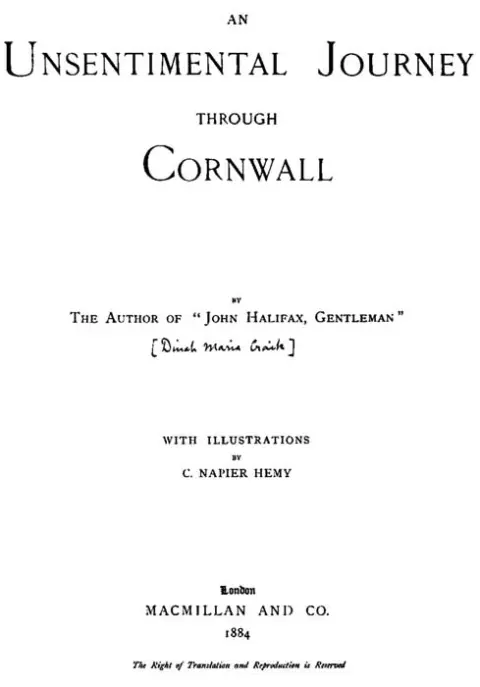
Dinah Maria Mulock Craik
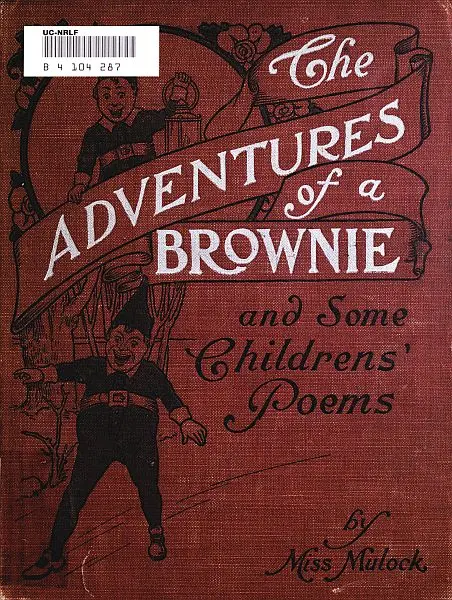
Dinah Maria Mulock Craik
Dinah Maria Mulock Craik
BEHIND THE BOOK
This eBook is for the use of anyone anywhere in the United States and most other parts of the world at no cost and with almost no restrictions whatsoever. You may copy it, give it away or re-use it under the terms of the Project Gutenberg License included with this eBook or online at www.gutenberg.org. If you are not located in the United States, you will have to check the laws of the country where you are located before using this eBook. Read the source licence.
The original source file, including credits and licence, is retained by this library. Request an original-format copy at no charge. Please include the book title and Project Gutenberg identifier #22121.
KEEP YOUR CURIOSITY GOING
Coulson Kernahan

Maurice Baring
Frances Wright
Cécile Tormay

Frederic Jesup Stimson

W. H. P. (William Henry Pope) Jarvis