THE CLASSIC COLLECTION✦Stories of RomanceCLASSIC FREE BOOKS
Stories of Romance
Dinah Maria Mulock Craik & Allan Cunningham & Oliver Wendell Holmes & Harriet Elizabeth Prescott Spofford & John Wilson
THE CLASSIC COLLECTION · 1850
"Olive: A Novel" by Dinah Maria Mulock Craik is a fictional work written in the mid-19th century. The novel introduces us to the titular character, Olive Rothesay, who is born into a world filled with superstitions and societal expectations. As the narrative unfolds, we witness the complex emotions surrounding her birth, her mother Sybilla's struggles, and her nurse Elspie's fierce loyalty as they navigate a society that often equates worth with outward beauty. The opening of the novel presents Olive's arrival into the world, accompanied by a foreboding prophecy from an old nurse who hints at troubles ahead. As Olive's mother, Sybilla, grapples with the reality of her daughter's deformity, the contrast between her beauty and her child's perceived ugliness sets the stage for the emotional turmoil that follows. The doctor, representing a voice of cold practicality, shares the grim news of Olive's condition with Elspie, who immediately feels a deep, protective love for the helpless babe. This initial glimpse of Olive's precarious place in a world fixated on appearances suggests a story rich with themes of maternal instinct, societal judgment, and the search for inner beauty amidst external struggles.
Introduction adapted from the source catalogue; source summaries may be automatically generated.
Free to read · English · 141,678 words · No account needed
MAKE TIME FOR A GOOD BOOK
On by default. Untick to stop anonymous reading totals. Each page counts after 10 seconds in view. How this works.
Anonymous counting is on unless you have switched it off.
“You do not answer, Miss Rothesay. Come, there is scarcely a subject that we have not discussed at some time or other, save this. Let us, just for amusement, take my friend's melancholy case as a text, and argue concerning what young people call 'love.'”
“As you will.”
“A cold acquiescence. You think, perhaps, the matter is either above or beneath me--that I can have no interest therein?” And his eyes, bright, piercing, commanding, seemed to force an answer.
It came, very quietly and coldly.
“I have heard you say that love was the brief madness of a man's life; if fulfilled, a burden--if unfulfilled or deceived, a curse.”
“I said so, did I? Well, you give my opinions--what think you of me? Answer truly--like a friend.”
She did so. She never could look in Harold's eyes and tell him what was
not true.
“I think you are one of those men in whom strong intellect prevents the need of love. Youthful passion you may have felt; but true, deep, earnest love you never did know, and, as I believe, never will! Nay, forgive me if I err; I only take you on your own showing.”
“Thank you, thank you! You speak honestly and frankly--that is something for a woman,” muttered Harold; and then there was a long, awkward pause. How one poor heart ached the while!
At last, fearing that her silence annoyed him, Olive took courage to say, “You were going to talk to me about your plans. Do so now; that is, if you are not angry with me,” she added, with a little deprecatory soothing.
It seemed to touch him. “Angry! How could you think so? I am never angry with you. But what do you desire to hear about? Whither I am going, and when? Do you, then, wish--I mean, advise me to go?”
“Yes, if it is for your good. If leaving Harbury would give you rest on that one subject of which we never speak.”
“But of which I, at least, think night and day, and never without a prayer--(I can pray now)--for the good angel who brought light into my darkness,” said Harold, solemnly. “That comfort is with me, whatever else may--But you wanted to hear about my going abroad?”
“Yes, tell me all. You know I like to hear.”
“Well, then, I have only to decide, and I might depart immediately; to America, I think. I should engage in science and literature. Mine would be a safe, sure course; but, at the beginning, I might have a hard struggle. I do not like to take any one to share it.”
“Not your mother, who loves you so?”
Your reading position is saved on this browser. Take it to another device with a library code. Reading pages adapt to text, rather than matching a printed edition.
Dinah Maria Mulock Craik & Allan Cunningham & Oliver Wendell Holmes & Harriet Elizabeth Prescott Spofford & John Wilson
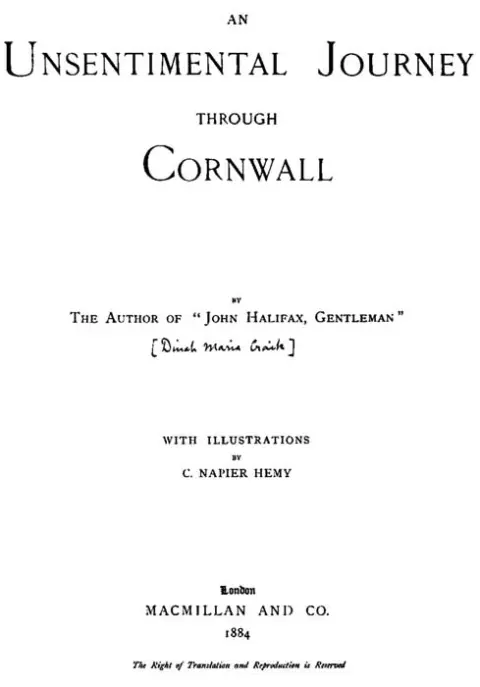
Dinah Maria Mulock Craik
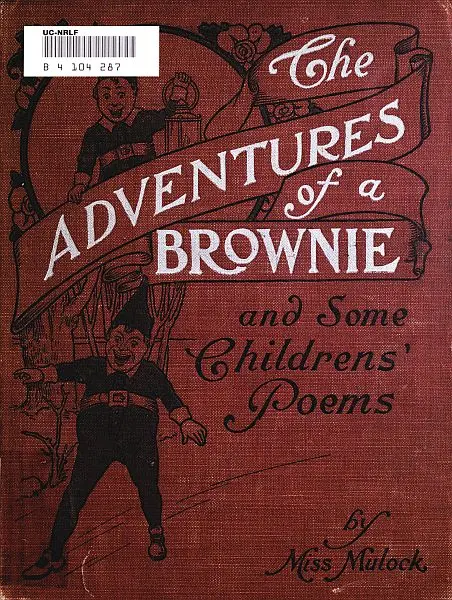
Dinah Maria Mulock Craik
Dinah Maria Mulock Craik
BEHIND THE BOOK
This eBook is for the use of anyone anywhere in the United States and most other parts of the world at no cost and with almost no restrictions whatsoever. You may copy it, give it away or re-use it under the terms of the Project Gutenberg License included with this eBook or online at www.gutenberg.org. If you are not located in the United States, you will have to check the laws of the country where you are located before using this eBook. Read the source licence.
The original source file, including credits and licence, is retained by this library. Request an original-format copy at no charge. Please include the book title and Project Gutenberg identifier #22121.
KEEP YOUR CURIOSITY GOING
Coulson Kernahan

Maurice Baring
Frances Wright
Cécile Tormay

Frederic Jesup Stimson

W. H. P. (William Henry Pope) Jarvis