THE CLASSIC COLLECTION✦Stories of RomanceCLASSIC FREE BOOKS
Stories of Romance
Dinah Maria Mulock Craik & Allan Cunningham & Oliver Wendell Holmes & Harriet Elizabeth Prescott Spofford & John Wilson
THE CLASSIC COLLECTION · 1850
"Olive: A Novel" by Dinah Maria Mulock Craik is a fictional work written in the mid-19th century. The novel introduces us to the titular character, Olive Rothesay, who is born into a world filled with superstitions and societal expectations. As the narrative unfolds, we witness the complex emotions surrounding her birth, her mother Sybilla's struggles, and her nurse Elspie's fierce loyalty as they navigate a society that often equates worth with outward beauty. The opening of the novel presents Olive's arrival into the world, accompanied by a foreboding prophecy from an old nurse who hints at troubles ahead. As Olive's mother, Sybilla, grapples with the reality of her daughter's deformity, the contrast between her beauty and her child's perceived ugliness sets the stage for the emotional turmoil that follows. The doctor, representing a voice of cold practicality, shares the grim news of Olive's condition with Elspie, who immediately feels a deep, protective love for the helpless babe. This initial glimpse of Olive's precarious place in a world fixated on appearances suggests a story rich with themes of maternal instinct, societal judgment, and the search for inner beauty amidst external struggles.
Introduction adapted from the source catalogue; source summaries may be automatically generated.
Free to read · English · 141,678 words · No account needed
MAKE TIME FOR A GOOD BOOK
On by default. Untick to stop anonymous reading totals. Each page counts after 10 seconds in view. How this works.
Anonymous counting is on unless you have switched it off.
He was still inconsolable, poor youth! He looked so drearily pathetic, and quoted such doleful poetry, that Mrs. Gwynne, who, in her matter-of-fact plainness, had no patience with any of Lyle's “romantic vagaries,” as she called them, began to exert the dormant humour by which she always quenched his little ebullitions. Olive at last considerately came to the rescue, and proposed an evening stroll about the garden, to which Lyle gladly assented.
There he still talked of her departure, but his affectations were now
broken by real feeling.
“I shall miss you bitterly,” he said, in a low tone; “but if your health needs change, and this journey is for your good, of course I would not think of myself at all.”
--The very expressions she had herself used to Harold! This coincidence touched her, and she half reproached herself for feeling so coldly to all her kind friends, and chiefly to Lyle Derwent, who evidently regarded her with much affection. But all other affections grew pale before the one great love. Every lesser tie that would fain come in the place of that which was unattainable, smote her with only a keener pain.
Still, half remorsefully, she looked on her old favourite, and wished that she could care for him more. So thinking, her manner became gentler than usual, while that of Lyle grew more earnest and less dreamy.
“I wish you would write to me while you are away, Miss Rothesay; or, at all events, let me write to you.”
“That you may; and I shall be so glad to hear all about Harbury and Farnwood.” Here she paused, half-shaming to confess to herself that for this reason chiefly would she welcome the letters of poor Lyle.
“Is that all? Will you not care to hear about me? Oh, Miss Rothesay,” cried Lyle, “I often wish I was again a little boy in the dear old garden at Oldchurch.”
“Why so?”
“Because--because”--and the quick blood rose in his cheek. “No, no, I cannot tell you now; but perhaps I may, some time.”
“Just as you like,” answered Olive, absently. Her thoughts, wakened by the long-silent name, were travelling over many years; back to her old home, her happy girlhood. She almost wished she had died then, while she was young. But her mother!
“No, I am glad I lived to comfort her.” she mused. “Perhaps it may be true that none ever leave earth until they are no longer needed there. So I will even patiently live on.”
Unable to talk more with Lyle, Olive re-entered the Parsonage. Harold
sat reading.
“Have you long come in?” she asked in a somewhat trembling voice.
Your reading position is saved on this browser. Take it to another device with a library code. Reading pages adapt to text, rather than matching a printed edition.
Dinah Maria Mulock Craik & Allan Cunningham & Oliver Wendell Holmes & Harriet Elizabeth Prescott Spofford & John Wilson
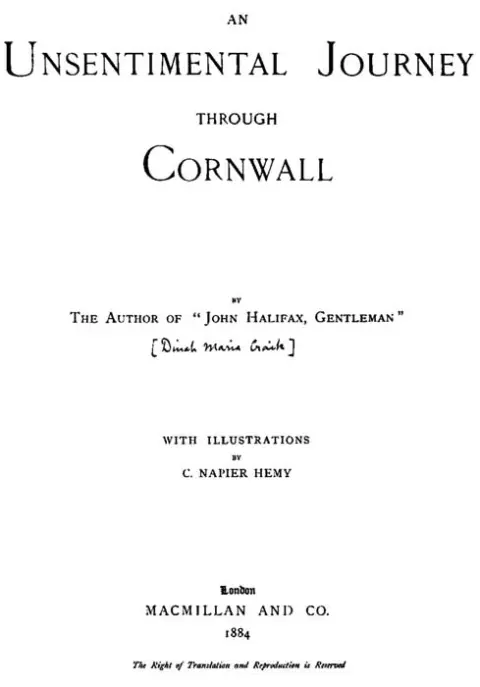
Dinah Maria Mulock Craik
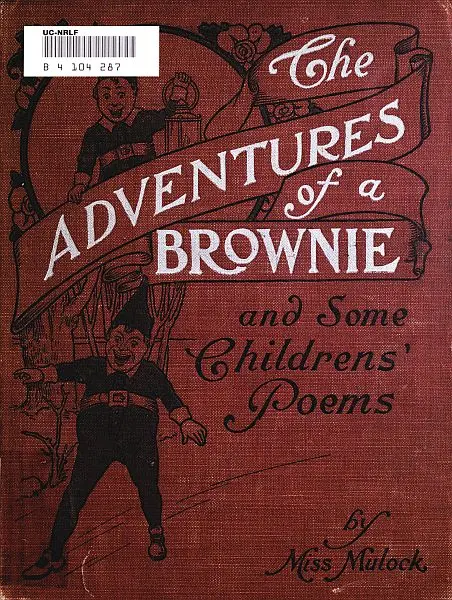
Dinah Maria Mulock Craik
Dinah Maria Mulock Craik
BEHIND THE BOOK
This eBook is for the use of anyone anywhere in the United States and most other parts of the world at no cost and with almost no restrictions whatsoever. You may copy it, give it away or re-use it under the terms of the Project Gutenberg License included with this eBook or online at www.gutenberg.org. If you are not located in the United States, you will have to check the laws of the country where you are located before using this eBook. Read the source licence.
The original source file, including credits and licence, is retained by this library. Request an original-format copy at no charge. Please include the book title and Project Gutenberg identifier #22121.
KEEP YOUR CURIOSITY GOING
Coulson Kernahan

Maurice Baring
Frances Wright
Cécile Tormay

Frederic Jesup Stimson

W. H. P. (William Henry Pope) Jarvis