THE CLASSIC COLLECTION✦Stories of RomanceCLASSIC FREE BOOKS
Stories of Romance
Dinah Maria Mulock Craik & Allan Cunningham & Oliver Wendell Holmes & Harriet Elizabeth Prescott Spofford & John Wilson
THE CLASSIC COLLECTION · 1850
"Olive: A Novel" by Dinah Maria Mulock Craik is a fictional work written in the mid-19th century. The novel introduces us to the titular character, Olive Rothesay, who is born into a world filled with superstitions and societal expectations. As the narrative unfolds, we witness the complex emotions surrounding her birth, her mother Sybilla's struggles, and her nurse Elspie's fierce loyalty as they navigate a society that often equates worth with outward beauty. The opening of the novel presents Olive's arrival into the world, accompanied by a foreboding prophecy from an old nurse who hints at troubles ahead. As Olive's mother, Sybilla, grapples with the reality of her daughter's deformity, the contrast between her beauty and her child's perceived ugliness sets the stage for the emotional turmoil that follows. The doctor, representing a voice of cold practicality, shares the grim news of Olive's condition with Elspie, who immediately feels a deep, protective love for the helpless babe. This initial glimpse of Olive's precarious place in a world fixated on appearances suggests a story rich with themes of maternal instinct, societal judgment, and the search for inner beauty amidst external struggles.
Introduction adapted from the source catalogue; source summaries may be automatically generated.
Free to read · English · 141,678 words · No account needed
MAKE TIME FOR A GOOD BOOK
On by default. Untick to stop anonymous reading totals. Each page counts after 10 seconds in view. How this works.
Anonymous counting is on unless you have switched it off.
“All, is very little. You know, my dear Miss Rothesay, that your father was speechless from the moment of his seizure. But my wife, who never quitted him--ah! I assure you she was a devoted nurse to him, was Mrs. Wyld.”
“I thank her deeply, as she knows.”
“My wife has just told me, that a few minutes before his death your poor father's consciousness returned; that he seemed struggling in vain to speak; at last she placed a pencil in his hand, and he wrote--one word only, in the act of writing which he died. Forgive me, my dear young lady for thus agitating you, but”----
“The paper--give me the paper!”
Mr. Wyld pulled out his pocket-book, and produced a torn and blotted scrap, whereon was written, in characters scarcely legible, the name “Harold.”
“Do you know any one who bears that name, Miss Rothesay?”
“No. Yes--one,” added she, suddenly remembering that the name of Sara's husband was Harold Gwynne. But between him and her father she knew of no single tie. It must be a mere chance coincidence.
“What is to be done?” cried Olive. “Shall I tell my mother?”
“If I might advise, I would say decisively, No! Better leave the matter in my hands. Harold!--'tis a boy's name,” he added, meditatively. “If it were a girl's now--I executed a little commission for Captain Rothesay once.”
“What did you say?” asked Olive, looking up at him with her innocent eyes. He could not meet them; his own fell confused.
“What did I say, Miss Rothesay? Oh, nothing--nothing at all; only that if I had a commission--to--to hunt out this secret.”
“I thank you, Mr. Wyld; but a daughter would not willingly employ any third person to 'hunt out' her father's secret. His papers will doubtless inform me of everything; therefore we will speak no more on this subject.”
“As you will” He gathered up his blue bag and its voluminous contents,
and made his adieux.
But Olive had scarcely sat down again, and with her head leaning on her father's desk, had given vent to a sigh of relief, in that she was freed from Mr. Wyld's presence, when the old lawyer again appeared.
“Miss Rothesay, I merely wished to say, if ever you find out--any secret--or need any advice about that paper, or anything else, I'm the man to give it, and with pleasure in this case. Good evening!”
Olive thanked him coldly, somewhat proudly, for what she thought a piece of unnecessary impertinence. However, it quickly passed from her gentle mind; and then, as the best way to soothe all her troubles, she quitted the study, and sought her mother.
Your reading position is saved on this browser. Take it to another device with a library code. Reading pages adapt to text, rather than matching a printed edition.
Dinah Maria Mulock Craik & Allan Cunningham & Oliver Wendell Holmes & Harriet Elizabeth Prescott Spofford & John Wilson
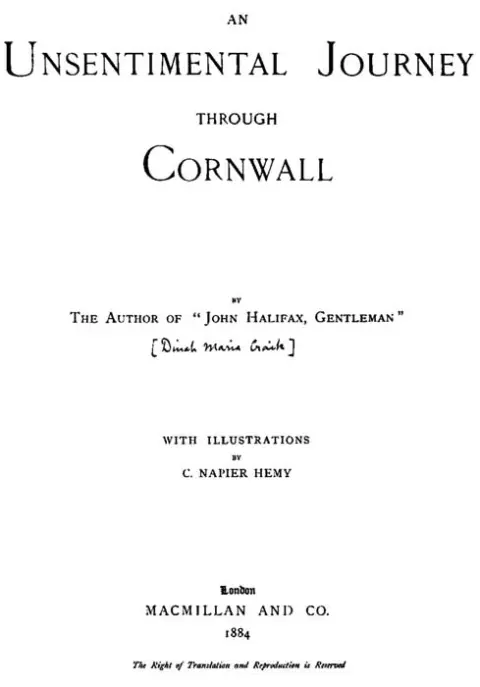
Dinah Maria Mulock Craik
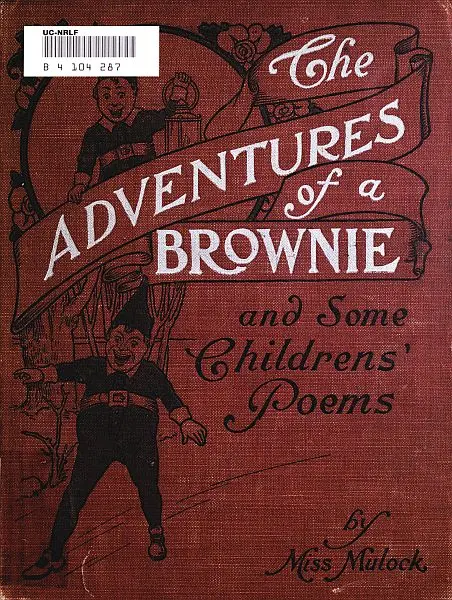
Dinah Maria Mulock Craik
Dinah Maria Mulock Craik
BEHIND THE BOOK
This eBook is for the use of anyone anywhere in the United States and most other parts of the world at no cost and with almost no restrictions whatsoever. You may copy it, give it away or re-use it under the terms of the Project Gutenberg License included with this eBook or online at www.gutenberg.org. If you are not located in the United States, you will have to check the laws of the country where you are located before using this eBook. Read the source licence.
The original source file, including credits and licence, is retained by this library. Request an original-format copy at no charge. Please include the book title and Project Gutenberg identifier #22121.
KEEP YOUR CURIOSITY GOING
Coulson Kernahan

Maurice Baring
Frances Wright
Cécile Tormay

Frederic Jesup Stimson

W. H. P. (William Henry Pope) Jarvis