THE CLASSIC COLLECTION✦Andersonville diaryCLASSIC FREE BOOKS
Andersonville diary
John L. Ransom
THE CLASSIC COLLECTION · 1883
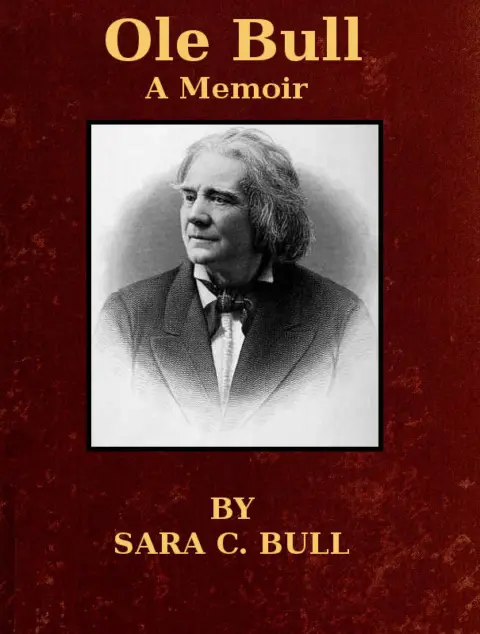
"Ole Bull: A Memoir" by Sara Chapman Thorp Bull is a biographical account written in the late 19th century. The work explores the life and legacy of Ole Bull, a celebrated Norwegian violinist and composer. Through various anecdotes and tributes, it aims to highlight Bull’s artistic journey, his rich cultural background, and the influence of Norwegian folklore and musical traditions on his development as a musician. At the start of the memoir, we are introduced to the picturesque city of Bergen, Norway, where Ole Bull was born in 1810. The opening portion presents a detailed glimpse into his childhood, describing his early experiences with music and nature, along with familial influences that shaped his artistic inclinations. Key moments include his first exposure to music through family gatherings and the poignant memories of his connection with the natural landscape that conveyed deep emotional resonance to his developing musical identity. His initial struggles with formal education, his burgeoning passion for the violin, and the subsequent artistic triumphs are also described, establishing a foundation for understanding his evolution into a prominent musical figure.
Introduction adapted from the source catalogue; source summaries may be automatically generated.
Free to read · English · 106,460 words · No account needed
MAKE TIME FOR A GOOD BOOK
On by default. Untick to stop anonymous reading totals. Each page counts after 10 seconds in view. How this works.
Anonymous counting is on unless you have switched it off.
Mozart, Ole Bull’s rendering of and reverence for, 110, 111,
145, 294.
Mozart, Madame, 111, 114.
Munch, the poet, 133.
Münden, the concert at, 39.
Munich, concerts at, 114.
Musæus, Ole Bull’s tutor, 25.
Naples, Ole Bull at, 64.
Naples, Queen Dowager of, 63.
Nassau, Duke of, 250.
Neumünster, concerts at, 94.
New Orleans, Ole Bull at, 157, 161, 174.
New York, concerts at, 151, 169, 170, 176, 178, 180, 216, 305.
Nilsson, Christine, 282.
Norwegian dances, 201;
history, 30;
literature, 35;
National Theatre, 198;
popular music, 5, 203.
Öhlenschläger, the Danish poet, quoted, 144.
Ole Bull: his birthplace, 1;
his parents, 2;
“Uncle Jens,” 3, 7, 11;
in the Latin School, 3;
early ideas of music, 4;
first violin, 8;
first musical triumph, 11;
plays Fiorillo’s “Studies,” 14;
at Lysekloster, 15;
at Valestrand, 17;
first studies in violin construction, 18;
death of baby sister, 19;
plays in orchestra when nine years old, 20;
taught by Lundholm, 20;
first acquaintance with Paganini’s music, 21;
his tutor Musæus, 25;
examined for the University, 27;
influence on Norwegian art, 36, 318;
on May 17th, 1829, 37;
visits Spohr, 38;
at Göttingen, 38;
at Münden, 39;
returns to Norway, 40;
goes to Paris in 1831, 41;
robbed of everything, 42;
acquaintance with Vidocq, 43;
at Frascati’s, 44;
tempted to suicide, 46;
meets Mdlle. Villeminot, 47;
attacked with brain fever, 45;
hears Paganini, 48;
plays at the Duke of Riario’s, 49;
gives concert under patronage of Duke of Montebello, 49;
tour in Switzerland and Italy, 50;
concert and studies at Milan, 50;
writes his “Concerto in A major,” 52;
visits Venice and Trieste, 55;
wins his first laurels at Bologna, 55;
invited to Florence, 61;
writes his “Quartetto a Violino Solo,” and “Preghiera d’una
Madre,” 61;
begins his “Polacca Guerriera,” 62;
at Pierro a Silve, 62;
writes “Grammar of Violin,” 62;
visits Baths of Lucca, 63;
goes to Naples, 64;
to Rome in 1835, 65;
completes the “Polacca,” 66;
to Paris, and plays at the Grand Opera, 71;
criticised by Jules Janin, 71;
severe illness in 1836, 79;
goes to London, 80;
his troubles with Mori and Costa, 80;
plays for Duke of Devonshire, 83;
married in 1836, 76, 88;
concert tour with Bochsa, 88;
on death of Malibran, 89;
bursts a blood–vessel, 90;
at Chatsworth, 90;
becomes acquainted with Paganini at Paris, 92;
concerts at Brussels and Courtray, 93;
at Hamburg in 1838, 94;
at Berlin, 96, 97;
at Königsberg and Riga, 98;
at St. Petersburg, 98, 99;
at Moscow, 99;
hears of his father’s death, 99;
tour in Finland, 100;
at Stockholm, 100;
at Christiania in 1838, 100;
at Bergen, 104;
writes “The Mountains of Norway,” 104;
third Continental tour, 105;
at Copenhagen, 105;
at Hamburg, 107;
visits Spohr again at Cassel, 107;
goes to Berlin, 108;
criticised by Finck, 109;
in Breslau and Vienna, 110;
his rendering of Mozart, 110;
visits Hungary, 111;
at Salzburg, the home of Mozart, 111;
returns to Paris, 111;
revisits Germany, 112;
to Paris again in 1839, 112, 119;
death of his child and his grandmother, 113;
his business habits, 117;
goes to London in 1840, 119;
his troubles with Morandi, 119;
with Liszt in London, 119, 120, 122;
goes to Belgium, the Rhine, and Heidelberg, 124;
in Berlin at the coronation of King William, 124;
in Dresden and Prague, 129;
writes his “Concerto in E minor,” 129;
his “Grüss aus des Ferne,” 130;
tour in Russia, 131;
sick at St. Petersburg, 131;
visits Norway, 132;
tour in Holland, 134;
and in Sweden, 135;
his letter on the Upsala affair, 136;
concert and “Sexa” at Upsala, 137;
troubles at Stockholm, 139;
celebrates Karl Johan’s birthday, 140;
meets his old teacher Lundholm, 140;
at Copenhagen, 141;
publishes three compositions, 143;
birth of a daughter, 144;
visits Throndhjem and climbs the Dovrefjeld, 146;
plays for peasants at Sogn, 147;
sails for America in 1843, 148;
concerts in New York and elsewhere, 151, 152;
makes Southern tour, 157;
on the Mississippi, 159;
visits Cuba, and writes two compositions there, 161;
returns to the United States, 164;
arrested by Schubert, 164;
visits Alice Cary, 165;
tour in New England, New York, and Canada, 168;
writes the “Niagara,” 168;
plays it in New York, 169;
writes “Solitude of Prairies” and “David’s Psalm,” 169;
tour in Mississippi Valley, 175;
in the Mammoth Cave, 175;
at St. Louis, 176;
returns to New York and Boston in October, 1845, 176;
writes his “Memory of Washington,” 176;
plays for the blind in New York, 178;
rejoins his family in Europe, 188;
concerts in Paris in 1846, 189;
gives banquet at Bordeaux, 191;
in Toulouse, Lyons, and Marseilles, 191;
tour in Algiers in 1847, 193;
tour in Spain, 194;
composes “La Verbena de San Juan,” 194;
returns to Paris, 196;
to Norway again, 198;
works to found a National Theatre, 198;
plays at festival in aid of the Theatre, 206;
composes his “Saeterbesög,” 206;
troubles with the police in Bergen, 207;
visits Prussia, 213;
sails again for America in January, 1852, 213;
invited to give concert in Washington, 214;
buys land for Norwegian colony, 221;
tour to the West and South, 222;
goes to California via Panama, 224;
finds that the title to his Pennsylvania lands is fraudulent, 225;
prostrated with fever in Illinois, 227;
his lawsuits with the swindlers, 228;
visits Mrs. Child, 230;
returns to Norway in 1857, 235;
at the German baths, 237;
in Vienna and Pesth, 238;
spends a summer at Carlsbad, 239;
returns to Norway, and buys Valestrand, 239;
tour in Finland in 1860, 243;
in England, Scotland, and Ireland in 1861–62, 243;
death of his wife, 243;
breaks a rib at Godesberg, 244;
plans a Norse Music Academy, 245;
death of his son Thorvald, 248;
concerts in Germany, Poland, and Russia, in 1863–67, 248;
his interest in political events, 252;
composes “The Nightingale,” 252;
to America again in November, 1867, 253;
in steamboat collision on the Ohio, 254;
at the Peace Jubilee in Boston in 1869, 254;
to Norway in April, 1870, 255;
his second marriage, 257;
return to the United States, 257;
his improvements of the piano, 257;
spends summer of 1872 in Norway, 261;
builds house at Lysö, 261;
winter in the South of France, 261;
concerts in Florence, 261;
visits the North of Norway, 264;
celebrates his birthday in 1876 on the Pyramid of Cheops, 266;
returns to the United States, 270;
concerts in Boston, 271;
in New York, 276, 279;
to Norway in 1877, 280;
spends winter on the Continent, 280;
the next summer in Norway, 284;
his life at Lysö, 285;
return to the United States in the fall of 1878, 291;
writes the “Violin Notes,” 292;
summer of 1879 in Norway, 296;
return to the United States and residence at Cambridge, 299;
celebration of his 70th birthday, 299, 301;
concerts in spring of 1880, 305;
sails for Europe in June, 305;
his arrival at Lysö, 311;
his death, 314;
the funeral services, 315;
address of Björnstjerne Björnson, 317;
of Edward Grieg, 323;
of Mr. Bendixen, 324;
the last tribute of the peasants, 324.
Your reading position is saved on this browser. Take it to another device with a library code. Reading pages adapt to text, rather than matching a printed edition.
BEHIND THE BOOK
This eBook is for the use of anyone anywhere in the United States and most other parts of the world at no cost and with almost no restrictions whatsoever. You may copy it, give it away or re-use it under the terms of the Project Gutenberg License included with this eBook or online at www.gutenberg.org. If you are not located in the United States, you will have to check the laws of the country where you are located before using this eBook. Read the source licence.
The original source file, including credits and licence, is retained by this library. Request an original-format copy at no charge. Please include the book title and Project Gutenberg identifier #40297.
KEEP YOUR CURIOSITY GOING
John L. Ransom

Herman W. Mudgett

Harriet Monroe
Daniel Dulany Addison
Charles Lanman

Harold Rosher