Hunting Indians in a Taxi-Cab
Kate Sanborn
THE CLASSIC COLLECTION · 1905
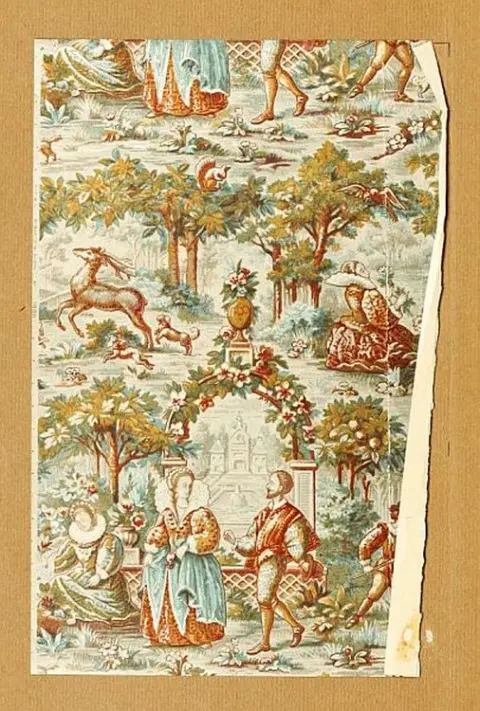
"Old Time Wall Papers" by Kate Sanborn is a historical account written in the early 20th century. The book provides an exploration of the art and history of wall-paper making and decoration, mapping the evolution from primitive materials to decorative papers that adorned the homes of earlier generations. It frames an insightful narrative around the significance of these wall coverings in historical homes and their cultural relevance across time. At the start of the book, the author introduces her unique collection of photographs of old wall papers and reflects on the challenges she faced while researching their history. She details her inquisitiveness about the origins of wall paper, tracing its evolution from various ancient practices, such as the use of painted mud walls and animal skins for decoration. The opening sets the stage for a broader discussion on the journey of decorative wall papers, emphasizing how the quest for reliable historical information has often encountered scarcity, reflecting the rich tapestry of human creativity and cultural interchange in the development of interior aesthetics.
Introduction adapted from the source catalogue; source summaries may be automatically generated.
Free to read · English · 33,653 words · No account needed
MAKE TIME FOR A GOOD BOOK
On by default. Untick to stop anonymous reading totals. Each page counts after 10 seconds in view. How this works.
Anonymous counting is on unless you have switched it off.
England advanced in the art of paper-making during the time the French were planning the Revolution, and English velvet papers became the fashion. In 1754 Mme. de Pompadour had her wardrobe and the passage that led to her apartments hung with English paper. In 1758 she had the bath-room of the Chateau de Champs papered with it, and others followed her example.
But in 1765 the importation of English papers--engraved, figured, printed, painted to imitate damasks, chintzes, tapestries, and so on--was checked by a heavy tax. So at this time papers were a precious and costly possession. They were sold when the owner was leaving a room, as the following advertisements will show:
Dec. 17, 1782. "To-let; large room, with mirror over the fire-place and paper which the owner is willing to sell."
Feb. 5, 1784. "To-let; Main body of a house, on the front, with two
apartments, one having mirrors, woodwork and papers, which will be
sold."
When the owner of the paper did not succeed in selling it, he took it away, as it was stretched on cloth or mounted on frames. These papers were then often offered for sale in the Parisian papers; we find advertised in 1764, "The paperhangers for a room, painted green and white"; November 26, 1766, "A hanging of paper lined with muslin, valued at 12 Livres"; February 13, 1777, "For sale; by M. Hubert, a hanging of crimson velvet paper, pasted on cloth, with gilt mouldings"; April 17, 1783, "38 yards of apple-green paper imitating damask, 24 livres, cost 38."
By 1782, the use of wall-papers became so general that, from that time on, the phrase "decorated with wall-paper" frequently occurs in advertisements of luxurious apartments to let. Before this time, mention had commonly been made, in the same manner, of the woodwork and mirrors.
October 12, 1782, the Journal general de France advertised: "To let; two houses, decorated with mirrors and papers, one with stable for five horses, 2 carriage-houses, large garden and well, the other with three master's apartments, stable for 12 horses, 4 carriage-houses, etc." Oct. 28, 1782, "To let; pretty apartment of five rooms, second floor front, with mirrors, papers, etc." Feb. 24, 1783, "To let; rue Montmartre, first floor apartment, with antechamber; drawing-room, papered in crimson, with mouldings; and two bed-rooms, one papered to match, with two cellars."
Mme. du Bocage, in her Letters on England, Holland, and Italy, (1750) gives an account of Mrs. Montague's breakfast parties: "In the morning, breakfasts agreeably bring together the people of the country and strangers, in a closet lined with painted paper of Pekin, and furnished with the choicest movables of China.
Your reading position is saved on this browser. Take it to another device with a library code. Reading pages adapt to text, rather than matching a printed edition.
Kate Sanborn
Kate Sanborn
Kate Sanborn
Kate Sanborn
BEHIND THE BOOK
This eBook is for the use of anyone anywhere in the United States and most other parts of the world at no cost and with almost no restrictions whatsoever. You may copy it, give it away or re-use it under the terms of the Project Gutenberg License included with this eBook or online at www.gutenberg.org. If you are not located in the United States, you will have to check the laws of the country where you are located before using this eBook. Read the source licence.
The original source file, including credits and licence, is retained by this library. Request an original-format copy at no charge. Please include the book title and Project Gutenberg identifier #41664.
KEEP YOUR CURIOSITY GOING
Cécile Tormay

Moritz Busch
John L. Ransom
Frances Wright
Cécile Tormay

Mabel Potter Daggett