THE CLASSIC COLLECTION✦Eline VereCLASSIC FREE BOOKS
Eline Vere
Louis Couperus

THE CLASSIC COLLECTION · 1918
"Old People and the Things That Pass" by Louis Couperus is a novel written in the early 20th century. The book explores the emotional landscape of aging, focusing on the complex relationships within an elderly family as they navigate love, loss, and the passage of time. Central characters include Ottilie, a woman grappling with the realities of her old age, her son Lot, who is preparing to marry Elly, and Steyn, Ottilie's second husband, highlighting themes of jealousy, loneliness, and the struggle to connect with loved ones. The opening of the novel introduces us to Ottilie as she interacts with her son Lot over coffee and prepares for his impending marriage to Elly. There is a palpable tension in Ottilie's emotions; she feels a mix of jealousy and sadness at the prospect of losing Lot. As they converse, Ottilie's reflections reveal her insecurities about aging and the changes in her family dynamics, particularly her complicated relationship with her husband Steyn. Lot, while affectionate, expresses his conflicting feelings about marriage, pondering why he proposed to Elly. The scene sets the stage for deeper explorations into the nuances of family bonds and the inevitability of aging as the narrative unfolds.
Introduction adapted from the source catalogue; source summaries may be automatically generated.
Free to read · English · 86,093 words · No account needed
MAKE TIME FOR A GOOD BOOK
On by default. Untick to stop anonymous reading totals. Each page counts after 10 seconds in view. How this works.
Anonymous counting is on unless you have switched it off.
"It's dreadful," said Ina. "How is Grandmamma to be told? It will be such a blow to her. And she doesn't even know of Mr. Takma's death...."
"Yes, it's very difficult.... I've sent word to your father and I expect him here any minute; then we can talk over what we are to do and say. Perhaps somebody else will come to-day...."
"Oh dear, oh dear, oh dear!" sighed Anna.
She looked at the stove, which was burning rather low, and, reflecting that perhaps there would be a good many using the morning-room that day, she shook the cinder-drawer: the fire began to glow behind the mica panes.
"Ah me!" cried Ina. "Grandmamma won't survive them long now.... Uncle, do you know that Aunt Thérèse is coming to the Hague? Aunt Stefanie has had a letter.... Oh, if only she arrives in time to see Grandmamma!... Oh, what a terrible winter!... And Papa is looking so depressed.... Uncle," she said--Anna had gone back to the kitchen, moaning and groaning and stumbling over the cat--"Uncle, tell me: why has Papa been so depressed ... ever since you came back to Holland?"
"Since I came back to Holland, dear?..."
"Yes, Uncle. There's something that brought you back to Holland ... something that's made Papa so terribly depressed."
"I don't know, dear, I don't know...."
"Yes, you do.... I'm not asking out of curiosity, I'm asking for Papa's sake ... to help him ... to relieve him ... if he's in trouble.... It may be business-matters...."
"No, dear, it's not business-matters...."
"Well, then, what is it?"
"Why, dear, it's nothing, nothing at all."
"No, Uncle Daan, there's something."
"But then why not ask your father?"
"Papa refuses to speak about it."
"Then why should I speak about it?" cried Daan Dercksz, put on his guard by Ina's slip of the tongue. "Why should I speak about it, Ina? There may be something ... business-matters, as you say ... but it'll be all right. Yes, really, Ina, don't alarm yourself: it's all right."
He took refuge in a feigned display of indignation, pretended to think her much too curious about those business-matters and scratched the back of his head.
Ina's eyes assumed their well-bred, weary expression:
"Uncle, other people's money-matters are le moindre de mes soucis.... I was only asking you for an explanation ... because of my love for my father."
"You're a good daughter to your father, we all know that, all of us.... Ah, there he is: he's ringing!"
And, before Anna had time to go to the door, he had let Harold Dercksz
in.
"Do you mean to say that Dr. Roelofsz is dead?" asked Harold.
Your reading position is saved on this browser. Take it to another device with a library code. Reading pages adapt to text, rather than matching a printed edition.
Louis Couperus
Louis Couperus

Louis Couperus
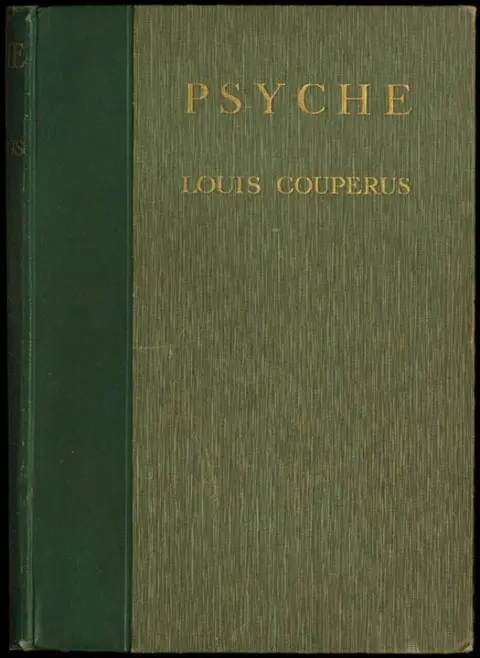
Louis Couperus
BEHIND THE BOOK
This eBook is for the use of anyone anywhere in the United States and most other parts of the world at no cost and with almost no restrictions whatsoever. You may copy it, give it away or re-use it under the terms of the Project Gutenberg License included with this eBook or online at www.gutenberg.org. If you are not located in the United States, you will have to check the laws of the country where you are located before using this eBook. Read the source licence.
The original source file, including credits and licence, is retained by this library. Request an original-format copy at no charge. Please include the book title and Project Gutenberg identifier #48271.
KEEP YOUR CURIOSITY GOING
Coulson Kernahan

Maurice Baring
Frances Wright
Cécile Tormay

Frederic Jesup Stimson

W. H. P. (William Henry Pope) Jarvis