THE CLASSIC COLLECTION✦Eline VereCLASSIC FREE BOOKS
Eline Vere
Louis Couperus

THE CLASSIC COLLECTION · 1918
"Old People and the Things That Pass" by Louis Couperus is a novel written in the early 20th century. The book explores the emotional landscape of aging, focusing on the complex relationships within an elderly family as they navigate love, loss, and the passage of time. Central characters include Ottilie, a woman grappling with the realities of her old age, her son Lot, who is preparing to marry Elly, and Steyn, Ottilie's second husband, highlighting themes of jealousy, loneliness, and the struggle to connect with loved ones. The opening of the novel introduces us to Ottilie as she interacts with her son Lot over coffee and prepares for his impending marriage to Elly. There is a palpable tension in Ottilie's emotions; she feels a mix of jealousy and sadness at the prospect of losing Lot. As they converse, Ottilie's reflections reveal her insecurities about aging and the changes in her family dynamics, particularly her complicated relationship with her husband Steyn. Lot, while affectionate, expresses his conflicting feelings about marriage, pondering why he proposed to Elly. The scene sets the stage for deeper explorations into the nuances of family bonds and the inevitability of aging as the narrative unfolds.
Introduction adapted from the source catalogue; source summaries may be automatically generated.
Free to read · English · 86,093 words · No account needed
MAKE TIME FOR A GOOD BOOK
On by default. Untick to stop anonymous reading totals. Each page counts after 10 seconds in view. How this works.
Anonymous counting is on unless you have switched it off.
He was a head shorter than the doctor; he took hold of a button of the
doctor's waistcoat.
"Yes-yes," said Roelofsz. "What is it, Dercksz?"
"Roelofsz ... I've heard about it."
"What?" shouted the doctor, deaf.
"I've heard everything ... in India."
"What?" shouted the doctor, no longer deaf, but dismayed.
"I've heard everything, heard it all ... in India."
The doctor looked at him with rolling eyes; and his pendulous lips slavered in his clean-shaven monk's-face, while his breath panted, reeking between the crumbly teeth.
And he, in his turn, caught hold of one of Daan Dercksz' buttons:
"What have you heard?"
"I've heard everything," Daan Dercksz repeated. "Heard it all ... in India. I know ... I know everything."
"You know ... everything? Oh? Oh? You know everything?... What ... what
do you know?"
"About ... about Mamma.... About Takma.... About ..."
They stood staring into each other's startled eyes.
"About my father," said Daan Dercksz; and his frightened voice sank to a hesitating whisper. "About my father. What you know too. What you have always known. That Takma, that night, when he was with my mother, snatched my father's own weapon from him: a kris which the Regent had given him the day before...."
"You know?" cried the doctor. "You know? Oh, my God! Do you know that? I ... I have never said a word. I am eightee-eight years of age ... but I've ... I've never said a word."
"No, you never said anything ... but Mamma's baboe ..."
"Ma-Boeten?"
"Yes, Ma-Boeten told her son, a mantri at Tegal. Ma-Boeten is dead and the mantri has started blackmailing me. He's been to me for money. I've given him money. I shall give him money every month."
"So you know.... Yes-yes, O my God, yes-yes!... So you know, Dercksz,
you know?"
"Yes, I know."
"What did the mantri say? What had Ma-Boeten told him?
"That my father tried to kill Takma, with a kris.... That Takma snatched the kris from him, while ..."
"While what?... Yes-yes, while what?"
"While Mamma ... while my mother ..."
"Yes-yes?"
"Flung her arms round my father, to prevent him ..."
"O my God, yes, yes!"
"To prevent him from defending himself ... and that Ma-Boeten, behind the door, heard her say ..."
"Yes-yes ... yes-yes ... O my God!"
"Heard her say, 'I hate you, I hate you: I've always hated you ...'"
"Yes-yes ... O my God!"
"'I've always hated you and ... and I love Emile!'"
"Yes-yes ... and then?"
"And then she called out to Takma, almost aloud, 'Emile, give him a
stab: rather he than you!'"
"O ... my ... God!"
The doctor sank, in a heavy mass, upon a chair:
Your reading position is saved on this browser. Take it to another device with a library code. Reading pages adapt to text, rather than matching a printed edition.
Louis Couperus
Louis Couperus

Louis Couperus
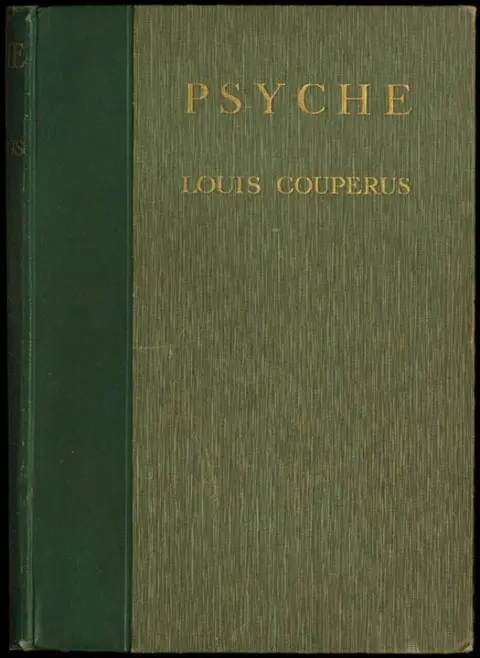
Louis Couperus
BEHIND THE BOOK
This eBook is for the use of anyone anywhere in the United States and most other parts of the world at no cost and with almost no restrictions whatsoever. You may copy it, give it away or re-use it under the terms of the Project Gutenberg License included with this eBook or online at www.gutenberg.org. If you are not located in the United States, you will have to check the laws of the country where you are located before using this eBook. Read the source licence.
The original source file, including credits and licence, is retained by this library. Request an original-format copy at no charge. Please include the book title and Project Gutenberg identifier #48271.
KEEP YOUR CURIOSITY GOING
Coulson Kernahan

Maurice Baring
Frances Wright
Cécile Tormay

Frederic Jesup Stimson

W. H. P. (William Henry Pope) Jarvis