THE CLASSIC COLLECTION✦Eline VereCLASSIC FREE BOOKS
Eline Vere
Louis Couperus

THE CLASSIC COLLECTION · 1918
"Old People and the Things That Pass" by Louis Couperus is a novel written in the early 20th century. The book explores the emotional landscape of aging, focusing on the complex relationships within an elderly family as they navigate love, loss, and the passage of time. Central characters include Ottilie, a woman grappling with the realities of her old age, her son Lot, who is preparing to marry Elly, and Steyn, Ottilie's second husband, highlighting themes of jealousy, loneliness, and the struggle to connect with loved ones. The opening of the novel introduces us to Ottilie as she interacts with her son Lot over coffee and prepares for his impending marriage to Elly. There is a palpable tension in Ottilie's emotions; she feels a mix of jealousy and sadness at the prospect of losing Lot. As they converse, Ottilie's reflections reveal her insecurities about aging and the changes in her family dynamics, particularly her complicated relationship with her husband Steyn. Lot, while affectionate, expresses his conflicting feelings about marriage, pondering why he proposed to Elly. The scene sets the stage for deeper explorations into the nuances of family bonds and the inevitability of aging as the narrative unfolds.
Introduction adapted from the source catalogue; source summaries may be automatically generated.
Free to read · English · 86,093 words · No account needed
MAKE TIME FOR A GOOD BOOK
On by default. Untick to stop anonymous reading totals. Each page counts after 10 seconds in view. How this works.
Anonymous counting is on unless you have switched it off.
A gentle tap; and the door opened: he saw his daughter on the threshold.
"Father dearest," she said, winningly.
"What is it, dear?"
Ina came nearer.
"I'm not disturbing you, I hope? I came to see how you were. I thought you looked so bad at dinner...."
She tended him, like a good daughter; and he appreciated it. His heart was sensitive and soft and he appreciated the companionship of the home: Ina's care, the boys' youth imparted a genial warmth to his poor chilled heart; and he put out his hand to her. She sat down beside his chair, giving a quick glance at the papers before him, interested in the sight of all those figures, which no doubt represented the state of Papa's fortune and Uncle Daan's. Then she asked:
"Are you ill, Father dear?"
"Yes," he said, moaning, "I'm in pain." And, moved by her affection, he added, "Better if it were over with me soon."
"Don't say that: we could never do without you."
He smiled, with a gesture of denial:
"You would have a trouble the less."
"Why, you know you're no trouble to me."
It was true and she said it sincerely; the note of sincerity rang true in his child's motherly voice.
"But you oughtn't to be always working like this," she went on.
"I don't do much work."
"What are all those figures?"
She smiled invitingly. He knew her curiosity, had known it ever since her childhood, when he had caught her ferreting in his writing-desk. Since that time, he had locked everything up.
"Business," he replied, "Indian business. I have to look into these figures for Uncle Daan, but it doesn't mean much work."
"Is Uncle Daan satisfied with the business?"
"Yes, he is. We shall be rich yet, dear."
"Do you think so?"
Her voice sounded greedy.
"Yes. Have no fear. I'll leave you something yet."
His voice sounded bitter.
"Oh, Father, I really wasn't thinking of that. I do worry about money sometimes, because of Lily, who married on nothing: what have Frits and Lily to live on? And because of my boys. I don't care about money myself."
It was almost true; it had become true as the years went on. Since she had grown older, she thought of money more for her children's sake; motherliness had developed in her soul, even though that soul remained material and small.
"Yes," said Harold Dercksz, "I know."
"You are so depressed, Father."
"I am just the same as usual."
"No, Uncle Daan has made you depressed. I can see it."
He was silent and on his guard.
Your reading position is saved on this browser. Take it to another device with a library code. Reading pages adapt to text, rather than matching a printed edition.
Louis Couperus
Louis Couperus

Louis Couperus
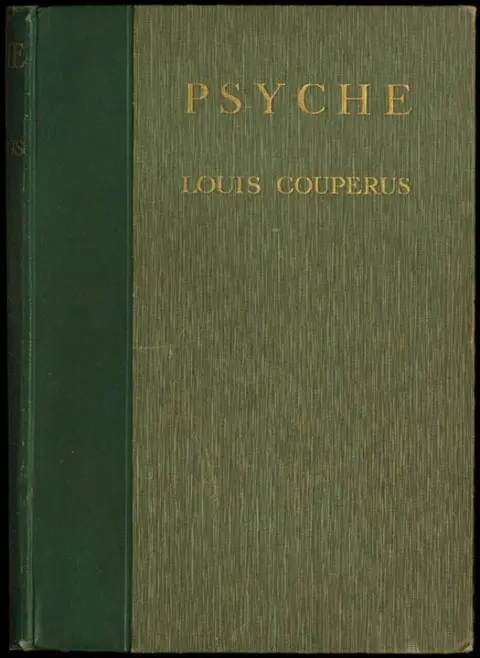
Louis Couperus
BEHIND THE BOOK
This eBook is for the use of anyone anywhere in the United States and most other parts of the world at no cost and with almost no restrictions whatsoever. You may copy it, give it away or re-use it under the terms of the Project Gutenberg License included with this eBook or online at www.gutenberg.org. If you are not located in the United States, you will have to check the laws of the country where you are located before using this eBook. Read the source licence.
The original source file, including credits and licence, is retained by this library. Request an original-format copy at no charge. Please include the book title and Project Gutenberg identifier #48271.
KEEP YOUR CURIOSITY GOING
Coulson Kernahan

Maurice Baring
Frances Wright
Cécile Tormay

Frederic Jesup Stimson

W. H. P. (William Henry Pope) Jarvis