THE CLASSIC COLLECTION✦Windmills: A book of fablesCLASSIC FREE BOOKS
Windmills: A book of fables
Gilbert Cannan
THE CLASSIC COLLECTION · 1914
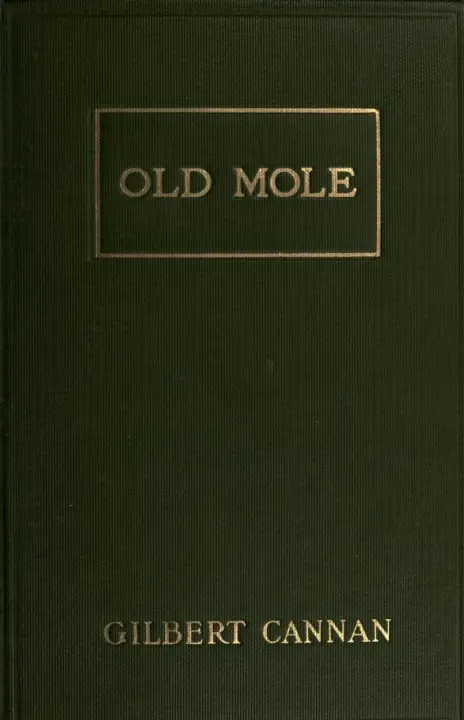
"Old Mole" by Gilbert Cannan is a novel written in the early 20th century. The story centers around Herbert Jocelyn Beenham, referred to as "Old Mole," an unambitious schoolmaster at the Thrigsby Grammar School who leads a monotonous life. His world is shaken when a misunderstanding leads to a scandal that forces him to leave his position, ultimately setting him on a path of self-discovery and unexpected adventures. The opening of "Old Mole" introduces us to H. J. Beenham, a schoolmaster who has dedicated twenty-five years to Thrigsby but is well aware of his own lack of ambition and the limited reach of his life. His routine existence is abruptly derailed when he is accused of assaulting a young woman, Matilda Burn, on a train. Despite his genuine intentions to comfort her, Beenham's actions are misconstrued, leading to public humiliation and the possibility of losing everything he has known. The chapter sets the tone for his transition from the confines of an academic life to the chaos and uncharacteristic adventures of the theater world, where he encounters Matilda again and becomes entwined in her aspirations. This unexpected turn catalyzes a series of events that challenge both his identity and beliefs, pushing him into a new life filled with unpredictability.
Introduction adapted from the source catalogue; source summaries may be automatically generated.
Free to read · English · 89,091 words · No account needed
MAKE TIME FOR A GOOD BOOK
On by default. Untick to stop anonymous reading totals. Each page counts after 10 seconds in view. How this works.
Anonymous counting is on unless you have switched it off.
"I've tried 'em all except the bust preservers."
It was precisely here that he and Old Mole found common ground. With his new mental activity Old Mole had become increasingly sensitive to any sluggishness in his internal organs and began to resent his tendency to fleshiness. He and Mr. Watts had immense discussions, and the musician produced remedies for every ailment and symptom.
Matilda said they were disgusting, but Old Mole stuck to it, smoked less, ate less, took long walks in the morning, and attained a ruddiness of complexion, a geniality of manner, a sense of wellbeing that helped him, with surprising suddenness, to begin to enjoy his life, to delight in its little pleasures, and to laugh at its small mischances and irritations. With a chuckling glee he would watch Matilda in her goings out and her comings in, and he preferred even her assiduous practicing to her absence. He was amazed at the swiftness with which, on the backward movement of time, his past life was borne away from him, with his anxieties, his unrest, his bewilderment, his repugnance in the face of new things and new people. He found that he was no longer shy with other men, nor did he force them to shyness. He lost much of his desire to criticize and came by a warm tolerance, which saved him from being conscious of too many things at once and left him free to exist or to live, as the case might be. He felt ready for anything.
When, therefore, Matilda announced that Mr. Watts had procured her an engagement with a No. 2 Northern Musical Comedy Company, touring, "The Cinema Girl" and "The Gay Princess," he packed up his traps, told himself that he would see more of this astonishing England, and went with her. She had two small parts and was successful in them. And now, when she was in the theater, he no longer skulked in their lodgings nor divided her existence into two portions--his and the theater's, but went among the company, joined in their fare and jokes and calamities, played golf with the principal comedian and the manager, and saw things with their eyes. This was easy, because they saw very little. They liked and respected him, and soon discovered that he had money. Matilda's lot was made comfortable and her parts were enlarged. Neither she nor her husband attributed this to anything but her talent, and it made them very happy. Her name was on the program, and they cut out all the flattering references to her in the newspapers and pasted them into a book, and it were hard to tell which read them the oftener, he or she. He felt ready for everything, expanded like a well-tended plant; but with his unrest had gone much of his sympathy and the tug and tear of his heart on the sight of misery. He watched men now as they might be dolls, pranked up and tottering, flopping through their daily employments, staggeringly gesticulating through anger and love, herding together for pleasure and gain, and when both were won (or avoided), lurching into their own separate little houses. In this mood it pleased him to be with the dolls of the theater, because they were gayer than the rest, farded, painted, peacocking through their days. He caught something of their swagger, and, looking at the world through their eyes, saw it as separate from himself, full of dull puppets, bound to one place, caught in a mesh of streets, while from week to week he moved on. The sense of liberty, of having two legs where other men were shackled, was potent enough to carry him through the traveling on Sundays, often all day long, with dreary waits at empty, shuttered stations, and blinded him to the small miseries, the mean scandals, the jealousies, rivalries and wounded sensibilities which occupied the rest of the company. . . . There was one woman--she was perhaps forty-five--who sat opposite to him on three consecutive Sundays. She played, in both pieces, the inevitable dowager to chaperone the heroine; she was always knitting, and, with brows furrowed, she stared fixedly in front of her; her lips were always moving, and every now and then she would nod her head vigorously, or she would stop and stare desperately, and put her hands to her lips and her heart would leap to her mouth. At first Old Mole thought she was counting the stitches; but once, in the train, she laid aside her knitting and produced a roll of cloth and cut out a pair of trousers. Her lips went more furiously than ever, and suddenly her eyes stared and she held out her hand with the scissors as though to ward off some danger. Old Mole leaned across and spoke to her, but she was so taken up with her own thoughts that she replied:
Your reading position is saved on this browser. Take it to another device with a library code. Reading pages adapt to text, rather than matching a printed edition.
Gilbert Cannan

Gilbert Cannan
Gilbert Cannan
Gilbert Cannan
BEHIND THE BOOK
This eBook is for the use of anyone anywhere in the United States and most other parts of the world at no cost and with almost no restrictions whatsoever. You may copy it, give it away or re-use it under the terms of the Project Gutenberg License included with this eBook or online at www.gutenberg.org. If you are not located in the United States, you will have to check the laws of the country where you are located before using this eBook. Read the source licence.
The original source file, including credits and licence, is retained by this library. Request an original-format copy at no charge. Please include the book title and Project Gutenberg identifier #43423.
KEEP YOUR CURIOSITY GOING
Coulson Kernahan

Maurice Baring
Frances Wright
Cécile Tormay

Frederic Jesup Stimson

W. H. P. (William Henry Pope) Jarvis