THE CLASSIC COLLECTION✦My diaries, being a personal narrative of events 1888-1914, Part 2 (1900-1914)CLASSIC FREE BOOKS
My diaries, being a personal narrative of events 1888-1914, Part 2 (1900-1914)
Wilfrid Scawen Blunt
THE CLASSIC COLLECTION · 1923
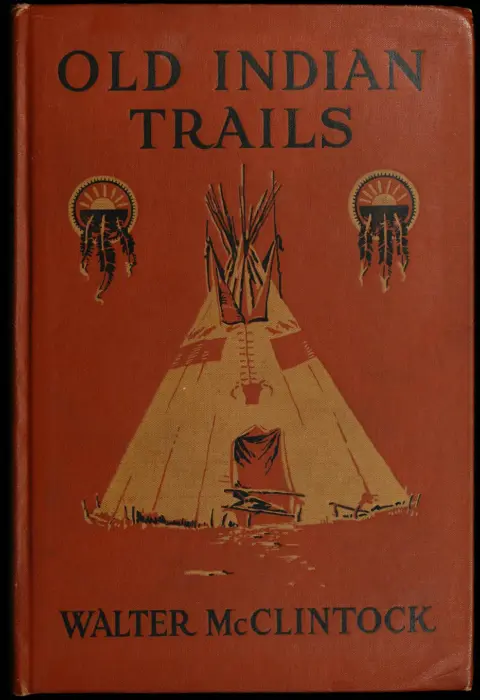
"Old Indian Trails" by Walter McClintock is a historical account written in the early 20th century. The book explores the author's experiences as he embarks on a government expedition in northwestern Montana, where he interacts with the Blackfoot Indians and becomes integrated into their culture over many years. The narrative provides insights into the customs, legends, and the significant changes faced by the Blackfoot tribe as they adapt to the encroachment of civilization. The opening of "Old Indian Trails" sets the stage for the author's journey into the heart of Blackfoot territory, beginning with his arrival in Montana as part of a government expedition in 1896. He is accompanied by a Blackfoot scout named Siksikaí-koan, who introduces him to the beauty and challenges of the wilderness. As the author expresses his yearning for a life in nature away from the constraints of city life, readers are drawn into his anticipation of the adventures ahead. His growing relationship with Siksikaí-koan is evident, as he admires the scout's knowledge of the land, legends, and wildlife, leading to a profound exploration of Native American life during a transformative era. The narrative promises a deep dive into the cultural richness of the Blackfoot people and an insightful perspective on the impact of modernization on their lives.
Introduction adapted from the source catalogue; source summaries may be automatically generated.
Free to read · English · 102,174 words · No account needed
MAKE TIME FOR A GOOD BOOK
On by default. Untick to stop anonymous reading totals. Each page counts after 10 seconds in view. How this works.
Anonymous counting is on unless you have switched it off.
“My father taught me how to read the future, by watching the flights of birds and the habits of wild animals. Of all the birds, we look upon the raven as the wisest. When I see one soaring over our camp, I know a messenger is coming from a distance. If two ravens sit near a trail with their heads close together, it is a sign an enemy is near. On a hunt, if I see a flock of ravens playing together, I go in that direction and am sure to find game.
“My father told me how to read the signs in the sky—if the sun paints his face (sun dogs), a big storm is coming; when the ‘fires of the northmen’ (aurora) show in the sky, a heavy wind is coming; a ‘feeding star’ (comet), is a sign of famine and sickness; and if the sun hides his face (eclipse), a great chief is about to die. The rainbow is the ‘lariat’; it is the Thunder roping the rain; and the storm will slow up.”
“The first moon of winter (November) is the ‘wind-moon,’ or ‘time of the first big snow.’
“Last of December and early January, ‘moon of the first warm wind’
(chinook).
“January, ‘moon when the jack rabbit whistles at night.’
“February, ‘moon of heavy snows,’ or ‘when buffalo calves are
black.’
“March, ‘moon of sore eyes,’ or ‘moon when the geese fly north.’
“April, ‘moon when ice breaks up in the rivers.’
“The spring moon has different names—‘time when the trees are budding,’ ‘when buffalo calves are yellow,’ ‘when the buffalo plant is in flower,’ ‘when the grass begins to grow.’
“May, ‘moon when the leaves come out.’
“June, ‘moon of high water.’
“Late June and July, ‘moon of flowers,’ ‘when strawberries get
ripe.’
“We call August, ‘home days.’
“September, ‘moon when the leaves turn yellow.’
“October, ‘moon when the leaves fall.’
“Last of October and early November, ‘moon when the geese fly
south.’
“My father used to sit by the lodge-fire on long winter evenings and tell us stories and the wonderful things that happened in his life. He told about the Stars and the Sun and the Moon, saying:
“There is a family of small stars in the sky; we call them Bunched Stars. They are some children that got lost from an Indian camp on the plains long ago.
“This happened in the spring, the moon when the buffalo calves are yellow. Some hunters were driving buffalo over a cliff. When they went back to camp, they gave the little yellow skins of the buffalo calves to their children, who wore them in playing.
Your reading position is saved on this browser. Take it to another device with a library code. Reading pages adapt to text, rather than matching a printed edition.
BEHIND THE BOOK
This eBook is for the use of anyone anywhere in the United States and most other parts of the world at no cost and with almost no restrictions whatsoever. You may copy it, give it away or re-use it under the terms of the Project Gutenberg License included with this eBook or online at www.gutenberg.org. If you are not located in the United States, you will have to check the laws of the country where you are located before using this eBook. Read the source licence.
The original source file, including credits and licence, is retained by this library. Request an original-format copy at no charge. Please include the book title and Project Gutenberg identifier #68074.
KEEP YOUR CURIOSITY GOING
Wilfrid Scawen Blunt
Wilfrid Scawen Blunt

E. W. (Edgar Watson) Howe
Cécile Tormay

Moritz Busch
John L. Ransom