THE CLASSIC COLLECTION✦The adventures of an ensignCLASSIC FREE BOOKS
The adventures of an ensign
Valentine Williams
THE CLASSIC COLLECTION · 1919
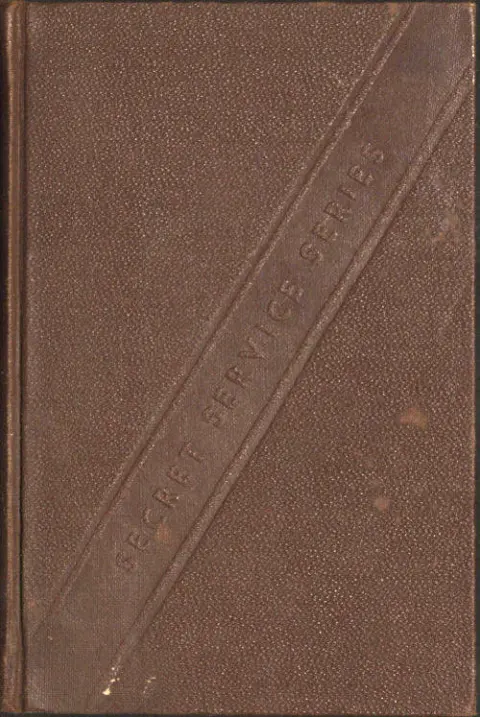
"Okewood of the Secret Service" by Valentine Williams is a novel likely written in the early 20th century during the tumult of World War I. The story appears to revolve around themes of espionage and murder, centered on the character of Arthur Mackwayte, a once-popular music hall performer, and his daughter, Barbara. Following a performance, they find themselves entangled in a mysterious murder at their home, leading to unraveling dangerous secrets that could have far-reaching implications. The opening of the book introduces Mr. Arthur Mackwayte and his daughter Barbara as they navigate the challenges of a struggling performer amidst the changing landscape of entertainment due to the war. After an unexpected call to fill a role at the Palaceum Theatre, they return home only to find themselves thrust into a dark mystery when Mr. Mackwayte is found murdered. The narrative builds tension as the characters face personal and societal struggles while hints of a deeper espionage plot begin to surface connected to the glamorous yet menacing figure of Nur-el-Din, a celebrated dancer linked to the unfolding tragedy. This sets the stage for an intricate tale of deception, loyalty, and the perilous world of spies during a time of war.
Introduction adapted from the source catalogue; source summaries may be automatically generated.
Free to read · English · 90,217 words · No account needed
MAKE TIME FOR A GOOD BOOK
On by default. Untick to stop anonymous reading totals. Each page counts after 10 seconds in view. How this works.
Anonymous counting is on unless you have switched it off.
“Escaped, escaped? Ah, oui, par exemple, in a German Staff car. As I have told my colleague here,” he went on, addressing the Admiral, “she escaped to Metz, the headquarters of the Army Group commanded by the... the... how do you say? the Prince Imperial?”
“The Crown Prince,” rectified the Chief.
“Ah, oui,—the Crown Prince. Messieurs, we have absolute testimony that this woman lived for nearly two years either in Metz or Berlin, and further, that at Metz, the Crown Prince was a constant visitor at her house. She was one of the ladies who nearly precipitated a definite rupture between the Crown Prince and his wife. Mon Admiral,” he went on, addressing the First Sea Lord again, “that this woman should be at large is a direct menace to the security of this country and of mine. It is only this morning that I at length received from Paris the facts which I have just laid before you. It is for you to order your action accordingly!”
The little Frenchman folded his arms pompously and gazed at the
ceiling.
“How does she explain her movements prior to her coming to this country” the First Sea Lord asked the Chief.
For an answer the Chief pressed the bell.
“Samuel, who engaged her, is outside. You shall hear her story from
him,” he said.
Samuel entered, exuding business acumen, prosperity, geniality. He nodded brightly to the Chief and stood expectant.
“Ah, Mr. Samuel,” said the Chief, “I wanted to see you about Nur-el-Din. You remember our former conversation on the subject. Where did she say she went to when she escaped to Brussels?”
“First to Ostend,” replied the music-hall proprietor, “and then, when the general exodus took place from there, to her mother’s country place near Lyons, a village called Sermoise-aux-Roses.”
“And what did she say her mother’s name was?”
“Madame Blondinet, sir!”
The Frenchman rapped smartly on a little pocketbook which he had produced and now held open in his hand.
“There, is a Madame Blondinet who has a large farm near Sermoise-aux-Roses,” he said, “and she has a daughter called Marcelle, who went to America.”
“Why then...?” began the First Sea Lord.
“Attendez un instant!”
The Colonel held up a plump hand.
“Unfortunately for Madame Nur-el-Din, this Marcelle Blondinet spent the whole of her childhood, in fact, the whole of her life until she was nineteen years of age, on her mother’s farm at a time when this Marcelle Blondinet was touring Europe with The Seven Duponts. The evidence is absolute. Mademoiselle here heard the dancer herself confirm it last night!”
Your reading position is saved on this browser. Take it to another device with a library code. Reading pages adapt to text, rather than matching a printed edition.
Valentine Williams

Valentine Williams
Valentine Williams
Valentine Williams
BEHIND THE BOOK
This eBook is for the use of anyone anywhere in the United States and most other parts of the world at no cost and with almost no restrictions whatsoever. You may copy it, give it away or re-use it under the terms of the Project Gutenberg License included with this eBook or online at www.gutenberg.org. If you are not located in the United States, you will have to check the laws of the country where you are located before using this eBook. Read the source licence.
The original source file, including credits and licence, is retained by this library. Request an original-format copy at no charge. Please include the book title and Project Gutenberg identifier #2417.
KEEP YOUR CURIOSITY GOING
Coulson Kernahan

Maurice Baring
Frances Wright
Cécile Tormay

Frederic Jesup Stimson

W. H. P. (William Henry Pope) Jarvis