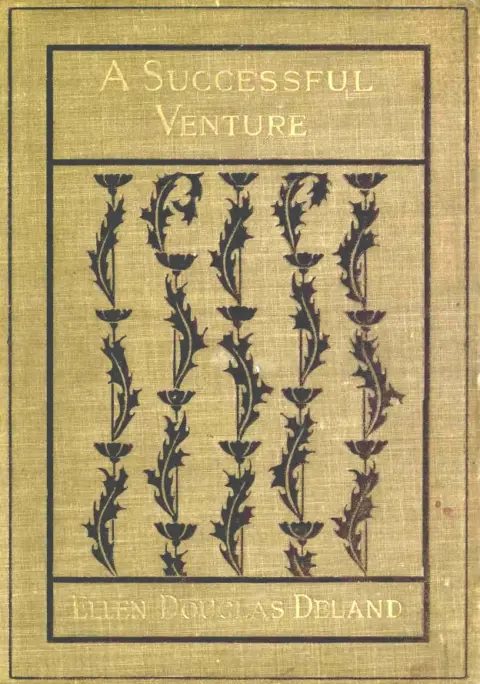
A successful venture
Ellen Douglas Deland
THE CLASSIC COLLECTION · 1895
"Oakleigh" by Ellen Douglas Deland is a novel written in the late 19th century. Set in a Massachusetts household, it follows the Franklin children—earnest Edith, spirited Cynthia, enterprising Jack, and the younger Janet and Willy—as they cope with loss, responsibility, and the upheaval of their father’s remarriage to Hester Gordon. Domestic comedy, small-town social life, and youthful schemes (notably Jack’s poultry-incubator enterprise) shape a warm, gently humorous family story. The opening of Oakleigh introduces the Franklins’ home and rhythms: motherless Edith manages the house, while twins Jack and Cynthia debate Jack’s plan to raise prize chickens with an incubator. Aunt Betsey Trinkett breezes in, funds the scheme, and unwittingly inspires Cynthia’s prank—an impersonation that leads to a gossip-fueled revelation that Mr. Franklin is likely to remarry. A disastrous meddling by the little ones ruins the first hatch, and Mr. Franklin confirms his engagement to Hester Gordon. The marriage soon follows; Cynthia embraces the kind new stepmother while Edith resists, even as Hester brings practical help (a new horse and cart) and cheer. A village tennis tournament, the arrival of Hester’s outspoken brother Neal, and his partnership with Jack on the poultry venture set the stage for family adjustments and future complications.
Introduction adapted from the source catalogue; source summaries may be automatically generated.
Free to read · English · 64,060 words · No account needed
MAKE TIME FOR A GOOD BOOK
On by default. Untick to stop anonymous reading totals. Each page counts after 10 seconds in view. How this works.
Anonymous counting is on unless you have switched it off.
They wandered into the big silent kitchen. The servants were up-stairs, and beyond the buzzing of a fly on the window-pane, and the singing of the kettle on the range, perfect quiet reigned.
"Let's go down and see the inkerbaker," said Willy.
"All right," returned Janet, affably, and down they pattered as fast as their sturdy little legs could carry them.
They peered in through the glass front at the eggs which lay so
peacefully within.
"It must be turrible stupid in there," said Janet, pityingly.
"Shouldn't you think those chickens would be tired of waiting to come
out?"
"Yes. We might crack a lot and help 'em out."
"Oh no. Jack says they won't be ready for two days. But I'll tell you what we might do. We might see whether it's hot enough for 'em in there. I guess Jack's forgotten all about 'em. I don't believe he's been near 'em to-day, nor Martha either."
"How d' yer find out whever it's hot enough?"
"I don't know. Guess you open the door and put your hand in and
feel."
For Janet had never been taught the significance of the thermometer
inside, and knew nothing of the proper means of ventilating the
machine.
No sooner said than done. One of the doors was promptly opened, and two fat hands were thrust into the chamber.
"My goodies, it's hot there!" cried Janet. "We ought to cool it off. Let's leave the door open and turn down the lamp and open the cellar window."
Mounted on an old barrel, Janet, at the risk of her life, struggled in vain with the window. She chose one that was never used, and it refused to respond to her efforts. Then she descended, and returned to the incubator.
"Can't do it," she said. "But I'll tell you what we'll do."
"What?" asked the ever-ready Willy.
"Pour some ice-water over 'em. That'll cool 'em nicely."
They travelled up the cellar stairs to the "cooler," which stood in
the hall.
"Wish we had a pitcher," said Janet. "You take the tum'ler, and I'll
get a dipper."
It required several journeys to and fro to sufficiently cool the eggs, according to their way of thinking, but at last it was accomplished, with much dripping of water and splashing of clean clothes.
The water-cooler was left empty, and the incubator was in a state of dampness alarming to behold.
"There; I guess it's cool enough now!" said Janet, when the last trip
had been taken.
Alas, the mercury, which should have remained at 103°, had dropped
quietly down to 70°!
"I'd like to see what's in those eggs," said Willy, meditatively. "D' yer s'pose they're duckies yet?"
Your reading position is saved on this browser. Take it to another device with a library code. Reading pages adapt to text, rather than matching a printed edition.
Ellen Douglas Deland
BEHIND THE BOOK
This eBook is for the use of anyone anywhere in the United States and most other parts of the world at no cost and with almost no restrictions whatsoever. You may copy it, give it away or re-use it under the terms of the Project Gutenberg License included with this eBook or online at www.gutenberg.org. If you are not located in the United States, you will have to check the laws of the country where you are located before using this eBook. Read the source licence.
The original source file, including credits and licence, is retained by this library. Request an original-format copy at no charge. Please include the book title and Project Gutenberg identifier #76126.
KEEP YOUR CURIOSITY GOING
Coulson Kernahan

Maurice Baring
Frances Wright
Cécile Tormay

Frederic Jesup Stimson

W. H. P. (William Henry Pope) Jarvis