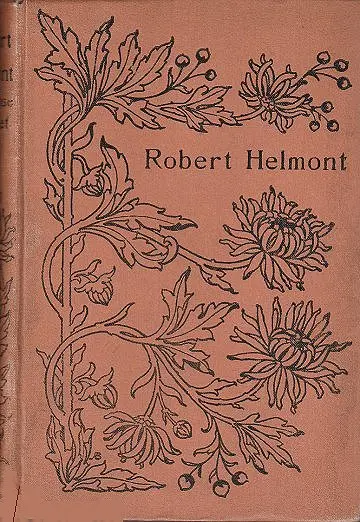
Robert Helmont: Diary of a Recluse, 1870-1871
Alphonse Daudet
THE CLASSIC COLLECTION · 1898
"Numa Roumestan" by Alphonse Daudet is a novel written in the late 19th century. The story revolves around Numa Roumestan, a prominent politician and local hero in the town of Aps in Provence, who is adored by the population due to his charismatic presence and political influence. The narrative explores themes of ambition, identity, and the contrasts between provincial life and the complexities of city politics, particularly through the lens of Roumestan's character and his interactions with his family and constituents. The opening of the novel transports the reader to a vibrant summer festival in the ancient amphitheater of Aps, where thousands gather to celebrate Numa Roumestan's arrival. The atmosphere is charged with excitement as villagers from various backgrounds cheer for their illustrious representative. Roumestan basks in the adoration, though his wife Rosalie appears less engaged and struggles to adapt to the fervor of her husband's supporters. In this lively and animated scene, we are introduced to both the grandeur of Roumestan’s public persona and the subtle undercurrents of personal discontent within his family life, setting the stage for the complex dynamics that will unfold throughout the story.
Introduction adapted from the source catalogue; source summaries may be automatically generated.
Free to read · English · 99,195 words · No account needed
MAKE TIME FOR A GOOD BOOK
On by default. Untick to stop anonymous reading totals. Each page counts after 10 seconds in view. How this works.
Anonymous counting is on unless you have switched it off.
Away down there at the end of the alley, on the little gravelled circle whence the band was sending its last note, there was a movement of umbrellas and light-colored gowns among the foliage, just as the first strokes of the dinner bells were heard from the hotels. The ladies Le Quesnoy detached themselves from a group of lively, chatting people, Hortense tall and slender in the sunlight, in a toilet of muslin and valenciennes, a hat trimmed with roses and in her hand a bouquet of the same kind of rose bought in the park.
“With whom were you talking just now, Numa? We thought it was Dr.
Bouchereau.”
There she was before him, dazzling in her youth and so brilliant, on that happy day, that her mother herself began to lose her fears and allowed a little of that infectious gayety to be reflected on her ancient face.
“Yes, it was Bouchereau, who was recounting to me his miseries; he’s pretty low, poor fellow!”
And Numa, looking at her, reassured himself.
“The man is crazy; it is not possible; it’s his own death he is dragging about with him and prognosticates everywhere.”
At that moment Bompard appeared, walking very quickly and brandishing a
newspaper.
“What is up?” asked the Minister.
“Great news! The tabor-player has made his début--”
They heard Hortense murmur: “At last!” and Numa was radiant.
“Success, was it not?”
“Do you think so? I have not read the article; but here are three columns on the front sheet of the Messenger!”
“There’s one more whom I discovered!” said the Minister, who had seated himself again with his thumbs in the armholes of his waist-coat. “Come on, read it to us.”
Mme. Le Quesnoy having called attention to the fact that the dinner-bell had sounded, Hortense hastily answered that it was only the first bell, and, her cheek resting on her hand, she listened in a pretty attitude of smiling expectancy. Bompard read:
“Is it due to the Minister of the Fine Arts or to the Director of the Opera that the Parisian public suffered such a grotesque mystification as that with which it was victimized last night?--”
They all started, with the exception of Bompard, who, under the impetus of his gait as a fine reader, lulled by the sonorous sound of his own voice and without taking in what he was reading, looked from one to the other, surprised at their astonishment.
“Well,” said Numa, “go on, go on!”
“In any case, it is the Honorable Roumestan who must shoulder the responsibility. He it is who has lugged up from his province this savage and odd-looking piper, this goat-whistler--”
Your reading position is saved on this browser. Take it to another device with a library code. Reading pages adapt to text, rather than matching a printed edition.
Alphonse Daudet
Alphonse Daudet
Alphonse Daudet
Alphonse Daudet
BEHIND THE BOOK
This eBook is for the use of anyone anywhere in the United States and most other parts of the world at no cost and with almost no restrictions whatsoever. You may copy it, give it away or re-use it under the terms of the Project Gutenberg License included with this eBook or online at www.gutenberg.org. If you are not located in the United States, you will have to check the laws of the country where you are located before using this eBook. Read the source licence.
The original source file, including credits and licence, is retained by this library. Request an original-format copy at no charge. Please include the book title and Project Gutenberg identifier #69808.
KEEP YOUR CURIOSITY GOING
Cécile Tormay

Moritz Busch
Coulson Kernahan
John L. Ransom

Maurice Baring
Frances Wright