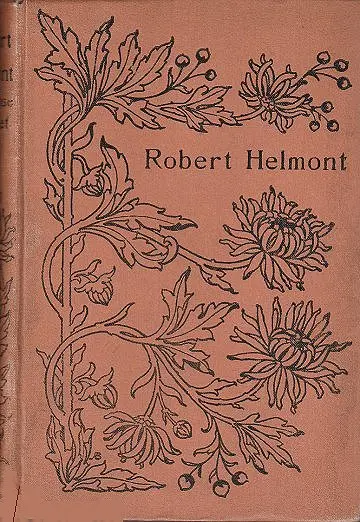
Robert Helmont: Diary of a Recluse, 1870-1871
Alphonse Daudet
THE CLASSIC COLLECTION · 1898
"Numa Roumestan" by Alphonse Daudet is a novel written in the late 19th century. The story revolves around Numa Roumestan, a prominent politician and local hero in the town of Aps in Provence, who is adored by the population due to his charismatic presence and political influence. The narrative explores themes of ambition, identity, and the contrasts between provincial life and the complexities of city politics, particularly through the lens of Roumestan's character and his interactions with his family and constituents. The opening of the novel transports the reader to a vibrant summer festival in the ancient amphitheater of Aps, where thousands gather to celebrate Numa Roumestan's arrival. The atmosphere is charged with excitement as villagers from various backgrounds cheer for their illustrious representative. Roumestan basks in the adoration, though his wife Rosalie appears less engaged and struggles to adapt to the fervor of her husband's supporters. In this lively and animated scene, we are introduced to both the grandeur of Roumestan’s public persona and the subtle undercurrents of personal discontent within his family life, setting the stage for the complex dynamics that will unfold throughout the story.
Introduction adapted from the source catalogue; source summaries may be automatically generated.
Free to read · English · 99,195 words · No account needed
MAKE TIME FOR A GOOD BOOK
On by default. Untick to stop anonymous reading totals. Each page counts after 10 seconds in view. How this works.
Anonymous counting is on unless you have switched it off.
“Well, that is a fantastic idea! It is very becoming to you, but I like you far better as a Parisian girl. And who dressed you so well?”
“Audiberte Valmajour. She has just gone out.”
“How often she comes here!” said Rosalie, going into their room to take off her bonnet. “What a friendship it is! I shall begin to get jealous.”
Hortense excused herself, a little bit embarrassed; this head-dress from Provence gave so much pleasure to their mother in the sober house.
“Is it not true, mother?” cried she, going from one room into the other. “Besides, that poor girl feels so outlandish in Paris and is so interesting with her blind devotion to the genius of her brother.”
“Oh! Genius, is it?” said the big sister, tossing her head a bit.
“What! You saw it yourself the other night at your house, the effect it produced--everywhere just the same thing!”
And when Rosalie answered that one must estimate at their real value these successes won in the world of society and due to politeness, a caprice of an evening, the last fad:
“Well, I don’t care, he is in the opera!”
The velvet band on the little head-dress bristled up in sign of revolt, as if it were really covering one of those enthusiastic heads above whose profile it floats, down there in Provence. Besides, the Valmajours were not peasants like others, but the last remnants of a reduced family of nobles.
Rosalie, standing in front of the tall mirror, turned about laughing:
“What! You believe in that legend?”
“Why, of course I do. They descend in direct line from the Princes des Baux. There are the parchments and there are the coats of arms at their rustic doorway. Any day that they should wish--”
Rosalie shuddered. Behind the peasant who played the flute there was the prince besides. Given a strong imagination--and that might become dangerous.
“None of that story is true,” and this time she did not laugh any more. “In the district of Aps there are ten families bearing that so-called princely name. Anybody who told you otherwise told a falsehood through vanity or through--”
“But it was Numa--it was your husband. The other night at the Ministry he gave us all sorts of details.”
“O! You know how it is with him--you have got to consider the focus, as
he says himself.”
Hortense was not listening. She had gone back into the drawing-room, and, seated at the piano, she began in a loud voice:
“Mount’ as passa ta matinado,
Mourbieù, Marioun....”
Your reading position is saved on this browser. Take it to another device with a library code. Reading pages adapt to text, rather than matching a printed edition.
Alphonse Daudet
Alphonse Daudet
Alphonse Daudet
Alphonse Daudet
BEHIND THE BOOK
This eBook is for the use of anyone anywhere in the United States and most other parts of the world at no cost and with almost no restrictions whatsoever. You may copy it, give it away or re-use it under the terms of the Project Gutenberg License included with this eBook or online at www.gutenberg.org. If you are not located in the United States, you will have to check the laws of the country where you are located before using this eBook. Read the source licence.
The original source file, including credits and licence, is retained by this library. Request an original-format copy at no charge. Please include the book title and Project Gutenberg identifier #69808.
KEEP YOUR CURIOSITY GOING
Cécile Tormay

Moritz Busch
Coulson Kernahan
John L. Ransom

Maurice Baring
Frances Wright