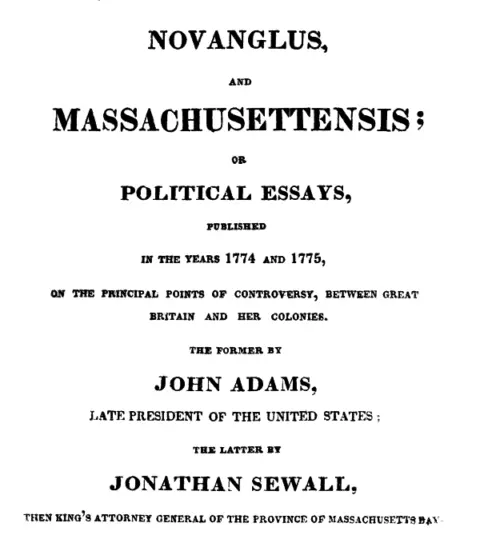
Novanglus, and Massachusettensis or, Political Essays, Published in the Years 1774 and 1775, on the Principal Points of Controversy, between Great Britain and Her Colonies
Every artifice is employed to ensure a rigorous, a severe, a cruel execution of this system of tyranny. The religion, the morality, of all plantation governors, of all naval commanders, of all custom house officers, if they had any, and all men have some, were put in requisition by the most solemn oaths. Their ambition was inlisted by the forfeiture of their officers; their avarice was secured by the most tempting penalties and forfeitures, to be divided among them. Fine picking to be sure! Even the lowest, the basest informers were to be made gentlemen of fortune!
I must transcribe one section of this detestable statute, and leave you to read the rest; I can transcribe no more.
The sixth section of this benign law, of our glorious deliverer king
William, is as follows:
Section 6. "And for the more effectual preventing of frauds, and regulating abuses in the plantation trade, in America, be it further enacted by the authority aforesaid, that all ships coming into, or going out of any of the said plantations, and lading, or unlading any goods or commodities, whether the same be his majesty's ships of war, or merchant ships, and the masters and commanders thereof, and their ladings, shall be subject and liable to the same rules, visitations, searches, penalties, and forfeitures, as to the entering, landing, and discharging their respective ships and ladings, as ships and their ladings, and the commanders and masters of ships, are subject and liable unto in this kingdom, by virtue of an act of parliament made in the fourteenth year of the reign of king Charles 2d. intituled, an act for preventing frauds, and regulating abuses in his majesty's customs. And that the officers for collecting and managing his majesty's revenue, and inspecting the plantation trade, and in any of the said plantations, shall have the same powers and authorities, for visiting and searching of ships, and taking their entries, and for seizing and securing, or bringing on shore any of the goods prohibited to be imported or exported into or out of any the said plantations, or for which any duties are payable, or ought to have been paid, by any of the before mentioned acts, as are provided for the officers of the customs in England by the said last mentioned act, made in the fourteenth year of the reign of king Charles 2d.; and also to enter houses or warehouses, to search for and seize any such goods; and that all the wharfingers, and owners of keys and wharves, or any lightermen, bargemen, watermen, porters, or other persons assisting in the conveyance, concealment, or rescue of any of the said goods, or in the hindering or resistance of any of the said officers in the performance of their duty, and the boats, barges, lighters, or other vessels employed in the conveyance of such goods, shall be subject to the like pains and penalties as are provided by the same act made in the fourteenth year of the reign of king Charles 2d. in relation to prohibited or unaccustomed goods in this kingdom; and that "the like assistance" shall be given to the said officers in the execution of their office, as by the said last mentioned act is provided for the officers in England; and also, that the said officers shall be subject to the same penalties and forfeitures, for any corruptions, frauds, connivances, or concealments, in violation of any the before mentioned laws, as any officers of the customs in England are liable to, by virtue of the last mentioned act; and also, that in case any officer or officers in the plantations shall be seized or molested for any thing done in the execution of their office, the said officer shall and may plead the general issue, and shall give this or other custom acts in evidence, and the judge to allow thereof, have and enjoy the like privileges and advantages, as are allowed by law to the officers of his majesty's customs in England."