THE CLASSIC COLLECTION✦The StrollersCLASSIC FREE BOOKS
The Strollers
Frederic Stewart Isham
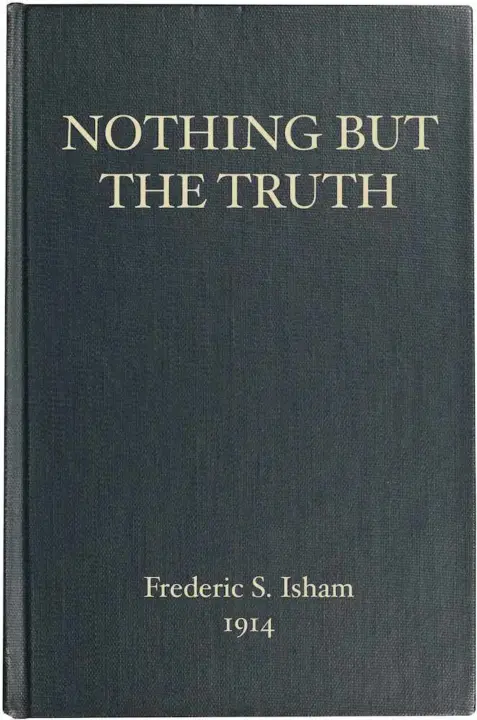
THE CLASSIC COLLECTION · 1914
"Nothing But the Truth" by Frederic S. Isham is a novel written in the early 20th century. The story revolves around Bob Bennett, a young man facing financial hardship after his father's business failure. As he navigates social life amidst this turmoil, the narrative explores themes of honesty, societal expectations, and the complexities of love and friendship. The opening of the novel introduces readers to a conversation between Bob and his friends at the University Club, where they challenge him to undertake a daring experiment: to only speak the truth for three weeks. This sets off a chain of events that complicates Bob's interactions as he tries to balance his obligations to his father and the expectations of his social circle. As he contemplates the task ahead, the weight of truthfulness becomes apparent, particularly when he encounters Miss Gwendoline Gerald, a figure of his affection. The narrative hints at Bob's struggles between loyalty, honesty, and societal pressures, setting the stage for a comedic and poignant exploration of the challenges that arise when one dares to live authentically in a world often driven by pretense.
Introduction adapted from the source catalogue; source summaries may be automatically generated.
Free to read · English · 73,905 words · No account needed
MAKE TIME FOR A GOOD BOOK
On by default. Untick to stop anonymous reading totals. Each page counts after 10 seconds in view. How this works.
Anonymous counting is on unless you have switched it off.
“It’s proofs I’m asking, Mr. Detective,” retorted Gee-gee, apparently not greatly abashed by this threat. She was accustomed to hitting back.
“Yes, it’s proofs,” said Gid-up, but in weaker accents.
The monocle-man shook a reproving finger at Gid-up. “You’re in bad company, my dear,” he observed. “You’re out of Gee-gee’s class. You’re just trying to be in it.”
“I don’t want any of your impertinence,” answered Gid-up with a faint imitation of Gee-gee’s manner. “He’s a proper bad one.” Pointing to Clarence who presented a picture of abject misery. “And when I tell all the things he done to me—”
“But you won’t tell them.”
“I have.” Defiantly. “In that paper the lawyer drew up.”
“But you’re going to sign a little paper I have here, repudiating all that,” he answered her.
“Oh, am I?” Elevating her turned-up nose.
“You are.” Blandly.
“Guess again,” said Gid-up saucily.
“You can’t prove what we told in that affidavit isn’t true,” reaffirmed Gee-gee. Only she and Gid-up could know it was a “frame-up”; they had builded carefully and were sure of their ground. “We know our rights and we’re going to have them. We’re not afraid of you.”
“Then why are you here?” quietly.
“That lawyer at the house said we might as well see you, just to call your bluff. He said, since we had told the truth, we had nothing to fear.”
“I don’t think you’re quite so confident as you seem,” observed the monocle-man. “My note awoke a little uneasiness, or you wouldn’t be here. This young lady,” turning to Gid-up, “suffered a mild case of stage fright, if I am any judge of human nature.”
“Me?” said Gid-up. “I defy you.”
“Here’s the answer,” replied the monocle-man, taking another paper from
his pocket.
“What’s that?” said Gee-gee scornfully. “I suppose it’s some lies from him.” Alluding to the commodore. “The lawyer told me to be prepared for them.”
“No; it isn’t that. It’s only a stenographic report of a conversation you and your friend had together in your room, the night you arrived at Mrs. Ralston’s.”
“A stenographic report? Nonsense!” Sharply. Gee-gee remembered all about that conversation. “How could you—”
“There’s a dictograph in the room you occupied, my dear,” observed the
monocle-man.
“A dic—” Gee-gee seemed to turn green. “Good Gawd!” she said.
It wasn’t very long thereafter that Gee-gee and Gid-up departed.
“Back to the old life!” said Gee-gee wearily. “And just when I thought my ambition to be a star was coming true.”
Your reading position is saved on this browser. Take it to another device with a library code. Reading pages adapt to text, rather than matching a printed edition.
Frederic Stewart Isham
Frederic Stewart Isham
Frederic Stewart Isham
BEHIND THE BOOK
This eBook is for the use of anyone anywhere in the United States and most other parts of the world at no cost and with almost no restrictions whatsoever. You may copy it, give it away or re-use it under the terms of the Project Gutenberg License included with this eBook or online at www.gutenberg.org. If you are not located in the United States, you will have to check the laws of the country where you are located before using this eBook. Read the source licence.
The original source file, including credits and licence, is retained by this library. Request an original-format copy at no charge. Please include the book title and Project Gutenberg identifier #43916.
KEEP YOUR CURIOSITY GOING
Coulson Kernahan

Maurice Baring
Frances Wright
Cécile Tormay

Frederic Jesup Stimson

W. H. P. (William Henry Pope) Jarvis