Things to be Remembered in Daily Life With Personal Experiences and Recollections
John Timbs
THE CLASSIC COLLECTION · 1867
"Nooks and Corners of English Life, Past and Present" by John Timbs is a historical account written in the late 19th century. The work delves into the domestic manners and customs of various periods in English history, offering insights into the lives of the English people from prehistoric times to more recent eras. The book aims to illuminate the changes in society and domestic life through vivid illustrations and detailed narratives. The opening of the book sets the stage by discussing the various dwelling places of early Britons. It emphasizes the connection between housing structures and the civilizations that inhabited them, providing descriptions of rudimentary homes, including reed cabins and caves, and explaining their significance. The text discusses archaeological discoveries that reveal the early human habitat and elaborates on the lifestyles and customs of the Britons before the Roman conquest. Through a blend of historical examination and anecdotal evidence, the author aims to paint a comprehensive picture of English life throughout the ages.
Introduction adapted from the source catalogue; source summaries may be automatically generated.
Free to read · English · 108,973 words · No account needed
MAKE TIME FOR A GOOD BOOK
On by default. Untick to stop anonymous reading totals. Each page counts after 10 seconds in view. How this works.
Anonymous counting is on unless you have switched it off.
On May-day and December 26th, is distributed the fund bequeathed in 1717 and 1736, by Mr. Raine, a wealthy brewer at St. George's-in-the-East, who founded schools and a hospital for girls, and added marriage portions of 100l., to be drawn by lots: the winner is married to a young man, of St. John's, Wapping, or St. Paul's, Shadwell; the couple dine with their friends, and in the evening an ode is sung, and the marriage portion of one hundred new sovereigns is presented to the bride.
Miss Baker, in her Northamptonshire Glossary, tells us that there are very few villages in that county where the May-day Festival is not noticed in some way or other.
That the ancient town of Banbury, lying on the northern verge of the county of Oxford, should have been famed, from time immemorial, for its rich cakes, should not excite our special wonder, seeing that the district has some of the richest pasture land in the kingdom; a single cow being here known to produce 200 pounds of butter in a year! Butter, we need scarcely add, is the prime ingredient of the Banbury cake, giving it the richness and lightness of the finest puff-paste; and, to the paper in which the cakes are wrapped, the appearance of their having been packed up by bakers with well-buttered fingers.
The cause of this cake-fame must, however, be sought in a higher walk of history than in the annals of pastry-making. It appears that the Banbury folks went on rejoicing in the fatness of their cakes until the reign of Elizabeth; from which time to that of Charles II., the people of the town were so noted for their peculiar religious fervour, as to draw upon themselves most unsparingly the satire of contemporary playwrights, wits, and humorists. By some unlucky turn of time, cakes, which were much valued by the classical ancients, and were given away as presents, in the Middle Ages, instead of bread, became looked upon as a superstitious relic by the Puritans, who thereupon abolished the practice. They formed so predominant a party at Banbury, in the reign of Elizabeth, that they pulled down Banbury Cross, so celebrated in our nursery rhymes. In the face of this historical fact, however, the reputed "zeal" of the Banburians has been attributed to an accidental circumstance, in modern phrase, "an error of the press." In Gough's edition of Camden's Britannia, in the MS. supplement, is this note: "Put out the word zeale in Banbury, where some think it a disgrace, when a zeale with knowledge is the greater grace among good Christians; for it was first foysted in by some compositor or press-man, neither is it in my Latin copie, which I desire the reader to hold as authentic." It was, indeed, printed, as a proverb, "Banbury zeal, cheese, and cakes," instead of "Banbury veal, cheese, and cakes." Gibson, in his edition of Camden, however, gives another version, relating: "There is a credible story--that while Philemon Holland was carrying on his English edition of the Britannia, Mr. Camden came accidentally to the press, when this sheet was working off; and looking on, he found, that to his own observation of Banbury being famous for cheese, the translator had added cakes and ale. But Mr. Camden thinking it too light an expression, changed the word ale into zeal; and so it passed, to the great indignation of the Puritans, who abounded in this town." Barnaby Googe, in his Strappado for the Divell, refers to Banbury as
Your reading position is saved on this browser. Take it to another device with a library code. Reading pages adapt to text, rather than matching a printed edition.
John Timbs
John Timbs
John Timbs
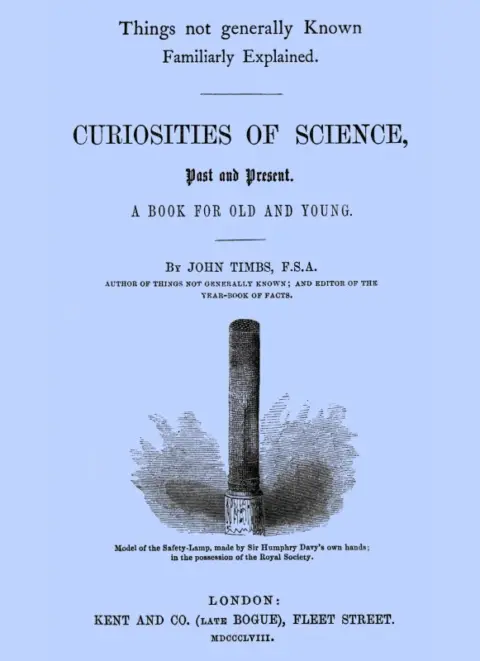
John Timbs
BEHIND THE BOOK
This eBook is for the use of anyone anywhere in the United States and most other parts of the world at no cost and with almost no restrictions whatsoever. You may copy it, give it away or re-use it under the terms of the Project Gutenberg License included with this eBook or online at www.gutenberg.org. If you are not located in the United States, you will have to check the laws of the country where you are located before using this eBook. Read the source licence.
The original source file, including credits and licence, is retained by this library. Request an original-format copy at no charge. Please include the book title and Project Gutenberg identifier #40031.
KEEP YOUR CURIOSITY GOING
Cécile Tormay

Moritz Busch
John L. Ransom
Frances Wright
Cécile Tormay

Mabel Potter Daggett