Things to be Remembered in Daily Life With Personal Experiences and Recollections
John Timbs
THE CLASSIC COLLECTION · 1867
"Nooks and Corners of English Life, Past and Present" by John Timbs is a historical account written in the late 19th century. The work delves into the domestic manners and customs of various periods in English history, offering insights into the lives of the English people from prehistoric times to more recent eras. The book aims to illuminate the changes in society and domestic life through vivid illustrations and detailed narratives. The opening of the book sets the stage by discussing the various dwelling places of early Britons. It emphasizes the connection between housing structures and the civilizations that inhabited them, providing descriptions of rudimentary homes, including reed cabins and caves, and explaining their significance. The text discusses archaeological discoveries that reveal the early human habitat and elaborates on the lifestyles and customs of the Britons before the Roman conquest. Through a blend of historical examination and anecdotal evidence, the author aims to paint a comprehensive picture of English life throughout the ages.
Introduction adapted from the source catalogue; source summaries may be automatically generated.
Free to read · English · 108,973 words · No account needed
MAKE TIME FOR A GOOD BOOK
On by default. Untick to stop anonymous reading totals. Each page counts after 10 seconds in view. How this works.
Anonymous counting is on unless you have switched it off.
Some dishes of the olden dinner-table are not very inviting. Our ancestors had no objection to stale fish; and blubber, if they could get it from a stray whale, or grampus or porpoise, was considered a delicacy. Yet some of the old dishes have stood the test of ages, as we see in the case of a Christmas Pie, the receipt to make which is preserved in the books of the Salters' Company, in the City of London.
"For to make a moost choyce Paaste of Gamys to be eten at ye Feste of Chrystemasse" (17th Richard II. A.D. 1394). A pie so made by the Company's cook in 1836 was found excellent. It consisted of a pheasant, hare, and capon; two partridges, two pigeons, and two rabbits; all boned and put into paste in the shape of a bird, with the livers and hearts, two mutton kidneys, forced-meats, and egg-balls, seasoning, spice, catsup, and pickled mushrooms, filled up with gravy made from the various bones.
We must, however, remember that Cookery flourished in the reign of Richard II., who rebuilt Westminster Hall, and gave therein a house-warming, at which old Stow says, "he feasted ten thousand persons." Richard is also said to have kept 2,000 cooks, who left to the world their famous cookery-book, the "Form of Cury, or, a Roll of English Cookery," compiled about the year 1390, by the master-cooks of the Royal Kitchen.
Sugar was at first regarded as a spice, and was introduced as a substitute for honey after the Crusades. It was sold by the pound in the thirteenth century, and was procurable even in such remote towns as Ross and Hereford. Before the discovery of America, however, Sugar was a costly luxury, and only used on rare occasions. About 1459, Margaret Barton, writing to her husband, who was a gentleman and landowner of Norfolk, begs that he will vouchsafe "to buy her a pound of sugar." Again: "I pray that ye will vouchsafe to send me another sugar-loaf, for my old one is done." The art of refining sugar, and what is called loaf-sugar, was discovered by a Venetian about the end of the fifteenth, or the beginning of the sixteenth century. Sugar-candy is of much earlier date; for in Marin's Storia di Commercio de Veneziani, there is an account of a shipment made at Venice for England, in 1319, of 100,000 pounds of sugar, and 10,000 pounds of sugar-candy. Refined or loaf-sugar is thus mentioned in a roll of provisions in the reign of Henry VIII.: "two loaves of sugar, weighing sixteen pound two ounces, at ---- per pound." A letter from Sir Edward Wotton to Lord Cobham, dated Calais, March 6, 1546, informs him that he had taken up for his lordship twenty-five sugar-loaves, at six shillings a loaf, "which is eightepence a pounde." Up to the close of the fifteenth century its price varied from one-and-sixpence to three shillings a pound, "or, on an average, to a sum equivalent to about thirty shillings at present." Sugar has become to us almost a necessary of life. "We consume it in millions of tons; we employ thousands of ships in transporting it. Millions of men spend their lives in cultivating the plants from which it is extracted, and the fiscal duties imposed upon it add largely to the revenue of nearly every established government. It may be said, therefore, to exercise a more direct and extended influence, not only over the social comfort, but over the social condition, of mankind, than any other production of the vegetable kingdom, with the exception, perhaps, of cotton alone."--J. F. W. Johnston, M.A.[51]
Your reading position is saved on this browser. Take it to another device with a library code. Reading pages adapt to text, rather than matching a printed edition.
John Timbs
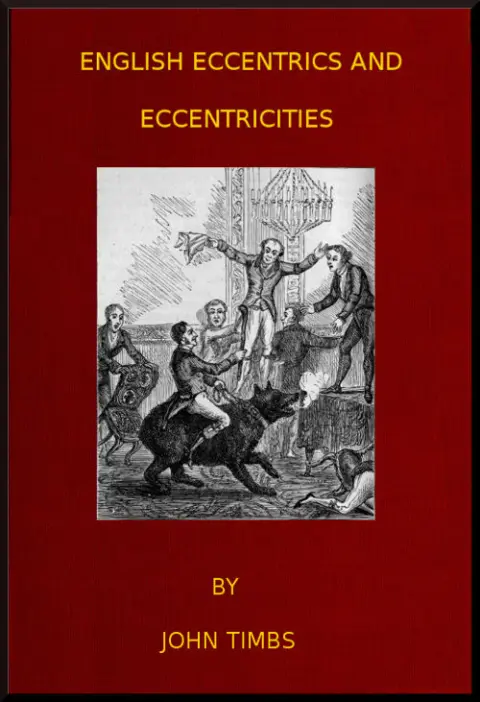
John Timbs
John Timbs
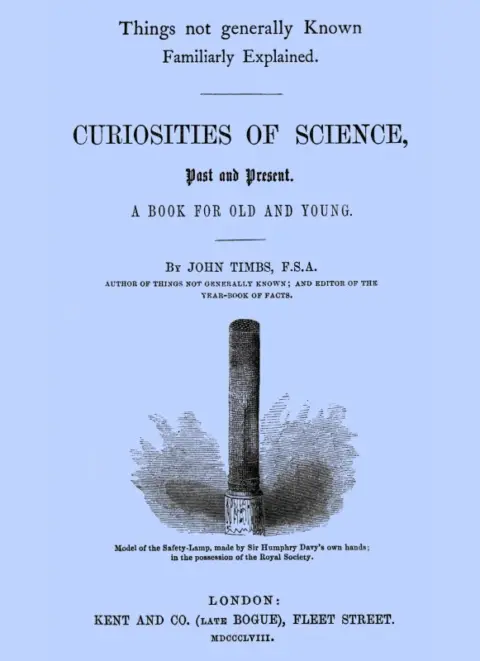
John Timbs
BEHIND THE BOOK
This eBook is for the use of anyone anywhere in the United States and most other parts of the world at no cost and with almost no restrictions whatsoever. You may copy it, give it away or re-use it under the terms of the Project Gutenberg License included with this eBook or online at www.gutenberg.org. If you are not located in the United States, you will have to check the laws of the country where you are located before using this eBook. Read the source licence.
The original source file, including credits and licence, is retained by this library. Request an original-format copy at no charge. Please include the book title and Project Gutenberg identifier #40031.
KEEP YOUR CURIOSITY GOING
Cécile Tormay

Moritz Busch
John L. Ransom
Frances Wright
Cécile Tormay

Mabel Potter Daggett