THE CLASSIC COLLECTION✦The story of Aaron (so named) the son of Ben AliCLASSIC FREE BOOKS
The story of Aaron (so named) the son of Ben Ali
Joel Chandler Harris
THE CLASSIC COLLECTION · 1883
"Nights With Uncle Remus: Myths and Legends of the Old Plantation" by Joel Chandler Harris is a collection of folk tales and legends written in the late 19th century. This work is rooted in the African-American folklore of the Southern United States and features characters like Uncle Remus, who narrates stories involving the clever rabbit, Brother Rabbit, and other animal folk. The tales explore themes of wit, survival, and the dynamics of plantation life. The opening of the book introduces Uncle Remus, an elderly man living on a plantation, who engages in storytelling with a little boy. As a storm rages outside, Uncle Remus recounts a tale about Brother Fox and the cunning ways of the animal characters in their world. The narrative captures an atmosphere of curiosity and amusement, with the little boy asking questions that lead to playful exchanges with Uncle Remus. Through dialogue and vibrant storytelling, the opening sets the stage for a series of humorous and moral stories that reflect the rich cultural heritage of African-American folklore.
Introduction adapted from the source catalogue; source summaries may be automatically generated.
Free to read · English · 120,638 words · No account needed
MAKE TIME FOR A GOOD BOOK
On by default. Untick to stop anonymous reading totals. Each page counts after 10 seconds in view. How this works.
Anonymous counting is on unless you have switched it off.
45. compair Torti tou le de pare. Jige la crie: "Go!" e ye
compere Tortue tous les deux prepares. Juge la crier: "Go!" et
eux
46. parti galope. Tan compair Chivreil rive cote primie partir galopper. Temps compere Chevreuil arriver cote premier
47. zalon, li hele: "Halo, compair Torti!" "Mo la, compair jalon, lui heler: "Halo, compere Tortue!" "Moi la, compere
48. Chivreil!" Tan ye rive dezieme zalon, compair Chivreil Chevreuil!" Temps eux arriver deuxieme jalon, compere Chevreuil
49. siffle: "Fioute!" Compair Torti reponne: "Croak!" Troisieme siffler: "Fioute!" Compere Tortue repondre: "Croak!" Troisieme
50. zalon boute, compair Torti tink-a-tink ave compair jalon au bout, compere Tortue tingue-a-tingue avec compere
51. Chivreil. "Diabe! Torti la galope pli vite Chevreuil. "Diable! Tortue la galopper plus vite
52. pace stimbotte; fo mo grouye mo cor." Tan compair passe steamboat; faut moi grouiller mon corps." Temps compere
53. Chivreil rive cote nevieme zalon, li oua compair Torti Chevreuil arriver cote neuvieme jalon, lui voir compere Tortue
54. ape patchiou dan dolo. Li mete ton so laforce apres patchiou! dans de l'eau. Lui mettre toute sa la force
55. dihior pou aien; avan li rive cote bite, li tende dehors pour rien; avant lui arriver cote but, lui entendre
56. ton monne ape hele: "Houra! houra! pou compair Torti!" tout monde apres heler: "Hourra! hourra! pour compere Tortue!"
57. Tan li rive, li oua compair Torti on la garlie ape Temps lui arriver, lui voir compere Tortue en la galerie apres
58. brasse Mamzel Calinda. Ca fe li si tan mal, li embrasser Mlle. Calinda. Cela faire lui si tant mal, lui
59. sape dan boi. Compair Torti maie ave Mamzel Calinda s'echapper dans bois. Compere Tortue marier avec Mlle. Calinda
60. samedi ape vini, e tou monne manze, boi, jika samedi apres venir, et tout monde manger, boire jusqu'a
61. y tchiak.[i_22]
eux griser.
It only remains to be said that none of the stories given in the present volume are "cooked." They are given in the simple but picturesque language of the negroes, just as the negroes tell them. The Ghost-story, in which the dead woman returns in search of the silver that had been placed upon her eyes, is undoubtedly of white origin; but Mr. Samuel L. Clemens (Mark Twain) heard it among the negroes of Florida, Missouri, where it was "The Woman with the Golden Arm." Fortunately, it was placed in the mouth of 'Tildy, the house-girl, who must be supposed to have heard her mistress tell it. But it has been negroized to such an extent that it may be classed as a negro legend; and it is possible that the white version is itself based upon a negro story. At any rate, it was told to the writer by different negroes; and he saw no reason to doubt its authenticity until after a large portion of the book was in type. His relations to the stories are simply those of editor and compiler. He has written them as they came to him, and he is responsible only for the setting. He has endeavored to project them upon the background and to give them the surroundings which they had in the old days that are no more; and it has been his purpose to give in their recital a glimpse of plantation life in the South before the war. If the reader, therefore, will exercise his imagination to the extent of believing that the stories are told to a little boy by a group of negroes on a plantation in Middle Georgia, before the war, he will need neither foot-note nor explanation to guide him.
Your reading position is saved on this browser. Take it to another device with a library code. Reading pages adapt to text, rather than matching a printed edition.
Joel Chandler Harris
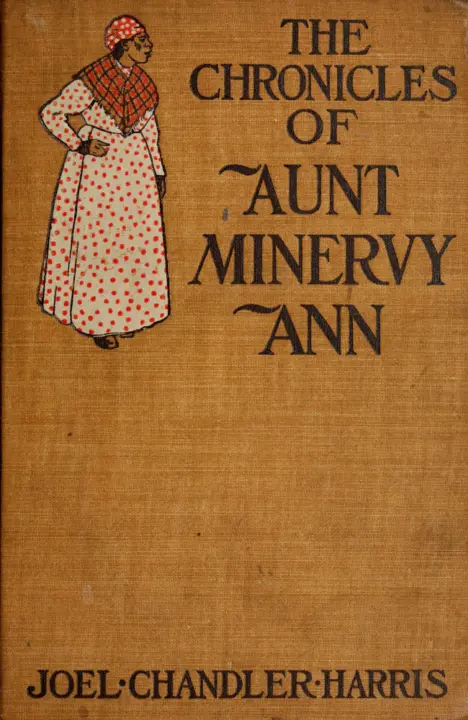
Joel Chandler Harris
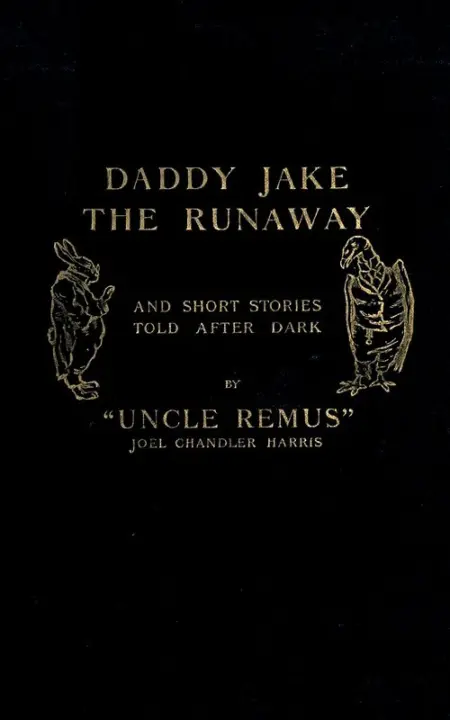
Joel Chandler Harris
Joel Chandler Harris
BEHIND THE BOOK
This eBook is for the use of anyone anywhere in the United States and most other parts of the world at no cost and with almost no restrictions whatsoever. You may copy it, give it away or re-use it under the terms of the Project Gutenberg License included with this eBook or online at www.gutenberg.org. If you are not located in the United States, you will have to check the laws of the country where you are located before using this eBook. Read the source licence.
The original source file, including credits and licence, is retained by this library. Request an original-format copy at no charge. Please include the book title and Project Gutenberg identifier #26429.
KEEP YOUR CURIOSITY GOING
Coulson Kernahan

Maurice Baring
Frances Wright
Cécile Tormay
Francis Greenleaf Allinson & Anne C. E. (Anne Crosby Emery) Allinson

Frederic Jesup Stimson