THE CLASSIC COLLECTION✦The story of Aaron (so named) the son of Ben AliCLASSIC FREE BOOKS
The story of Aaron (so named) the son of Ben Ali
Joel Chandler Harris
THE CLASSIC COLLECTION · 1883
"Nights With Uncle Remus: Myths and Legends of the Old Plantation" by Joel Chandler Harris is a collection of folk tales and legends written in the late 19th century. This work is rooted in the African-American folklore of the Southern United States and features characters like Uncle Remus, who narrates stories involving the clever rabbit, Brother Rabbit, and other animal folk. The tales explore themes of wit, survival, and the dynamics of plantation life. The opening of the book introduces Uncle Remus, an elderly man living on a plantation, who engages in storytelling with a little boy. As a storm rages outside, Uncle Remus recounts a tale about Brother Fox and the cunning ways of the animal characters in their world. The narrative captures an atmosphere of curiosity and amusement, with the little boy asking questions that lead to playful exchanges with Uncle Remus. Through dialogue and vibrant storytelling, the opening sets the stage for a series of humorous and moral stories that reflect the rich cultural heritage of African-American folklore.
Introduction adapted from the source catalogue; source summaries may be automatically generated.
Free to read · English · 120,638 words · No account needed
MAKE TIME FOR A GOOD BOOK
On by default. Untick to stop anonymous reading totals. Each page counts after 10 seconds in view. How this works.
Anonymous counting is on unless you have switched it off.
In the introduction to the first volume of Uncle Remus, a lame apology was made for inflicting a book of dialect upon the public. Perhaps a similar apology should be made here; but the discriminating reader does not need to be told that it would be impossible to separate these stories from the idiom in which they have been recited for generations. The dialect is a part of the legends themselves, and to present them in any other way would be to rob them of everything that gives them vitality. The dialect of Daddy Jack, which is that of the negroes on the Sea Islands and the rice plantations, though it may seem at first glance to be more difficult than that of Uncle Remus, is, in reality, simpler and more direct. It is the negro dialect in its most primitive state--the "Gullah" talk of some of the negroes on the Sea Islands, being merely a confused and untranslatable mixture of English and African words. In the introductory notes to "Slave Songs of the United States" may be found an exposition of Daddy Jack's dialect as complete as any that can be given here. A key to the dialect may be given very briefly. The vocabulary is not an extensive one--more depending upon the manner, the form of expression, and the inflection, than upon the words employed. It is thus an admirable vehicle for story-telling. It recognizes no gender, and scorns the use of the plural number except accidentally. "'E" stands for "he" "she" or "it," and "dem" may allude to one thing, or may include a thousand. The dialect is laconic and yet rambling, full of repetitions, and abounding in curious elisions, that give an unexpected quaintness to the simplest statements. A glance at the following vocabulary will enable the reader to understand Daddy Jack's dialect perfectly, though allowance must be made for inversions and elisions.
B'er, brother.
Beer, bear.
Bittle, victuals.
Bret, breath.
Buckra, white man, overseer, boss.
Churrah, churray, spill, splash.
Da, the, that.
Dey, there.
Dey-dey, here, down there, right here.
Enty, ain't he? an exclamation of astonishment or assent.
Gwan, going.
Leaf, leave.
Lif, live.
Lil, lil-a, or lilly, little.
Lun, learn.
Mek, make.
Neat', or nead, underneath, beneath.
Oona, you, all of you.
Sem, same.
Shum, see them, saw them.
Tam, time.
'Tan', stand.
Tankee, thanks, thank you.
Tark, or tahlk, talk.
Teer, tear.
Tek, take.
T'ink, or t'ought, think, thought.
T'row, throw.
Titty, or titter, sissy, sister.
Trute, truth.
Turrer, or tarrah, the other.
Tusty, thirsty.
Urrer, other.
Wey, where.
Wun, when.
Wut, what.
Y'et or ut, earth.
Yeddy, or yerry, heard, hear.
Yent, ain't, is n't.
Your reading position is saved on this browser. Take it to another device with a library code. Reading pages adapt to text, rather than matching a printed edition.
Joel Chandler Harris
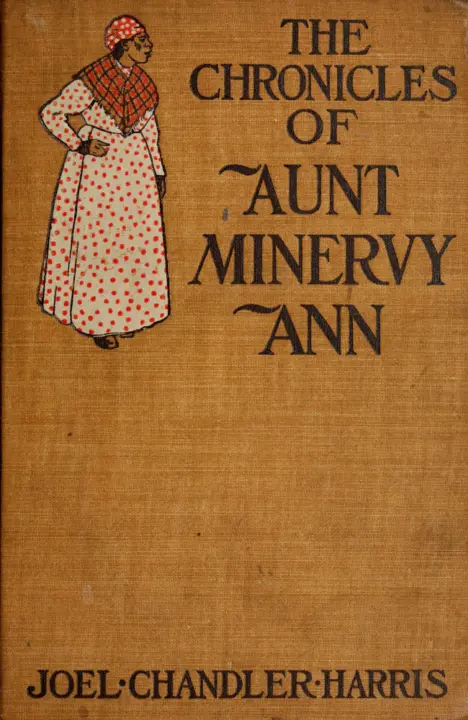
Joel Chandler Harris
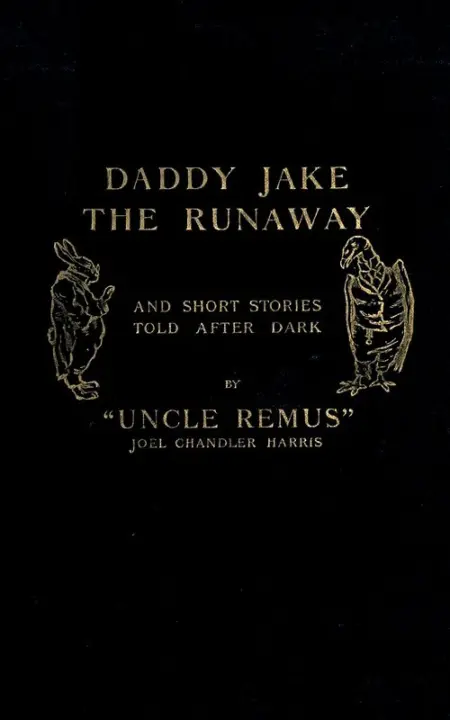
Joel Chandler Harris
Joel Chandler Harris
BEHIND THE BOOK
This eBook is for the use of anyone anywhere in the United States and most other parts of the world at no cost and with almost no restrictions whatsoever. You may copy it, give it away or re-use it under the terms of the Project Gutenberg License included with this eBook or online at www.gutenberg.org. If you are not located in the United States, you will have to check the laws of the country where you are located before using this eBook. Read the source licence.
The original source file, including credits and licence, is retained by this library. Request an original-format copy at no charge. Please include the book title and Project Gutenberg identifier #26429.
KEEP YOUR CURIOSITY GOING
Coulson Kernahan

Maurice Baring
Frances Wright
Cécile Tormay
Francis Greenleaf Allinson & Anne C. E. (Anne Crosby Emery) Allinson

Frederic Jesup Stimson