THE CLASSIC COLLECTION✦By the gods belovedCLASSIC FREE BOOKS
By the gods beloved
Emmuska Orczy, Baroness Orczy
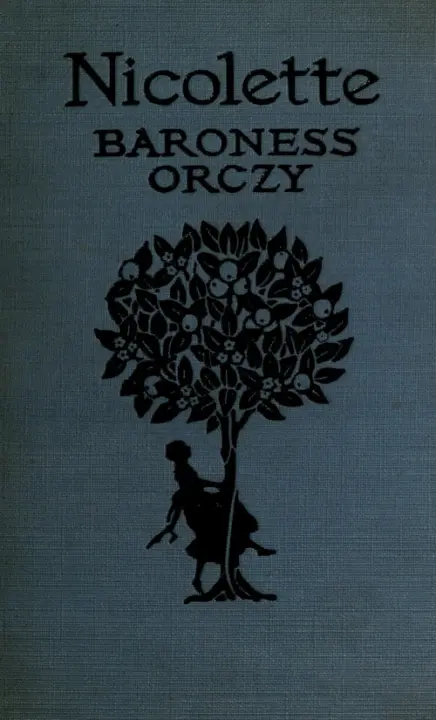
THE CLASSIC COLLECTION · 1922
"Nicolette: A Tale of Old Provence" by Baroness Emmuska Orczy is a novel written in the early 20th century. The book sets the stage in the enchanting backdrop of Provence, focusing on the themes of faded glory and the interplay of social class. It introduces Nicolette, a young girl whose family history intertwines with that of the declining noble house of the Comtes de Ventadour, especially through her bond with the boy Bertrand, also known affectionately as Tan-tan. The opening of the novel paints a vivid picture of a ruined château that once belonged to the proud seigneurs de Ventadour, now a mere shadow of its former self. It introduces the childhood adventures of Nicolette and her playmate Tan-tan, weaving together their imaginative escapades and rich heritage. However, the narrative also hints at the broader socio-economic struggles that define their lives, as the once-great family grapples with poverty. Through a blend of nostalgia and youthful innocence, the beginning establishes an emotional foundation, hinting at the complexities of class and identity that will unfold as the story progresses.
Introduction adapted from the source catalogue; source summaries may be automatically generated.
Free to read · English · 61,853 words · No account needed
MAKE TIME FOR A GOOD BOOK
On by default. Untick to stop anonymous reading totals. Each page counts after 10 seconds in view. How this works.
Anonymous counting is on unless you have switched it off.
She turned great, wondering eyes on him.
“What am I doing, Ameyric,” she asked, “that irritates you?”
“Letting that flower kiss your cheek,” he replied, “when I——”
“Poor Ameyric,” she sighed.
“Alas! poor Ameyric!” he assented. “You must think that I am made of stone, Nicolette, or you would not tease me so.”
“I?” she exclaimed, genuinely astonished: “I tease you? How?”
But Ameyric had not a great power of expressing himself. Just now he looked shy, awkward, and mumbled haltingly:
“By—by being you—yourself—so lovely—so fresh—then kissing that flower. You must know that it makes me mad!” he added almost roughly. He tried to capture her hand; but she succeeded in freeing it, and flung the twig away.
“Poor Ameyric,” she reiterated with a sigh.
He had already darted after the flower and, kneeling, he picked it up and pressed it to his lips. She looked down on his eager, flushed face, and there crept a soft, almost motherly look in her eyes.
“If you only knew,” he said moodily, “how it hurts!”
“Just now you wished me to know how good it was to love,” she riposted
lightly.
“That is just the trouble, Nicolette,” the lad assented, and rose slowly to his feet; “it is good but it also hurts; and when the loved one is unkind, or worse still, indifferent, then it is real hell!”
Then, as she said nothing, but stood quite still, her little head thrown back, breathing in the delicious scented air, which had become almost oppressive in its fragrance, he exclaimed passionately:
“I love you so, Nicolette!”
He put out his arms and drew her to him, longing to fasten his lips on that round white throat, which gleamed like rose-tinted marble.
“Nicolette,” he pleaded, because she had pushed him away quickly—almost roughly. “Are you quite sure that you cannot bring yourself to love me?”
“Quite sure,” she replied firmly.
“But you cannot go on like this,” he argued, “loving no one. It is not natural. Every girl has a lad. Look at them how happy they are.”
Instinctively she turned to look.
Your reading position is saved on this browser. Take it to another device with a library code. Reading pages adapt to text, rather than matching a printed edition.
Emmuska Orczy, Baroness Orczy
Emmuska Orczy, Baroness Orczy
Emmuska Orczy, Baroness Orczy
Emmuska Orczy, Baroness Orczy
BEHIND THE BOOK
This eBook is for the use of anyone anywhere in the United States and most other parts of the world at no cost and with almost no restrictions whatsoever. You may copy it, give it away or re-use it under the terms of the Project Gutenberg License included with this eBook or online at www.gutenberg.org. If you are not located in the United States, you will have to check the laws of the country where you are located before using this eBook. Read the source licence.
The original source file, including credits and licence, is retained by this library. Request an original-format copy at no charge. Please include the book title and Project Gutenberg identifier #61484.
KEEP YOUR CURIOSITY GOING
Cécile Tormay

Moritz Busch
Coulson Kernahan
John L. Ransom

Maurice Baring
Frances Wright