THE CLASSIC COLLECTION✦By the gods belovedCLASSIC FREE BOOKS
By the gods beloved
Emmuska Orczy, Baroness Orczy
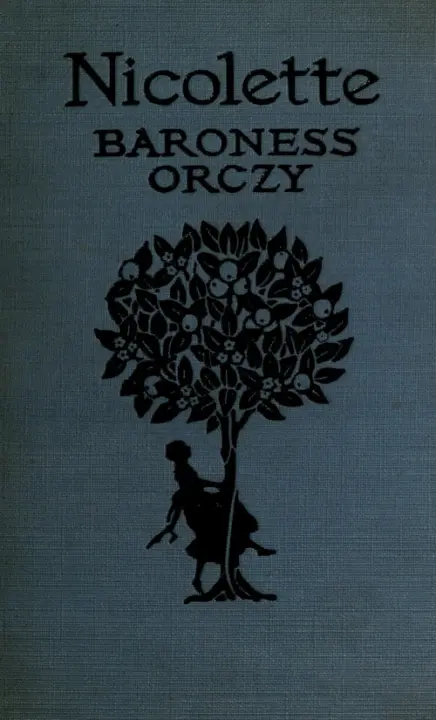
THE CLASSIC COLLECTION · 1922
"Nicolette: A Tale of Old Provence" by Baroness Emmuska Orczy is a novel written in the early 20th century. The book sets the stage in the enchanting backdrop of Provence, focusing on the themes of faded glory and the interplay of social class. It introduces Nicolette, a young girl whose family history intertwines with that of the declining noble house of the Comtes de Ventadour, especially through her bond with the boy Bertrand, also known affectionately as Tan-tan. The opening of the novel paints a vivid picture of a ruined château that once belonged to the proud seigneurs de Ventadour, now a mere shadow of its former self. It introduces the childhood adventures of Nicolette and her playmate Tan-tan, weaving together their imaginative escapades and rich heritage. However, the narrative also hints at the broader socio-economic struggles that define their lives, as the once-great family grapples with poverty. Through a blend of nostalgia and youthful innocence, the beginning establishes an emotional foundation, hinting at the complexities of class and identity that will unfold as the story progresses.
Introduction adapted from the source catalogue; source summaries may be automatically generated.
Free to read · English · 61,853 words · No account needed
MAKE TIME FOR A GOOD BOOK
On by default. Untick to stop anonymous reading totals. Each page counts after 10 seconds in view. How this works.
Anonymous counting is on unless you have switched it off.
In the olden days, she used, when she saw him, to run to him and throw her arms round his neck. She also would have said “Tan-tan” in the olden days. This time, however, she put out her hand, and it also seemed quite natural for Bertrand to stoop and kiss it, as if she were a lady. She, however, withdrew her hand very quickly, though not before he had perceived that it was very soft and very warm, and quivered in his grasp just like a little bird.
“How funny to find you here, Nicolette,” he said somewhat lamely. “And how you have grown,” he added.
“Yes,” she said, “Margaï thought you would say that when——”
“I was coming over with Micheline to-morrow,” he broke in quickly. “It was all arranged.”
Her face lit up with a wonderful expression of relief and of joy.
“Ah!” she exclaimed, “I knew—I knew——”
Bertrand smiled, for she looked so happy.
“What did you know, Nicolette?” he asked.
“Margaï said you would not come to see us, because you were too proud, now that you were an officer of the King’s guard. Time went on, and even father said——”
“But you knew better, eh, little one?”
“I knew,” she said simply, “that you would not turn your back on old
friends.”
He felt so ashamed of himself that he could not say anything for the moment. Indeed, he felt foolish, standing here beside this village girl with that silly peasant’s head-dress on her head, who, nevertheless, had the power to make him feel mean and ungrateful. She seemed to be waiting for him to say something, but as he appeared moody and silent, she went on after a while.
“Margaï will have to bake a very large brioche to-morrow as a punishment for having doubted you.”
“Nicolette,” he rejoined dejectedly, “I cannot come to-morrow.”
“Then the next day—why! it will be Sunday, and father’s birthday, we
will....”
He shook his head. He dared not meet her eyes, those great hazel eyes of hers, which had golden lights in them just like a topaz. He knew that the expression of joy had gone out of them, and that the tears were beginning to gather. So he just put his hand in his pocket and drew out the letter which the soldier-messenger had brought from Avignon.
“It was all arranged,” he said haltingly, “Micheline and I were coming over to-morrow. I wanted to see your father and—and thank him, and I longed to see you, Nicolette, and dear old Margaï—but a messenger came with this, a couple of hours ago.”
Your reading position is saved on this browser. Take it to another device with a library code. Reading pages adapt to text, rather than matching a printed edition.
Emmuska Orczy, Baroness Orczy
Emmuska Orczy, Baroness Orczy
Emmuska Orczy, Baroness Orczy
Emmuska Orczy, Baroness Orczy
BEHIND THE BOOK
This eBook is for the use of anyone anywhere in the United States and most other parts of the world at no cost and with almost no restrictions whatsoever. You may copy it, give it away or re-use it under the terms of the Project Gutenberg License included with this eBook or online at www.gutenberg.org. If you are not located in the United States, you will have to check the laws of the country where you are located before using this eBook. Read the source licence.
The original source file, including credits and licence, is retained by this library. Request an original-format copy at no charge. Please include the book title and Project Gutenberg identifier #61484.
KEEP YOUR CURIOSITY GOING
Cécile Tormay

Moritz Busch
Coulson Kernahan
John L. Ransom

Maurice Baring
Frances Wright