THE CLASSIC COLLECTION✦By the gods belovedCLASSIC FREE BOOKS
By the gods beloved
Emmuska Orczy, Baroness Orczy
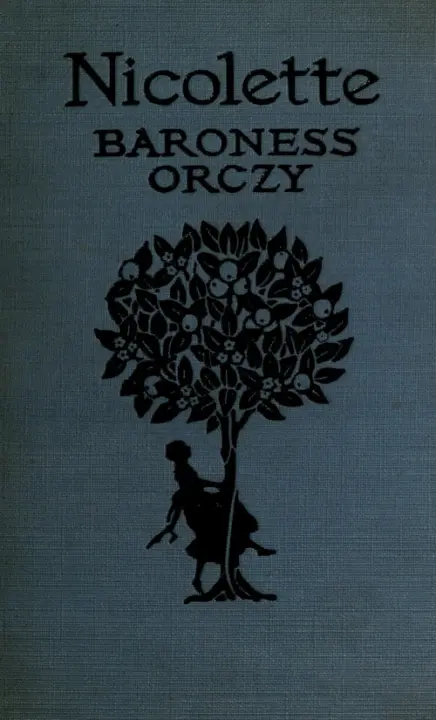
THE CLASSIC COLLECTION · 1922
"Nicolette: A Tale of Old Provence" by Baroness Emmuska Orczy is a novel written in the early 20th century. The book sets the stage in the enchanting backdrop of Provence, focusing on the themes of faded glory and the interplay of social class. It introduces Nicolette, a young girl whose family history intertwines with that of the declining noble house of the Comtes de Ventadour, especially through her bond with the boy Bertrand, also known affectionately as Tan-tan. The opening of the novel paints a vivid picture of a ruined château that once belonged to the proud seigneurs de Ventadour, now a mere shadow of its former self. It introduces the childhood adventures of Nicolette and her playmate Tan-tan, weaving together their imaginative escapades and rich heritage. However, the narrative also hints at the broader socio-economic struggles that define their lives, as the once-great family grapples with poverty. Through a blend of nostalgia and youthful innocence, the beginning establishes an emotional foundation, hinting at the complexities of class and identity that will unfold as the story progresses.
Introduction adapted from the source catalogue; source summaries may be automatically generated.
Free to read · English · 61,853 words · No account needed
MAKE TIME FOR A GOOD BOOK
On by default. Untick to stop anonymous reading totals. Each page counts after 10 seconds in view. How this works.
Anonymous counting is on unless you have switched it off.
Marcelle de Ventadour sighed again. For a moment it seemed as if she would make of her son a confidant of all her hopes, her secret longings, her spiritless repinings; as if she would tell him of what she thought and what she planned during those hours and days that she spent on her couch, listless and idle. But the habits of a life-time cannot be shaken off in a moment, even under the stress of great emotion, and Marcelle had been too long under the domination of her mother-in-law to venture on an independent train of thought.
“My dear lamb,” she said tenderly; “I only pray for your happiness—and I feel that your grandmother knows best.”
Bertrand gave a quick, impatient little sigh.
“What we have to do,” his mother resumed more calmly after a while, “is to try and wipe away the shame that clings around your father’s memory.”
“We cannot do that unless we pay what we owe,” he retorted.
“We cannot do that, Bertrand,” she rejoined earnestly. “We have not the money. At the time of—of your father’s death the creditors took everything from us that they could: we were left with nothing—nothing but this old owl’s nest. It, too, had been heavily mortgaged, but—but a—but a kind friend paid off the mortgage, then allowed us to stay on here.”
“A kind friend,” Bertrand asked. “Who?”
“I—don’t know,” his mother replied after an imperceptible moment’s hesitation. “Your grandmother knows about it, she has always kept control of our money. We must leave it to her. She knows best.”
Then, as Bertrand relapsed into silence, she insisted more earnestly:
“You do think that your grandmother knows best, do you not, Bertrand?”
“Perhaps,” he said with an impatient sigh, and turned away.
It was then that he caught sight of Micheline—Micheline who, as was her wont, had withdrawn silently into the nearest window recess, and had sat there, patient and watchful, until such time as it pleased some one to take notice of her.
“Micheline,” Bertrand said, “have you been here all the time?”
“All the time,” she replied simply.
“It is getting late,” he remarked, and gazed out of the window to distant Luberon, behind whose highest peak the sunset had already lighted his crimson fire.
“Too late to go over to the mas this afternoon,” he added decisively.
A look of great joy lit up Micheline’s peaky little face.
“Then you are coming, Bertrand,” she cried impulsively.
“Not to-night,” he said, “because it is late. But to-morrow we’ll go together. I would like to—to thank Jaume Deydier for——”
Your reading position is saved on this browser. Take it to another device with a library code. Reading pages adapt to text, rather than matching a printed edition.
Emmuska Orczy, Baroness Orczy
Emmuska Orczy, Baroness Orczy
Emmuska Orczy, Baroness Orczy
Emmuska Orczy, Baroness Orczy
BEHIND THE BOOK
This eBook is for the use of anyone anywhere in the United States and most other parts of the world at no cost and with almost no restrictions whatsoever. You may copy it, give it away or re-use it under the terms of the Project Gutenberg License included with this eBook or online at www.gutenberg.org. If you are not located in the United States, you will have to check the laws of the country where you are located before using this eBook. Read the source licence.
The original source file, including credits and licence, is retained by this library. Request an original-format copy at no charge. Please include the book title and Project Gutenberg identifier #61484.
KEEP YOUR CURIOSITY GOING
Cécile Tormay

Moritz Busch
Coulson Kernahan
John L. Ransom

Maurice Baring
Frances Wright