THE CLASSIC COLLECTION✦By the gods belovedCLASSIC FREE BOOKS
By the gods beloved
Emmuska Orczy, Baroness Orczy
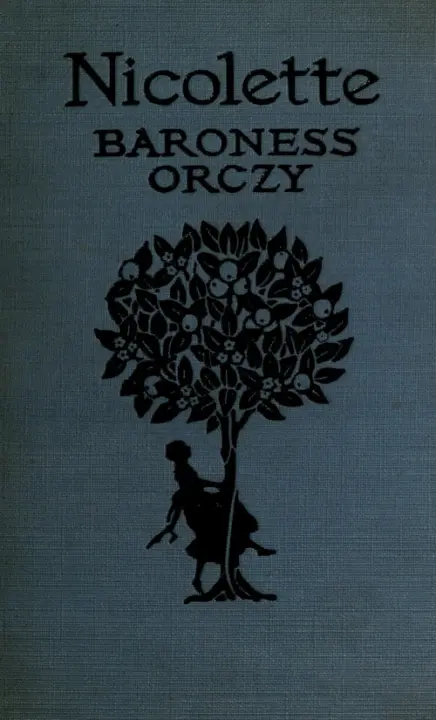
THE CLASSIC COLLECTION · 1922
"Nicolette: A Tale of Old Provence" by Baroness Emmuska Orczy is a novel written in the early 20th century. The book sets the stage in the enchanting backdrop of Provence, focusing on the themes of faded glory and the interplay of social class. It introduces Nicolette, a young girl whose family history intertwines with that of the declining noble house of the Comtes de Ventadour, especially through her bond with the boy Bertrand, also known affectionately as Tan-tan. The opening of the novel paints a vivid picture of a ruined château that once belonged to the proud seigneurs de Ventadour, now a mere shadow of its former self. It introduces the childhood adventures of Nicolette and her playmate Tan-tan, weaving together their imaginative escapades and rich heritage. However, the narrative also hints at the broader socio-economic struggles that define their lives, as the once-great family grapples with poverty. Through a blend of nostalgia and youthful innocence, the beginning establishes an emotional foundation, hinting at the complexities of class and identity that will unfold as the story progresses.
Introduction adapted from the source catalogue; source summaries may be automatically generated.
Free to read · English · 61,853 words · No account needed
MAKE TIME FOR A GOOD BOOK
On by default. Untick to stop anonymous reading totals. Each page counts after 10 seconds in view. How this works.
Anonymous counting is on unless you have switched it off.
Bertrand loved the device; for his love and for his name, he would in very truth have sacrificed life itself. He took up the ring and slipped it on his finger; then he continued to turn over the pages of the old book, still hoping to extract from it that knowledge he so longed to possess.
Half an hour later a soft foot-tread behind him roused him from his meditations, and two loving arms were creeping round his neck:
“Are you ready, Bertrand?” Micheline asked.
“Ready for what?” he retorted.
“You said you would come over to the mas with me this afternoon.”
Bertrand frowned, and then with obvious moodiness, he picked up the family chronicle, and went to lock it up in the big dower-chest.
“You are coming, Bertrand, are you not?” Micheline insisted with a little catch in her throat.
“Not to-day, Micheline,” he replied after awhile.
“Bertrand!”
The cry came with such a note of reproach that the frown deepened on his
forehead.
“Grandmama has such a violent objection to my going,” he said, somewhat
shamefacedly.
“And you—at your age——” Micheline broke in more bitterly than she had ever spoken to her brother in her life; “you are going to allow, grandmama, an old woman, to dictate to you as to where you should go, and where not?”
Bertrand at this taunt aimed at his dignity had blushed to the roots of his hair, and a look of obstinacy suddenly hardened his face, making it seem quite set and old.
“There is no question,” he said coldly, “of anybody dictating to me: it is a question of etiquette and of usage. It was Jaume Deydier’s duty in the first instance to pay his respects to me.”
“It is not a question of etiquette or of usage, Bertrand,” the girl retorted hotly, “but of Nicolette our friend and playmate. I do not know what keeps Jaume Deydier from setting foot inside the château, but God knows that he owes us nothing, so why should he come? We on the other hand owe him countless kindnesses and boundless generosity, which we can never repay save by kindliness and courtesy. Why! when you were first at St. Cyr——”
“Micheline!”
The word rang out hard and trenchant, as the old Comtesse sailed into the room. Micheline at once held her tongue, cowed as she always was in the presence of her autocratic grandmother.
“What is the discussion about?” grandmama asked coldly.
“My going to the mas,” Bertrand replied.
“To pay your respects to Jaume Deydier?” she asked, with a sneer.
“To see Nicolette,” Micheline broke in boldly. “Bertrand’s oldest
friend.”
Your reading position is saved on this browser. Take it to another device with a library code. Reading pages adapt to text, rather than matching a printed edition.
Emmuska Orczy, Baroness Orczy
Emmuska Orczy, Baroness Orczy
Emmuska Orczy, Baroness Orczy
Emmuska Orczy, Baroness Orczy
BEHIND THE BOOK
This eBook is for the use of anyone anywhere in the United States and most other parts of the world at no cost and with almost no restrictions whatsoever. You may copy it, give it away or re-use it under the terms of the Project Gutenberg License included with this eBook or online at www.gutenberg.org. If you are not located in the United States, you will have to check the laws of the country where you are located before using this eBook. Read the source licence.
The original source file, including credits and licence, is retained by this library. Request an original-format copy at no charge. Please include the book title and Project Gutenberg identifier #61484.
KEEP YOUR CURIOSITY GOING
Cécile Tormay

Moritz Busch
Coulson Kernahan
John L. Ransom

Maurice Baring
Frances Wright