THE CLASSIC COLLECTION✦By the gods belovedCLASSIC FREE BOOKS
By the gods beloved
Emmuska Orczy, Baroness Orczy
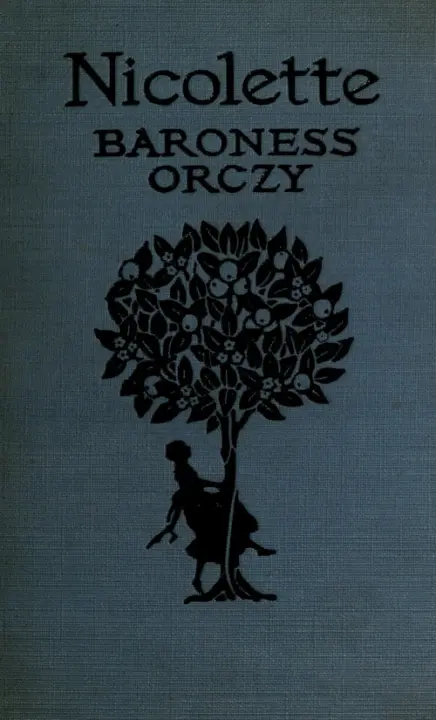
THE CLASSIC COLLECTION · 1922
"Nicolette: A Tale of Old Provence" by Baroness Emmuska Orczy is a novel written in the early 20th century. The book sets the stage in the enchanting backdrop of Provence, focusing on the themes of faded glory and the interplay of social class. It introduces Nicolette, a young girl whose family history intertwines with that of the declining noble house of the Comtes de Ventadour, especially through her bond with the boy Bertrand, also known affectionately as Tan-tan. The opening of the novel paints a vivid picture of a ruined château that once belonged to the proud seigneurs de Ventadour, now a mere shadow of its former self. It introduces the childhood adventures of Nicolette and her playmate Tan-tan, weaving together their imaginative escapades and rich heritage. However, the narrative also hints at the broader socio-economic struggles that define their lives, as the once-great family grapples with poverty. Through a blend of nostalgia and youthful innocence, the beginning establishes an emotional foundation, hinting at the complexities of class and identity that will unfold as the story progresses.
Introduction adapted from the source catalogue; source summaries may be automatically generated.
Free to read · English · 61,853 words · No account needed
MAKE TIME FOR A GOOD BOOK
On by default. Untick to stop anonymous reading totals. Each page counts after 10 seconds in view. How this works.
Anonymous counting is on unless you have switched it off.
“Of course he did, my good Marcelle,” old Madame retorted coldly, “but the creditors will want paying all the same. If the marriage had come about, this would have been easy enough, as I told you at the time. Bertrand was a fool not to have known how to win that jade’s affections.”
A cry of indignation rose to the mother’s throat.
“Oh!”
“Eh, what?” Madame riposted unmoved. “Young men have before now succeeded in gaining a woman’s love, even when she sat on a mountain of money-bags and he had not even one to fasten to his saddle-bow. It should have been easier for Bertrand with his physique and his accomplishments to win a woman’s love than it will be for him to pay his debts.”
“You know very well,” Marcelle cried, “that he cannot do that.”
“That is why we shall have to think of something,” grandmama retorted, and at that moment went deliberately towards the door. Her hand was already on the portière and Nicolette stood by undecided what she should do, when suddenly Marcelle sprang forward more like a wild animal, defending its young, than an ailing, timid woman: she interposed her slim, shrunken form between the door and the old woman, and whispered hoarsely, but commandingly:
“What do you want with Bertrand?”
Old Madame, taken aback, raised her aristocratic eyebrows: she looked her daughter-in-law ironically up and down, then, as was her wont, she shrugged her shoulders and tried to push her aside.
“My dear Marcelle,” she said icily, “have you taken leave of your
senses?”
“No,” Marcelle replied, in a voice which she was endeavouring to keep steady. “I only want to know what you are going to say to Bertrand.”
“That will depend on what he tells me,” grandmama went on coldly. “You do not suppose, I presume, that the future can be discussed without my having a say in it?”
“Certainly not,” the younger woman rejoined, “seeing that the present is entirely of your making.”
“Then I pray you let me go to Bertrand. I wish to speak with him.”
“We’ll call him. And you shall speak with him in my presence.”
Now she spoke quite firmly: her face was very pale and her eyes certainly had a wild look in them. With a mechanical gesture she pushed the unruly strands of her hair from her moist forehead. Old Madame gazed at her for a moment or two in silence, then she broke into harsh, ironical laughter.
“Ah ça, ma mie!” she said, “Will you tell me, I pray, what is the exact meaning of this melodramatic scene?”
Your reading position is saved on this browser. Take it to another device with a library code. Reading pages adapt to text, rather than matching a printed edition.
Emmuska Orczy, Baroness Orczy
Emmuska Orczy, Baroness Orczy
Emmuska Orczy, Baroness Orczy
Emmuska Orczy, Baroness Orczy
BEHIND THE BOOK
This eBook is for the use of anyone anywhere in the United States and most other parts of the world at no cost and with almost no restrictions whatsoever. You may copy it, give it away or re-use it under the terms of the Project Gutenberg License included with this eBook or online at www.gutenberg.org. If you are not located in the United States, you will have to check the laws of the country where you are located before using this eBook. Read the source licence.
The original source file, including credits and licence, is retained by this library. Request an original-format copy at no charge. Please include the book title and Project Gutenberg identifier #61484.
KEEP YOUR CURIOSITY GOING
Cécile Tormay

Moritz Busch
Coulson Kernahan
John L. Ransom

Maurice Baring
Frances Wright