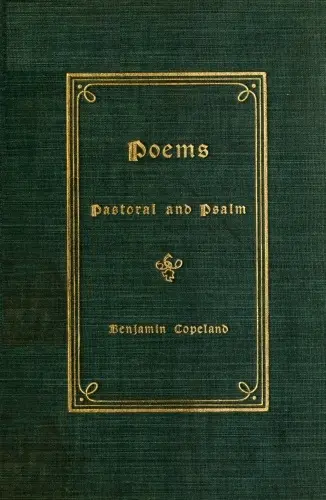
Poems: Pastoral and Psalm
Benjamin Copeland
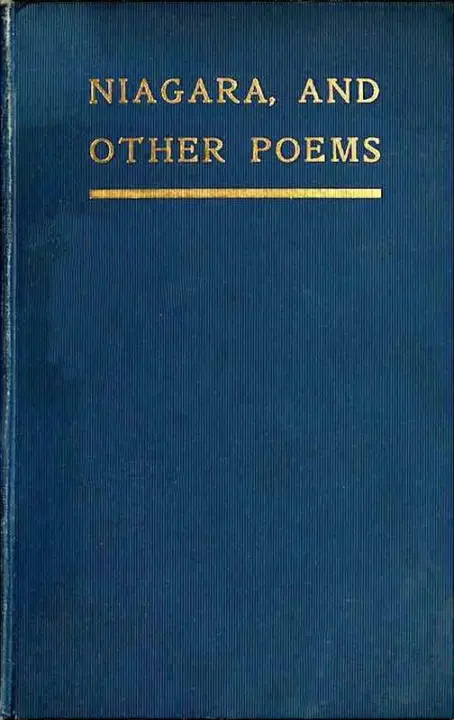
THE CLASSIC COLLECTION · 1904
"Niagara, and Other Poems" by Benjamin Copeland is a collection of poems published in the early 20th century. This work showcases various poetic themes related to nature, spirituality, and human experiences, reflecting the author's philosophical contemplations and emotional depth. The poems are characterized by a lyrical style that invokes imagery of both the natural world and personal introspection, likely resonating with readers who appreciate reflective and emotionally charged poetry. The collection features a wide array of poems, including the titular piece "Niagara," which serves as a powerful metaphor for the sublime and awe-inspiring forces of nature, evoking feelings of humility and respect. Other poems delve into themes of life, love, and faith, often employing nature as a backdrop to explore the transient nature of existence and the quest for meaning beyond earthly concerns. Through vivid imagery and thoughtful expressions, Copeland crafts a tapestry of words that inspire contemplation on both the beauty and struggles of life, appealing to readers seeking both solace and insight in poetic form.
Introduction adapted from the source catalogue; source summaries may be automatically generated.
Free to read · English · 11,428 words · No account needed
MAKE TIME FOR A GOOD BOOK
On by default. Untick to stop anonymous reading totals. Each page counts after 10 seconds in view. How this works.
Anonymous counting is on unless you have switched it off.
Deceived, despised, despoiled! The blight has fallen on thy peerless bloom; To bless thy bridal eager ages toiled;— A moment’s glamour leaves thee endless gloom.
Crimson and cloth-of-gold,
His cloud-couch, rarely wrought;—
To bower so beautiful
No bride was ever brought.
Save his,—of tender grace,—
Dear Twilight, faithful, fair,
On whose sweet lips he seeks
Surcease of toil and care.
O light ineffable!
Wonder of wood and wold;—
The vision and the pledge
Of rapture manifold.
Lips to lips in rapture pressed,—
Dearest secret of the breast
In a moment all confessed;—
Love is best; love is best!
Worn with care, by pain oppressed,—
Empty arms and aching breast,—
Longing for release and rest;—
Death is best; death is best!
Home at last! O welcome blest!
Heart to heart our loved ones pressed,—
Of eternal life possessed;—
Heaven is best! heaven is best!
Content with life’s allotted hours, Or brook or river,—may mine be Forever cheered by its unfailing Source,— A happy stream unhasting to the Sea,— With little children, birds and flowers, The dear companions of its tranquil course.
Lured by no lower goal between,
From light to light still upward move,
Aspiring to the heights serene
Of magnanimity and love.
Thou shalt not take thy way alone;— The Beautiful, the True, the Good, Shall draw to thee, undream’d, unknown, Heaven’s fairest First-Born Brotherhood!
And with them, steadfast to the end, The sons of God of like degree, Earth’s noblest souls shall thee attend With kingliest, kindliest company.
Two natures, ours,—two lives
Attest our heavenly birth;—
In “the third heaven,” one,—
The other, on the earth.
One soars to realms above,
Where saints and angels dwell;
The other strives alone
With all the powers of hell.
The soul’s clear vision, one,
And ecstacy untold;
The other, darkness, doubt,
And sorrow manifold.
The one is triumph, rest;
The other, struggle, pain:—
A fearful fight, wherein
Both prayers and tears seem vain.
And yet they are but one,
Though worlds between them roll;
One, also, their reward
In God, their glorious goal.
For duty, in the dust,
Is equally divine
With victor wreath and crown
Which in His presence shine.
If, as you say, like dogs we die,
Why, then, like angels live?
Let faithless Reason make reply,
And honest answer give.
What power shall check the downward trend
Of wilful hearts of men,
If in eternal nothing end
Their three score years and ten?
That Virtue is its own reward—
Think you sufficient cause
To move men to the due regard
Of Heaven’s holiest laws?
Your reading position is saved on this browser. Take it to another device with a library code. Reading pages adapt to text, rather than matching a printed edition.
Benjamin Copeland
BEHIND THE BOOK
This eBook is for the use of anyone anywhere in the United States and most other parts of the world at no cost and with almost no restrictions whatsoever. You may copy it, give it away or re-use it under the terms of the Project Gutenberg License included with this eBook or online at www.gutenberg.org. If you are not located in the United States, you will have to check the laws of the country where you are located before using this eBook. Read the source licence.
The original source file, including credits and licence, is retained by this library. Request an original-format copy at no charge. Please include the book title and Project Gutenberg identifier #55105.
KEEP YOUR CURIOSITY GOING

Eric Mackay
Edmund Gosse
Sophia Margaretta Hensley
Gilbert Parker
George MacDonald

Elizabeth Bibesco