THE CLASSIC COLLECTION✦The Long White Cloud: “Ao Tea Roa”CLASSIC FREE BOOKS
The Long White Cloud: “Ao Tea Roa”
William Pember Reeves
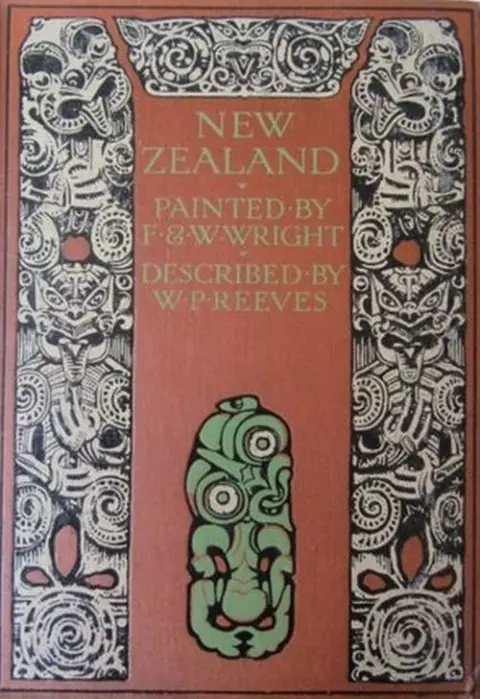
THE CLASSIC COLLECTION · 1898
"New Zealand" by William Pember Reeves is a descriptive travelogue written in the early 20th century. The work explores the landscapes, environments, and lifestyle of New Zealand, painting a vivid picture of the islands’ unique character and culture. The author’s insights into the natural beauty, climate, and agricultural practices provide an informative glimpse into life on the islands for potential travelers or those curious about the region. At the start of the book, the author introduces the islands and their geographical context, emphasizing their isolation in the southern waters. Reeves notes the diverse climates of New Zealand, highlighting how the mixture of lush landscapes and rugged mountains contributes to its distinct beauty. He contrasts the islands with Great Britain, debunking common stereotypes and illustrating how the local culture has developed uniquely. The opening sets the tone for a deeper exploration into New Zealand's allure, including natural wonders and societal characteristics, all of which readers can expect to discover in the following chapters.
Introduction adapted from the source catalogue; source summaries may be automatically generated.
Free to read · English · 64,054 words · No account needed
MAKE TIME FOR A GOOD BOOK
On by default. Untick to stop anonymous reading totals. Each page counts after 10 seconds in view. How this works.
Anonymous counting is on unless you have switched it off.
We often call this largest of our national parks a paradise. To apply the term to such a wilderness is a curious instance of change in the use of words. The Persian “paradise” was a hunting-ground where the great king could chase wild beasts without interruption. In our south-west, on the contrary, guns and bird-snaring are alike forbidden, and animal life is preserved, not to be hunted, but to be observed. As most of my readers know, the birds of our islands, by their variety and singularity, atone for the almost complete absence of four-footed mammals. The most curious are the flightless kinds. Not that these comprise all that is interesting in our bird-life by any means. The rare stitch-bird; those beautiful singers, the tui, bell-bird, and saddle-back; many marine birds, and those friendly little creatures the robins and fantails of the bush, amuse others as well as the zoologists. But the flightless birds--the roa, the grey kiwi, the takahé, the kakapo, the flightless duck of the Aucklands, and the weka--are our chief scientific treasures, unless the tuatara lizard and the short-tailed bat may be considered to rival them. Some of our ground-birds have the further claim on the attention of science, that they are the relatives of the extinct and gigantic moa. That monstrous, and probably harmless, animal was exterminated by fires and Maori hunters centuries ago. Bones, eggs, and feathers remain to attest its former numbers, and the roa and kiwi to give the unscientific a notion of its looks and habits. The story of the thigh-bone which found its way to Sir Richard Owen seventy years ago, and of his diagnosis therefrom of a walking bird about the size of an ostrich, is one of the romances of zoology. The earlier moas were far taller and more ponderous than any ostrich. Their relationship to the ancient moas of Madagascar, as well as their colossal stature, are further suggestions that New Zealand is what it looks--the relics of a submerged southern continent. After the discovery of moa skeletons there were great hopes that living survivors of some of the tall birds would yet be found, and the unexplored and intricate south-west was by common consent the most promising field in which to search. In 1848 a rail over three feet high--the takahé--was caught by sealers in Dusky Sound. Fifty years later, when hope had almost died out, another takahé was taken alive--the bird that now stands stuffed in a German museum. But, alas! this rail is the solitary “find” that has rewarded us in the last sixty years, and the expectation of lighting upon any flightless bird larger than a roa flutters very faintly now. All the more, therefore, ought we to bestow thought on the preservation of the odd and curious wild life that is left to us. The outlook for our native birds has long been very far from bright. Many years ago the Norway rat had penetrated every corner of the islands. Cats, descended from wanderers of the domestic species, are to be found in forest and mountain, and have grown fiercer and more active with each decade. Sparrows, blackbirds, and thrushes compete for Nature’s supplies of honey and insects. Last, and, perhaps, their worst enemies of all, are the stoats, weasels, and ferrets, which sheep-farmers were foolish enough to import a quarter of a century ago to combat the rabbit. Luckily, more effectual methods of coping with rabbits have since been perfected, for had we to trust to imported vermin our pastures would be in a bad case. As it is, the stoat and weasel levy toll on many a poultry yard, and their ravages among the unhappy wild birds of the forest are more deplorable still. In both islands they have found their way across from the east coast to the west: rivers, lakes, rock, snow, and ice have been powerless to stop them. Even the native birds that can fly lose their eggs and nestlings. The flightless birds are helpless. Weasels can kill much more formidable game than kiwi and kakapo; a single weasel has been known to dispose of a kea parrot in captivity. Pressed, then, by these and their other foes, the native birds are disappearing in wide tracts of the main islands. Twenty years ago this was sufficiently notorious; and at length in the ’nineties the Government was aroused to do something to save a remnant. Throughout the whole of the Great Reserve of the south-west shooting was, and still is, discouraged. But this is not enough. Only on islets off the coast can the birds be safe from ferrets and similar vermin, to say nothing of human collectors and sportsmen.
Your reading position is saved on this browser. Take it to another device with a library code. Reading pages adapt to text, rather than matching a printed edition.
BEHIND THE BOOK
This eBook is for the use of anyone anywhere in the United States and most other parts of the world at no cost and with almost no restrictions whatsoever. You may copy it, give it away or re-use it under the terms of the Project Gutenberg License included with this eBook or online at www.gutenberg.org. If you are not located in the United States, you will have to check the laws of the country where you are located before using this eBook. Read the source licence.
The original source file, including credits and licence, is retained by this library. Request an original-format copy at no charge. Please include the book title and Project Gutenberg identifier #60645.
KEEP YOUR CURIOSITY GOING
Wilfrid Scawen Blunt
Wilfrid Scawen Blunt

E. W. (Edgar Watson) Howe
Cécile Tormay

Moritz Busch
John L. Ransom