READ · DISCOVER · ENJOYClassic literature · Always free
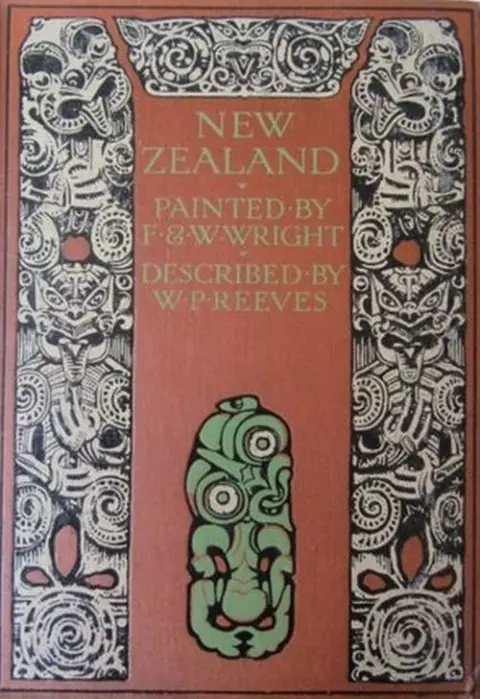
New Zealand — digital edition cover

THE CLASSIC COLLECTION · 1898

New Zealand

"New Zealand" by William Pember Reeves is a descriptive travelogue written in the early 20th century. The work explores the landscapes, environments, and lifestyle of New Zealand, painting a vivid picture of the islands’ unique character and culture. The author’s insights into the natural beauty, climate, and agricultural practices provide an informative glimpse into life on the islands for potential travelers or those curious about the region. At the start of the book, the author introduces the islands and their geographical context, emphasizing their isolation in the southern waters. Reeves notes the diverse climates of New Zealand, highlighting how the mixture of lush landscapes and rugged mountains contributes to its distinct beauty. He contrasts the islands with Great Britain, debunking common stereotypes and illustrating how the local culture has developed uniquely. The opening sets the tone for a deeper exploration into New Zealand's allure, including natural wonders and societal characteristics, all of which readers can expect to discover in the following chapters.

Introduction adapted from the source catalogue; source summaries may be automatically generated.

Start reading ↓

Free to read · English · 64,054 words · No account needed

MAKE TIME FOR A GOOD BOOK

New Zealand

On by default. Untick to stop anonymous reading totals. Each page counts after 10 seconds in view. How this works.

Anonymous counting is on unless you have switched it off.

New Zealand

Aorangi, with its 12,349 feet, exceeds the peak of Teneriffe by 159 feet. It is the highest point in our islands, for Mount Tasman, its neighbour, which comes second, fails to equal it by 874 feet. Only two or three other summits surpass 11,000 feet, and the number which attain to anything over 10,000 is not great. From the south-west, Aorangi, with the ridge attached to it, resembles the high-pitched roof of a Gothic church with a broad, massive spire standing up from the northern end. When, under strong sunlight, the ice glitters on the steep crags, and the snow-fields, unearthly in their purity, contrast with the green tint of the crawling glaciers, the great mountain is a spectacle worthy of its fame. Yet high and shapely as it is, and worthy of its name, Cloud-in-the-Heavens, it is not the most beautiful mountain in the islands. That honour may be claimed by Egmont, just as Tongariro may demand precedence as the venerated centre of Maori reverence and legend. Nor, formidable as Aorangi looks, is it, I should imagine, as impracticable as one or two summits farther south, notably Mount Balloon. However, unlike Kosciusko in Australia, it is a truly imposing height, and worthy of its premier place. With it the story of New Zealand alpine-climbing has been bound up for a quarter of a century, and such romance as that story has to show is chiefly found in attempts, successful and unsuccessful, to reach the topmost point of Aorangi. Canterbury had been settled for thirty-two years before the first of these was made. For the low snow-line, great cliffs, and enormous glaciers of the Southern Alps have their especial cause of origin. They bespeak an extraordinary steepness in the rock faces, and a boisterous climate with rapid and baffling changes of temperature. Not a climber or explorer amongst them but has been beaten back at times by tempests, or held a prisoner for many hours, listening through a sleepless night to the howling of north-west or south-west wind--lucky if he is not drenched to the skin by rain or flood. As for the temperature, an observer once noted a fall of fifty-three degrees in a few hours. On the snow-fields the hot sun blisters the skin of your face and neck, and even at a lower level makes a heavy coat an intolerable burden; but the same coat--flung impatiently on the ground and left there--may be picked up next morning frozen as stiff as a board. These extremes of heat and cold, these sudden and furious gales, are partly, I imagine, the cause of the loose and rotten state of much of the rock-surface, of the incessant falls of stones, ice-blocks, and snow, and of the number and size of the avalanches. At any rate, the higher alps showed a front which, to ordinary dwellers on our plains, seemed terrific, and which even gave pause to mountain-climbers of some Swiss experience. So even von Haast’s book did not do much more than increase the number of visitors to the more accessible glaciers and sub-alpine valleys. The spirit of mountaineering lay dormant year after year, and it was not until 1882 that an unexpected invader from Europe delivered the sudden and successful stroke that awoke it. The raider was Mr. Green, an Irish clergyman, who, with two Swiss guides, Boss and Kaufmann, landed in the autumn of 1882. His object was the ascent of Aorangi; he had crossed the world to make it. He found our inner mountains just as Nature had left them, and, before beginning his climb, had to leave human life behind, and camp at the foot of the mountain with so much of the resources of civilisation as he could take with him. One of his first encounters with a New Zealand river in a hurry ended in the loss of his light cart, which was washed away. Its wrecked and stranded remains lay for years in the river-bed a battered relic of a notable expedition. To cap his troubles, a pack-horse carrying flour, tea, sugar, and spare clothing, coolly lay down when fording a shallow torrent, and rolled on its back--and therefore on its pack--in the rapid water. Ten days of preliminary tramping and clambering, during which five separate camps were formed, only carried the party with their provisions and apparatus to a height of less than 4000 feet above the sea. They had toiled over moraine boulders, been entangled in dense and prickly scrubs, and once driven back by a fierce north-wester. On the other hand the scenery was glorious and the air exhilarating. Nothing round them seemed tame except the wild birds. Keas, wekas, and blue ducks were as confiding and fearless as our birds are wont to be till man has taught them distrust and terror. Among these the Swiss obtained the raw material of a supper almost as easily as in a farmyard. On the 25th of February the final ascent was begun. But Aorangi did not yield at the first summons. Days were consumed in futile attempts from the south and east. On their first day they were checked by finding themselves on a crumbling knife-like ridge, from which protruded spines of rock that shook beneath their tread. A kick, so it seemed, would have sent the surface into the abyss on either side. The bridge that leads to the Mahometan paradise could not be a more fearful passage. Two days later they were baffled on the east side by walls of rock from which even Boss and Kaufmann turned hopelessly away. It was not until March 2, after spending a night above the clouds, that they hit upon a new glacier, the Linda, over which they found a winding route to the north-eastern ridge which joins Cook to Tasman. The day’s work was long and severe, and until late in the afternoon the issue was doubtful. A gale burst upon them from the north-west, and they had to go on through curling mists and a wind that chilled them to the bone. It was six o’clock in the evening when they found themselves standing on the icy scalp of the obstinate mountain, and even then they did not attain the highest point. There was not a moment to lose if they were to regain some lower point of comparative security; for March is the first month of autumn in South New Zealand, and the evenings then begin to draw in. So Mr. Green had to retreat when within either a few score feet or a few score yards of the actual goal. As it was, night closed in on the party when they were but a short way down, and they spent the dark hours on a ledge less than two feet wide, high over an icy ravine. Sleep or faintness alike meant death. They stood there hour after hour singing, stamping, talking, and listening to the rain pattering on rock and hissing on snow. All night long the wind howled: the wall at their backs vibrated to the roar of the avalanches: water streaming down its face soaked their clothing. For food they had three meat lozenges each. They sucked at empty pipes, and pinched and nudged each other to drive sleep away. By the irony of fate it happened that close beneath them were wide and almost comfortable shelves. But night is not the time to wander about the face of a precipice, looking for sleeping berths, 10,000 feet above the sea. Mr. Green and his guides were happy to escape with life and limb, and not to have to pay such a price for victory as was paid by Whymper’s party after scaling the Matterhorn.

Your reading position is saved on this browser. Take it to another device with a library code. Reading pages adapt to text, rather than matching a printed edition.

More from this author

BEHIND THE WORDS

About William Pember Reeves

William Pember Reeves (1857–1932). Explore New Zealand, The Long White Cloud: “Ao Tea Roa” in this collection. These books span history, travel & exploration.

Explore this author’s books →

THE READERS’ VERDICT

How did this story stay with you?

Not rated yet
Your rating for New Zealand

Be the first to share your verdict.

One rating per browser, which you can change or remove. A necessary browser identifier remembers your vote. How ratings work

A GOOD STORY DESERVES COMPANY

Pass this book along.

A great read is even better when it’s shared.

SEND A LITTLE INSPIRATION

Share this book

BEHIND THE BOOK

Edition & source details.

Title
New Zealand
Author
William Pember Reeves
First publication (Open Library catalogue match)
1898
Digital edition publisher
Project Gutenberg
Gutenberg release date
2019-11-07
Language
English
Source edition imprint
Not stated in source catalogue
Source identifier
Project Gutenberg #60645
Contributors
F. (Frank) Wright (ill); Walter Wright (ill)

Public-domain source & licence

This eBook is for the use of anyone anywhere in the United States and most other parts of the world at no cost and with almost no restrictions whatsoever. You may copy it, give it away or re-use it under the terms of the Project Gutenberg License included with this eBook or online at www.gutenberg.org. If you are not located in the United States, you will have to check the laws of the country where you are located before using this eBook. Read the source licence.

Full source licence and obtaining an original copy

The original source file, including credits and licence, is retained by this library. Request an original-format copy at no charge. Please include the book title and Project Gutenberg identifier #60645.

the full Project Gutenberg License must appear
prominently whenever any copy of a Project Gutenberg work (any work
on which the phrase “Project Gutenberg” appears, or with which the
phrase “Project Gutenberg” is associated) is accessed, displayed,
performed, viewed, copied or distributed:

This eBook is for the use of anyone anywhere in the United States and most
other parts of the world at no cost and with almost no restrictions
whatsoever. You may copy it, give it away or re-use it under the terms
of the Project Gutenberg™ License included with this eBook or online
at www.gutenberg.org. If you
are not located in the United States, you will have to check the laws
of the country where you are located before using this eBook.

1.E.2. If an individual Project Gutenberg electronic work is
derived from texts not protected by U.S. copyright law (does not
contain a notice indicating that it is posted with permission of the
copyright holder), the work can be copied and distributed to anyone in
the United States without paying any fees or charges. If you are
redistributing or providing access to a work with the phrase “Project
Gutenberg” associated with or appearing on the work, you must comply
either with the requirements of paragraphs 1.E.1 through 1.E.7 or
obtain permission for the use of the work and the Project Gutenberg
trademark as set forth in paragraphs 1.E.8 or 1.E.9.

1.E.3. If an individual Project Gutenberg electronic work is posted
with the permission of the copyright holder, your use and distribution
must comply with both paragraphs 1.E.1 through 1.E.7 and any
additional terms imposed by the copyright holder. Additional terms
will be linked to the Project Gutenberg License for all works
posted with the permission of the copyright holder found at the
beginning of this work.

1.E.4. Do not unlink or detach or remove the full Project Gutenberg
License terms from this work, or any files containing a part of this
work or any other work associated with Project Gutenberg.

1.E.5. Do not copy, display, perform, distribute or redistribute this
electronic work, or any part of this electronic work, without
prominently displaying the sentence set forth in paragraph 1.E.1 with
active links or immediate access to the full terms of the Project
Gutenberg License.

1.E.6. You may convert to and distribute this work in any binary,
compressed, marked up, nonproprietary or proprietary form, including
any word processing or hypertext form. However, if you provide access
to or distribute copies of a Project Gutenberg work in a format
other than “Plain Vanilla ASCII” or other format used in the official
version posted on the official Project Gutenberg website
(www.gutenberg.org), you must, at no additional cost, fee or expense
to the user, provide a copy, a means of exporting a copy, or a means
of obtaining a copy upon request, of the work in its original “Plain
Vanilla ASCII” or other form. Any alternate format must include the
full Project Gutenberg License as specified in paragraph 1.E.1.

1.E.7. Do not charge a fee for access to, viewing, displaying,
performing, copying or distributing any Project Gutenberg works
unless you comply with paragraph 1.E.8 or 1.E.9.

1.E.8. You may charge a reasonable fee for copies of or providing
access to or distributing Project Gutenberg electronic works
provided that:

• You pay a royalty fee of 20% of the gross profits you derive from
the use of Project Gutenberg works calculated using the method
you already use to calculate your applicable taxes. The fee is owed
to the owner of the Project Gutenberg trademark, but he has
agreed to donate royalties under this paragraph to the Project
Gutenberg Literary Archive Foundation. Royalty payments must be paid
within 60 days following each date on which you prepare (or are
legally required to prepare) your periodic tax returns. Royalty
payments should be clearly marked as such and sent to the Project
Gutenberg Literary Archive Foundation at the address specified in
Section 4, “Information about donations to the Project Gutenberg
Literary Archive Foundation.”

• You provide a full refund of any money paid by a user who notifies
you in writing (or by e-mail) within 30 days of receipt that s/he
does not agree to the terms of the full Project Gutenberg™
License. You must require such a user to return or destroy all
copies of the works possessed in a physical medium and discontinue
all use of and all access to other copies of Project Gutenberg™
works.

• You provide, in accordance with paragraph 1.F.3, a full refund of
any money paid for a work or a replacement copy, if a defect in the
electronic work is discovered and reported to you within 90 days of
receipt of the work.

• You comply with all other terms of this agreement for free
distribution of Project Gutenberg™ works.


1.E.9. If you wish to charge a fee or distribute a Project
Gutenberg™ electronic work or group of works on different terms than
are set forth in this agreement, you must obtain permission in writing
from the Project Gutenberg Literary Archive Foundation, the manager of
the Project Gutenberg™ trademark. Contact the Foundation as set
forth in Section 3 below.

1.F.

1.F.1. Project Gutenberg volunteers and employees expend considerable
effort to identify, do copyright research on, transcribe and proofread
works not protected by U.S. copyright law in creating the Project
Gutenberg™ collection. Despite these efforts, Project Gutenberg™
electronic works, and the medium on which they may be stored, may
contain “Defects,” such as, but not limited to, incomplete, inaccurate
or corrupt data, transcription errors, a copyright or other
intellectual property infringement, a defective or damaged disk or
other medium, a computer virus, or computer codes that damage or
cannot be read by your equipment.

1.F.2. LIMITED WARRANTY, DISCLAIMER OF DAMAGES - Except for the “Right
of Replacement or Refund” described in paragraph 1.F.3, the Project
Gutenberg Literary Archive Foundation, the owner of the Project
Gutenberg™ trademark, and any other party distributing a Project
Gutenberg™ electronic work under this agreement, disclaim all
liability to you for damages, costs and expenses, including legal
fees. YOU AGREE THAT YOU HAVE NO REMEDIES FOR NEGLIGENCE, STRICT
LIABILITY, BREACH OF WARRANTY OR BREACH OF CONTRACT EXCEPT THOSE
PROVIDED IN PARAGRAPH 1.F.3. YOU AGREE THAT THE FOUNDATION, THE
TRADEMARK OWNER, AND ANY DISTRIBUTOR UNDER THIS AGREEMENT WILL NOT BE
LIABLE TO YOU FOR ACTUAL, DIRECT, INDIRECT, CONSEQUENTIAL, PUNITIVE OR
INCIDENTAL DAMAGES EVEN IF YOU GIVE NOTICE OF THE POSSIBILITY OF SUCH
DAMAGE.

1.F.3. LIMITED RIGHT OF REPLACEMENT OR REFUND - If you discover a
defect in this electronic work within 90 days of receiving it, you can
receive a refund of the money (if any) you paid for it by sending a
written explanation to the person you received the work from. If you
received the work on a physical medium, you must return the medium
with your written explanation. The person or entity that provided you
with the defective work may elect to provide a replacement copy in
lieu of a refund. If you received the work electronically, the person
or entity providing it to you may choose to give you a second
opportunity to receive the work electronically in lieu of a refund. If
the second copy is also defective, you may demand a refund in writing
without further opportunities to fix the problem.

1.F.4. Except for the limited right of replacement or refund set forth
in paragraph 1.F.3, this work is provided to you ‘AS-IS’, WITH NO
OTHER WARRANTIES OF ANY KIND, EXPRESS OR IMPLIED, INCLUDING BUT NOT
LIMITED TO WARRANTIES OF MERCHANTABILITY OR FITNESS FOR ANY PURPOSE.

1.F.5. Some states do not allow disclaimers of certain implied
warranties or the exclusion or limitation of certain types of
damages. If any disclaimer or limitation set forth in this agreement
violates the law of the state applicable to this agreement, the
agreement shall be interpreted to make the maximum disclaimer or
limitation permitted by the applicable state law. The invalidity or
unenforceability of any provision of this agreement shall not void the
remaining provisions.

1.F.6. INDEMNITY - You agree to indemnify and hold the Foundation, the
trademark owner, any agent or employee of the Foundation, anyone
providing copies of Project Gutenberg™ electronic works in
accordance with this agreement, and any volunteers associated with the
production, promotion and distribution of Project Gutenberg™
electronic works, harmless from all liability, costs and expenses,
including legal fees, that arise directly or indirectly from any of
the following which you do or cause to occur: (a) distribution of this
or any Project Gutenberg work, (b) alteration, modification, or
additions or deletions to any Project Gutenberg work, and (c) any
Defect you cause.

Section 2. Information about the Mission of Project Gutenberg

Project Gutenberg is synonymous with the free distribution of
electronic works in formats readable by the widest variety of
computers including obsolete, old, middle-aged and new computers. It
exists because of the efforts of hundreds of volunteers and donations
from people in all walks of life.

Volunteers and financial support to provide volunteers with the
assistance they need are critical to reaching Project Gutenberg’s
goals and ensuring that the Project Gutenberg collection will
remain freely available for generations to come. In 2001, the Project
Gutenberg Literary Archive Foundation was created to provide a secure
and permanent future for Project Gutenberg and future
generations. To learn more about the Project Gutenberg Literary
Archive Foundation and how your efforts and donations can help, see
Sections 3 and 4 and the Foundation information page at www.gutenberg.org.

Section 3. Information about the Project Gutenberg Literary Archive Foundation

The Project Gutenberg Literary Archive Foundation is a non-profit
501(c)(3) educational corporation organized under the laws of the
state of Mississippi and granted tax exempt status by the Internal
Revenue Service. The Foundation’s EIN or federal tax identification
number is 64-6221541. Contributions to the Project Gutenberg Literary
Archive Foundation are tax deductible to the full extent permitted by
U.S. federal laws and your state’s laws.

The Foundation’s business office is located at 41 Watchung Plaza #516,
Montclair NJ 07042, USA, +1 (862) 621-9288. Email contact links and up
to date contact information can be found at the Foundation’s website
and official page at www.gutenberg.org/contact

Section 4. Information about Donations to the Project Gutenberg
Literary Archive Foundation

Project Gutenberg™ depends upon and cannot survive without widespread
public support and donations to carry out its mission of
increasing the number of public domain and licensed works that can be
freely distributed in machine-readable form accessible by the widest
array of equipment including outdated equipment. Many small donations
($1 to $5,000) are particularly important to maintaining tax exempt
status with the IRS.

The Foundation is committed to complying with the laws regulating
charities and charitable donations in all 50 states of the United
States. Compliance requirements are not uniform and it takes a
considerable effort, much paperwork and many fees to meet and keep up
with these requirements. We do not solicit donations in locations
where we have not received written confirmation of compliance. To SEND
DONATIONS or determine the status of compliance for any particular state
visit www.gutenberg.org/donate.

While we cannot and do not solicit contributions from states where we
have not met the solicitation requirements, we know of no prohibition
against accepting unsolicited donations from donors in such states who
approach us with offers to donate.

International donations are gratefully accepted, but we cannot make
any statements concerning tax treatment of donations received from
outside the United States. U.S. laws alone swamp our small staff.

Please check the Project Gutenberg web pages for current donation
methods and addresses. Donations are accepted in a number of other
ways including checks, online payments and credit card donations. To
donate, please visit: www.gutenberg.org/donate.

Section 5. General Information About Project Gutenberg electronic works

Professor Michael S. Hart was the originator of the Project
Gutenberg concept of a library of electronic works that could be
freely shared with anyone. For forty years, he produced and
distributed Project Gutenberg eBooks with only a loose network of
volunteer support.

Project Gutenberg eBooks are often created from several printed
editions, all of which are confirmed as not protected by copyright in
the U.S. unless a copyright notice is included. Thus, we do not
necessarily keep eBooks in compliance with any particular paper
edition.

Most people start at our website which has the main PG search
facility: www.gutenberg.org.

This website includes information about Project Gutenberg,
including how to make donations to the Project Gutenberg Literary
Archive Foundation, how to help produce our new eBooks, and how to
subscribe to our email newsletter to hear about new eBooks.


KEEP YOUR CURIOSITY GOING

Your next chapter awaits.