THE CLASSIC COLLECTION✦The Long White Cloud: “Ao Tea Roa”CLASSIC FREE BOOKS
The Long White Cloud: “Ao Tea Roa”
William Pember Reeves
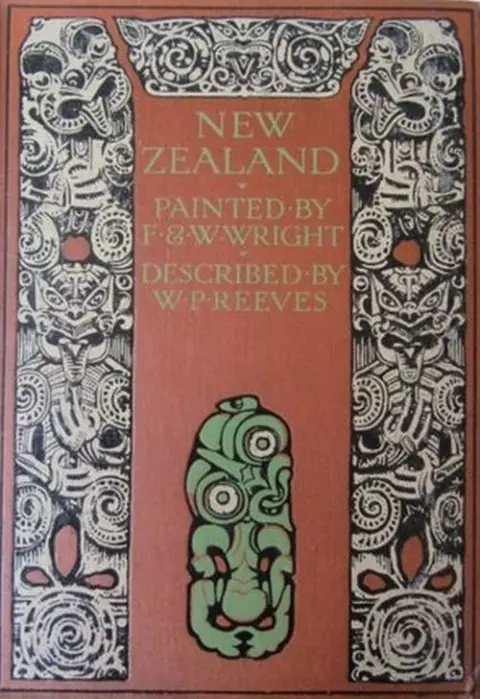
THE CLASSIC COLLECTION · 1898
"New Zealand" by William Pember Reeves is a descriptive travelogue written in the early 20th century. The work explores the landscapes, environments, and lifestyle of New Zealand, painting a vivid picture of the islands’ unique character and culture. The author’s insights into the natural beauty, climate, and agricultural practices provide an informative glimpse into life on the islands for potential travelers or those curious about the region. At the start of the book, the author introduces the islands and their geographical context, emphasizing their isolation in the southern waters. Reeves notes the diverse climates of New Zealand, highlighting how the mixture of lush landscapes and rugged mountains contributes to its distinct beauty. He contrasts the islands with Great Britain, debunking common stereotypes and illustrating how the local culture has developed uniquely. The opening sets the tone for a deeper exploration into New Zealand's allure, including natural wonders and societal characteristics, all of which readers can expect to discover in the following chapters.
Introduction adapted from the source catalogue; source summaries may be automatically generated.
Free to read · English · 64,054 words · No account needed
MAKE TIME FOR A GOOD BOOK
On by default. Untick to stop anonymous reading totals. Each page counts after 10 seconds in view. How this works.
Anonymous counting is on unless you have switched it off.
No one, however, Maori or white, seriously conceived of anything like the destruction that was impending. The landlord of the Wairoa hotel grumbled at the native guide Sophia for telling of these ominous incidents. And a Maori chief, with some followers, went to camp upon two little islets in Roto-mahana lying handy for the hot bathing-pools. Why should any one expect that the flat-topped, heavy looking mountain of Tarawera would burst out like Krakatoa? True, Tarawera means “burning peak,” but the hill, and its companion Ruawahia, must have been quiescent for many hundred years. For were not trees growing in clefts near the summits with trunks as thick as the height of a tall man? Nor was there any tradition of explosions on the spot. Thirteen generations ago, said the Maori, a famous chief had been interred in or near one of the craters, and Nature had never disturbed his resting-place. The surprise, therefore, was almost complete, and only the winter season was responsible for the small number of tourists in the district on the 10th of June. It was about an hour past midnight when the convulsion began. First came slight shocks of earthquake; then noises, booming, muttering, and swelling to a roar. The shocks became sharper. Some of them seemed like strokes of a gigantic hammer striking upwards. Then, after a shock felt for fifty miles round, an enormous cloud rose above Tarawera and the mountain spouted fire, stones, and dust to the heavens. The burning crater illumined the cloud, so that it glowed like a “pillar of fire by night.” And above the glow an immense black canopy began to open out and spread for at least sixty miles, east, north-east and south-east. Seen from far off it had the shape of a monstrous mushroom. In the earlier hours of the eruption the outer edges of the mushroom shape were lit up by vivid streams and flashes of lightning, shooting upward, downward, or stabbing the dark mass with fierce sidelong thrusts. Forked bolts sped in fiery zig-zags, or ascended, rocket-fashion, to burst and fall in flaming fragments. Sounds followed them like the crackling of musketry. Brilliantly coloured, the flashes were blue, golden or orange, while some were burning bars of white that stood out, hot and distinct, across the red of the vomiting crater. But more appalling even than the cloudy canopy with its choking dust, the tempest, the rocking earth, or the glare of lightning, was the noise. After two o’clock it became an awful and unceasing roar, deafening the ears, benumbing the nerves, and bewildering the senses of the unhappy beings within the ring of death or imminent danger. It made the windows rattle in the streets of Auckland one hundred and fifty miles away, and awoke many sleepers in Nelson at a more incredible distance. And with the swelling of the roar thick darkness settled down--darkness that covered half a province for hours. Seven hours after the destruction began, settlers far away on the sea-coast to the east were eating their morning meals--if they cared to eat at all--by candle-light. To say that it was a darkness that could be felt would be to belittle its horrors absurdly--at any rate near Tarawera. For miles out from the mountain it was a darkness that smote and killed you--made up as it was of mud and fire, burning stones, and suffocating dust. Whence came the mud? Partly, no doubt, it was formed by steam acting on the volcanic dust-cloud; but, in part, it was the scattered contents of Roto-mahana--a whole lake hurled skyward, water and ooze together. With Roto-mahana went its shores, the Terraces, several neighbouring smaller lakes and many springs. Yet so tremendous was the outburst that even this wreck was not physically the chief feature of the destruction. That was the great rift, an irregular cleft, fourteen or fifteen miles long, opened across the Tarawera and its companion heights. This earth-crack, or succession of cracks, varied in depth from three hundred to nine hundred feet. To any one looking down into it from one of the hill-tops commanding it, it seemed half as deep again. It, and the surrounding black scoria cast up from its depths, soon became cold and dead; but, continuing as it did to bear the marks of the infernal fires that had filled it, the great fissure remained in after years the plainest evidence of that dark night’s work. When I had a sight of it in 1891, it was the centre of a landscape still clothed with desolation. The effect was dreary and unnatural. The deep wound looked an injury to the earth as malign as it was gigantic. It was precisely such a scene as would have suggested to a zealot of the Middle Ages a vision of the pit of damnation.
Your reading position is saved on this browser. Take it to another device with a library code. Reading pages adapt to text, rather than matching a printed edition.
BEHIND THE BOOK
This eBook is for the use of anyone anywhere in the United States and most other parts of the world at no cost and with almost no restrictions whatsoever. You may copy it, give it away or re-use it under the terms of the Project Gutenberg License included with this eBook or online at www.gutenberg.org. If you are not located in the United States, you will have to check the laws of the country where you are located before using this eBook. Read the source licence.
The original source file, including credits and licence, is retained by this library. Request an original-format copy at no charge. Please include the book title and Project Gutenberg identifier #60645.
KEEP YOUR CURIOSITY GOING
Wilfrid Scawen Blunt
Wilfrid Scawen Blunt

E. W. (Edgar Watson) Howe
Cécile Tormay

Moritz Busch
John L. Ransom