THE CLASSIC COLLECTION✦The Long White Cloud: “Ao Tea Roa”CLASSIC FREE BOOKS
The Long White Cloud: “Ao Tea Roa”
William Pember Reeves
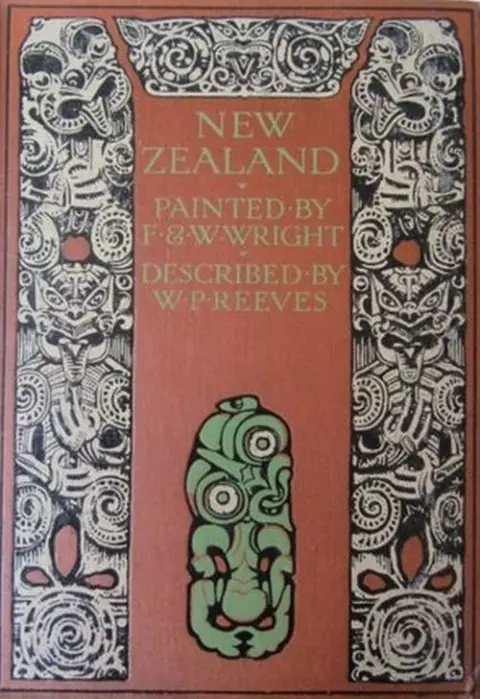
THE CLASSIC COLLECTION · 1898
"New Zealand" by William Pember Reeves is a descriptive travelogue written in the early 20th century. The work explores the landscapes, environments, and lifestyle of New Zealand, painting a vivid picture of the islands’ unique character and culture. The author’s insights into the natural beauty, climate, and agricultural practices provide an informative glimpse into life on the islands for potential travelers or those curious about the region. At the start of the book, the author introduces the islands and their geographical context, emphasizing their isolation in the southern waters. Reeves notes the diverse climates of New Zealand, highlighting how the mixture of lush landscapes and rugged mountains contributes to its distinct beauty. He contrasts the islands with Great Britain, debunking common stereotypes and illustrating how the local culture has developed uniquely. The opening sets the tone for a deeper exploration into New Zealand's allure, including natural wonders and societal characteristics, all of which readers can expect to discover in the following chapters.
Introduction adapted from the source catalogue; source summaries may be automatically generated.
Free to read · English · 64,054 words · No account needed
MAKE TIME FOR A GOOD BOOK
On by default. Untick to stop anonymous reading totals. Each page counts after 10 seconds in view. How this works.
Anonymous counting is on unless you have switched it off.
It appeared that the torrents of rain which had been falling had flooded a cold stream hard by, and this, overflowing into the pool, had made it pleasantly tepid.
Needless to say, there is one fatal event, the story of which overshadows all other stories told of the thermal zone. It is the one convulsion of Nature there, since the settlement of New Zealand, that has been great enough to become tragically famous throughout the world, apart from its interest to science. The eruption of Mount Tarawera was a magnificent and terrible spectacle. Accompanied as it was by the blowing-up of Lake Roto-mahana, it destroyed utterly the beautiful and extraordinary Pink and White Terraces. There can be no doubt that most of those who saw them thought the lost Pink and White Terraces the finest sight in the thermal region. They had not the grandeur of the volcanoes and the lakes, or the glorious energy of the geysers; but they were an astonishing combination of beauty of form and colour, of what looked like rocky massiveness with the life and heat of water in motion. Then there was nothing else of their kind on the earth at all equal to them in scale and completeness. So they could fairly be called unique, and the gazer felt on beholding them that in a sense this was the vision of a lifetime. Could those who saw them have known that the spectacle was to be so transient, this feeling must have been much keener. For how many ages they existed in the ferny wilderness, seen only by a few savages, geologists may guess at. Only for about twelve years were they the resort of any large number of civilised men. It is strange how little their fame had gone abroad before Hochstetter described them after seeing them in 1859. Bidwill, who was twice at Roto-rua in 1839, never mentions them. The naturalist Dieffenbach, who saw them in 1842, dismisses them in a paragraph, laudatory but short. George French Angas, the artist, who was the guest of Te Heu Heu in 1845, and managed, against express orders, to sketch Tongariro, does not seem to have heard of them. Yet he of all men might have been expected to get wind of such a marvel. For a marvel they were, and short as was the space during which they were known to the world, their fame must last until the Fish of Maui is engulfed in the ocean. There, amid the green manuka and rusty-green bracken, on two hill-sides sloping down to a lake of moderate size--Roto-mahana or Warm Lake,--strong boiling springs gushed out. They rose from two broad platforms, each about a hundred yards square, the flooring of craters with reddish-brown sides streaked and patched with sulphur. Their hot water, after seething and swirling in two deep pools, descended to the lake over a series of ledges, basins, or hollowed terraces, which curved out as boldly as the swelling canvas of a ship, so that the balustrades or battlements--call them what you will--seemed the segments of broken circles. Their irregular height varied from two to six feet, and visitors could scale them, as in Egypt they climb the pyramids. One terrace, or rather set of terraces, was called White, the other Pink: but the White were tinged lightly with pink in spots, and their rosy sisters paled here and there, so as to become nearly colourless in places. “White,” moreover, scarcely conveys the exact impression of Te Tarata, except from a distance or under strong light. Domett’s “cataract of marble” summed it up finely. But to be precise, where it was smoothest and where water and the play of light made the surface gleam or glisten, the silica coating of the White ledges reminded you rather of old ivory, or polished bone tinted a faint yellow. As for the “Pink” staircase, one traveller would describe it as bright salmon-pink, another as pale rose, for eyes in different heads see the same things differently. The White Terrace was the higher of the two, and descended with a gentler slope than the other. The skirts of both spread out into the lake, so that its waters flowed over them. The number and fine succession of these ivory arcs and rosy battlements made but half their charm. The hot water as it trickled from shelf to shelf left its flinty sediment in delicate incrustations--here like the folds of a mantle, there resembling fringing lace-work, milk outpoured and frozen, trailing parasites or wild arabesques. Or it made you think of wreathed sea-foam, snow half-melted, or the coral of South Sea reefs. Then among it lay the blue pools, pool after pool, warm, richly coloured, glowing; while over every edge and step fell the water, trickling, spurting, sparkling, and steaming as it slowly cooled on its downward way. So that, though there was a haunting reminder of human architecture and sculpture, there was none of the smug finish of man’s buildings, nothing of the cold dead lifelessness of carved stone-work. The sun shone upon it, the wind played with the water-drops. The blue sky--pale by contrast--overarched the deeper blue of the pools. Green mosses and vivid ferns grew and flourished on the very edge of the steam. What sculptor’s frieze or artist’s structure ever had such a framework? In the genial water the bathers, choosing their temperature, could float or sit, breathing unconfined air and wondering at the softness and strange intensity of colour. They could bathe in the day-time when all was sunshine, or on summer nights when the moonlight turned the ledges to alabaster. Did the tribute of his provinces build for Caracalla such imperial baths as these? No wonder that Nature, after showing such loveliness to our age for a moment, snatched it away from the desecration of scribbling, defacing, civilised men!
Your reading position is saved on this browser. Take it to another device with a library code. Reading pages adapt to text, rather than matching a printed edition.
BEHIND THE BOOK
This eBook is for the use of anyone anywhere in the United States and most other parts of the world at no cost and with almost no restrictions whatsoever. You may copy it, give it away or re-use it under the terms of the Project Gutenberg License included with this eBook or online at www.gutenberg.org. If you are not located in the United States, you will have to check the laws of the country where you are located before using this eBook. Read the source licence.
The original source file, including credits and licence, is retained by this library. Request an original-format copy at no charge. Please include the book title and Project Gutenberg identifier #60645.
KEEP YOUR CURIOSITY GOING
Wilfrid Scawen Blunt
Wilfrid Scawen Blunt

E. W. (Edgar Watson) Howe
Cécile Tormay

Moritz Busch
John L. Ransom